Technically speaking, what is an embroidery machine is a specialized device used to create patterns on textiles by using a needle and thread to form automated decorative stitches. Unlike normal sewing, it uses a computer system to read a digital design and stitch it automatically on fabric placed in a hoop. This helps make clean and consistent designs quickly. Whether you want it for a hobby or a business, understanding how it works, the software it needs, and its cost will help you get better results.
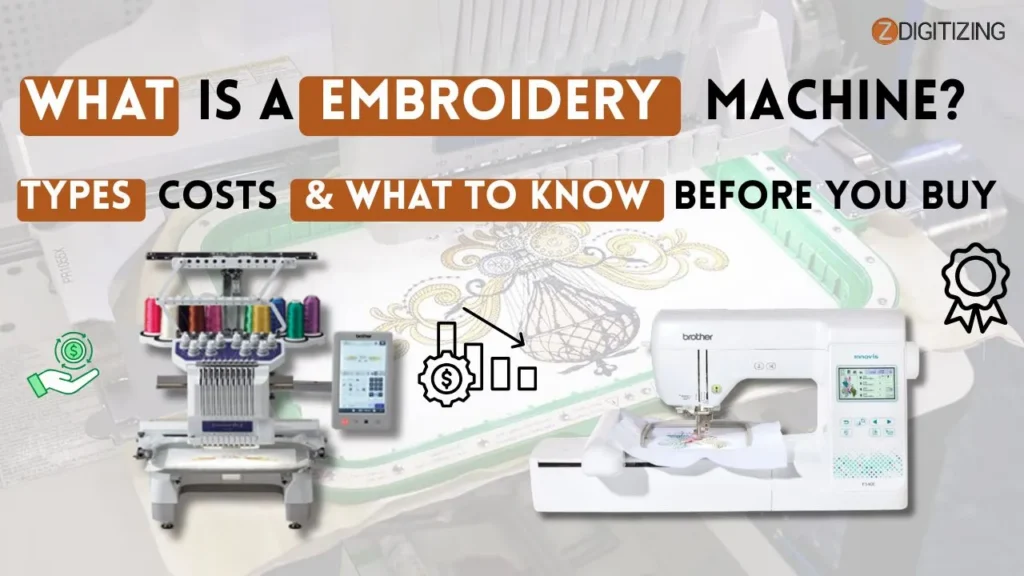
What Is an Embroidery Machine? Types, Costs & What to Know Before You Buy
How Embroidery Machines Work Actually?
To understand how these machines work, you need to see what happens inside them. If you already know what is an embroidery machine, the next step is understanding how it creates designs with accuracy.
It works using timing, thread control, and digital instructions that guide every stitch.
Role of the Hoop and Stabilizer
In embroidery, the fabric is fixed tightly in a hoop so it does not move. Even a small shift can ruin the design. A stabilizer is placed under the fabric to stop stretching and wrinkles.
When learning what is an embroidery machine, proper hooping is one of the most important steps for clean results.
X-Y Movement System Explained
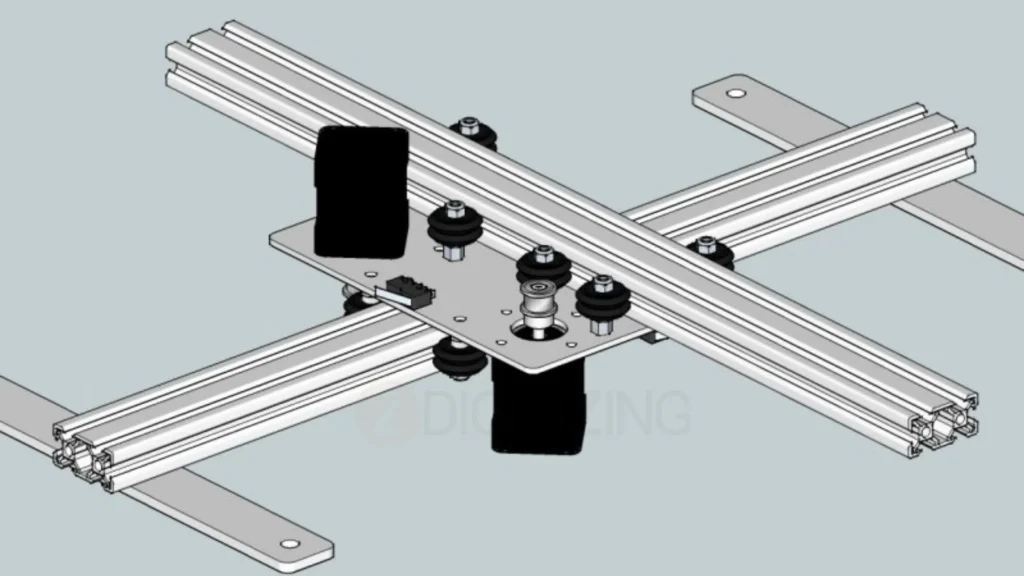
The needle stays in one place, but the hoop moves in different directions. This is called the X-Y movement system.
The machine reads a design file and moves the hoop to place each stitch correctly. This is the basic idea of how embroidery machines work, allowing precise and smooth designs every time.
Understanding Digital Files (.DST, .PES, .EXP)
These machines cannot read normal image files. They need special stitch files like DST, PES, or EXP. These files tell the machine where to stitch and when to change colors.
When understanding what is an embroidery machine, it is important to know that good digitizing is key to getting professional results.
Embroidery Machine vs. Sewing Machine: Key Differences
Many people think these two machines are the same, but they are very different. If you understand what is an embroidery machine, you will see that it is built for decoration, while a sewing machine is made for stitching fabric pieces together.
Can a Sewing Machine Do Embroidery?
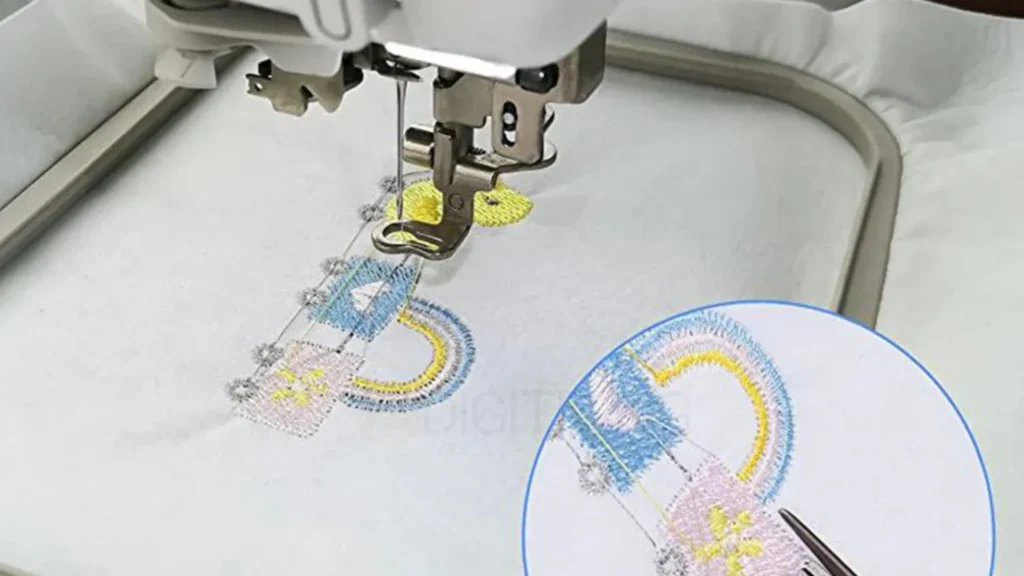
The short answer is no, not automatically. You can try free-motion embroidery on a sewing machine by moving the fabric yourself, but it needs a lot of skill and practice. It is hard to get clean and consistent results this way.
A dedicated embroidery machine does all this work automatically using a digital design. For anyone learning what is an embroidery machine, this is one of the biggest differences because it saves time and gives professional results.
That is why many people prefer an embroidery machine for beginners instead of trying manual methods.
Benefits of Combination (Hybrid) Units
Some machines come as combination units that can do both sewing and embroidery. You can switch modes by adding an embroidery attachment. This is helpful if you have limited space or budget. However, these machines are often a compromise.
Over time, users who understand what is an embroidery machine usually move to a separate machine because it offers better performance, larger hoop sizes, and less hassle when working on regular projects.
Hand vs Machine Embroidery: Spot the Differences

Hand embroidery uses needles and threads you guide by hand to make designs on fabric. A machine does the same but faster with power and computer help.
People often ask what is an embroidery machine when they see one, it’s your quick way to get pro stitches without hours of work.
Embroidery machine vs hand embroidery comes down to time and skill. Hand takes patience for every loop; machine handles repeats perfect every time.
Feature | Hand Embroidery | Machine Embroidery |
Speed | Slow (hours per design) | Fast (minutes per design) |
Skill Needed | High (practice for even stitches) | Low (load file, hit start) |
Cost Upfront | Cheap ($20 kit) | Higher ($300+) |
Best For | Custom art, small one-offs | Bulk items, logos, business |
Stitch Quality | Unique, handmade feel | Perfect, uniform every time |
Portability | Easy (carry anywhere) | Needs power outlet, table space |
Tiring? | Yes (hand cramps after 30 min) | No (runs alone) |
Fix Errors | Pick out by hand | Edit file, re-run |
Types of Embroidery Machines
Embroidery machines come in different types based on your needs, budget, and skill level. If you understand what is an embroidery machine, it becomes easier to choose the right one for your work. Some machines are made for home use, while others are built for heavy production.
1. Single-Needle Machines (Best Embroidery Machine for Beginners)

If you are just starting out, a single-needle unit is the most logical choice. These look very similar to traditional sewing machines. They have one needle and one spool of thread.
When the machine finishes a color, it stops and prompts you to manually change the thread to the next color. This is often considered the best embroidery machine for those who only plan to personalize gifts for friends and family.
2. Multi-Needle Professional Systems (6, 10, and 15 Needles)
As you move into professional embroidery machines, you encounter multi-needle systems. These machines have a “head” with multiple needles, each threaded with a different color. The machine automatically switches between needles based on the design’s instructions.
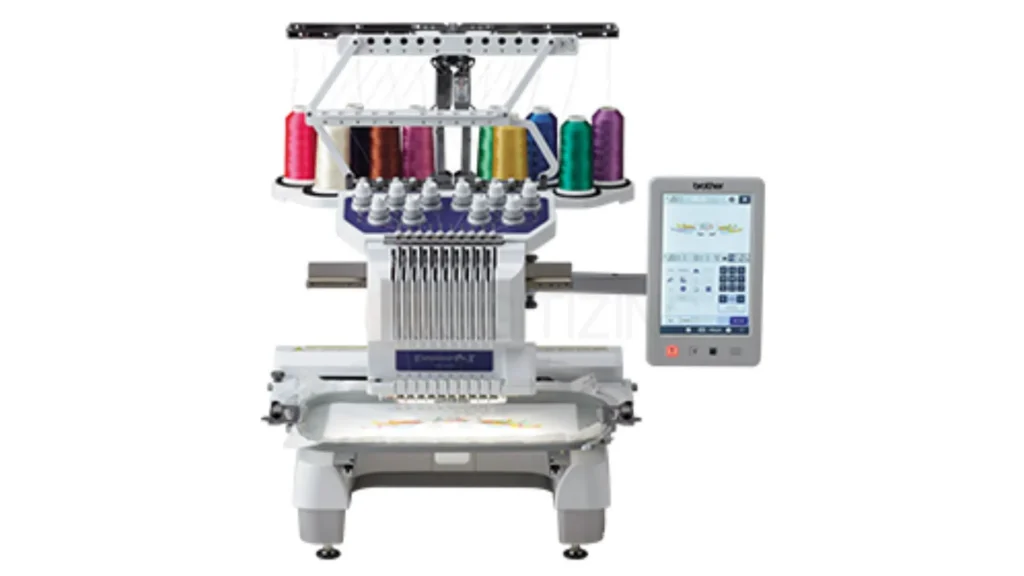
This allows you to walk away while the machine completes a multi-colored logo. These are much faster, more robust, and can handle heavier items like thick jackets or leather.
When you understand what is an embroidery machine in a professional setup, you will see that multi-needle machines save a lot of time and effort, especially for large or multi-color designs.
3. Commercial vs. Industrial Giants
A commercial embroidery machine is built to run 8 to 12 hours a day, every day. They are made of heavy-duty metal parts rather than plastic.
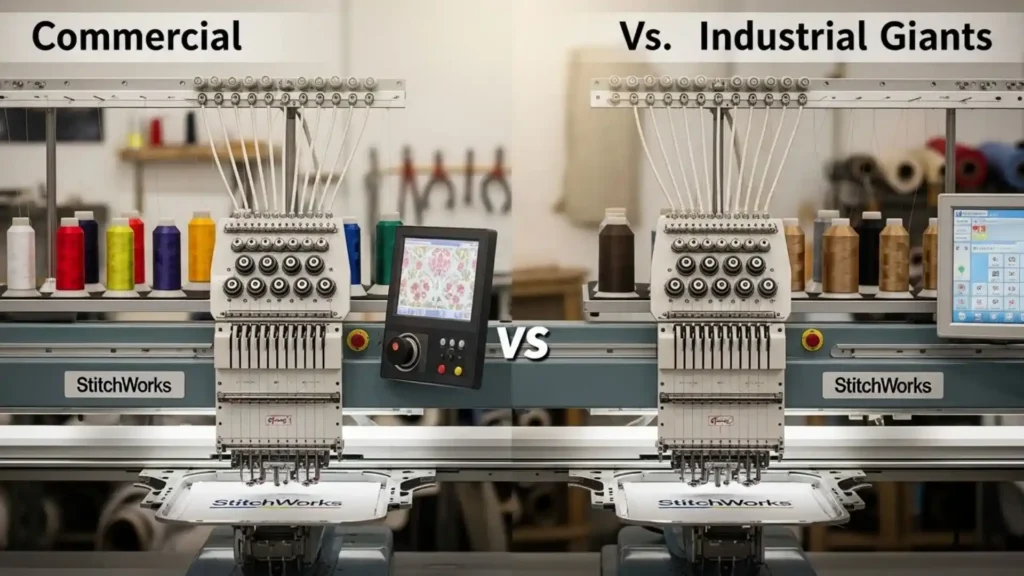
Industrial giants, On the other hand, are “multi-head” machines. Imagine 4, 6, or even 20 embroidery heads all working in sync to stitch the same logo on 20 different shirts at the same time. This is how large apparel brands manage mass production.
When you fully understand what is an embroidery machine, you realize that these high-end machines are made for speed, volume, and long-term production.
4. Combo Machines (Sewing + Embroidery)
Some machines offer both sewing and embroidery in one unit. These are called combo machines. They are useful for people who want to sew clothes and then add designs on them. You can switch between modes depending on your work.
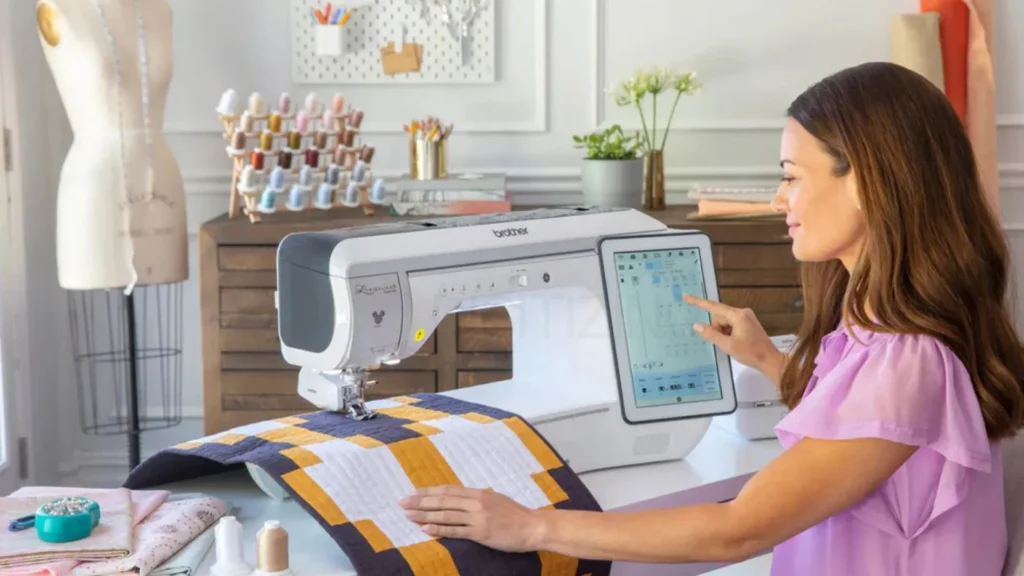
While they save space and money, they are not as powerful as dedicated machines. Many users start with these but later upgrade as their work grows.
5. Specialized Types (e.g., Cap, Hat, or Tubular Frames)

When you understand what is an embroidery machine, you also learn that it can work on more than just flat fabric. For non-flat items, special attachments or machines are used to handle curves and different shapes.
- Cap/hat embroiderers use adjustable frames to embroider curved brims without distortion. Often add-ons for single-needle machines. Example: Hat hoop kits for Brother machines (~$100–$300).
- Tubular frame machines handle sleeves, pant legs, or socks via cylindrical hoops. Great for sportswear. Example: Multi-needle models like the Happy HCH-601 (~$12,000) with tubular arms.
Top Embroidery Machine Brands You Need to Know
In the embroidery world, brand reputation is very important because it affects machine quality, support, spare parts, and resale value.
If you understand what is an embroidery machine, you will also understand that choosing the right brand can make your experience much easier and smoother.
Janome Embroidery Machine: The Home Hobbyist King
For home users, a Janome machine is often seen as one of the best choices. These machines are known for easy software and very smooth stitching results. They are beginner-friendly and do not feel complicated to use.
There is also a large community of Janome users online who share helpful tips and solutions. When learning what is an embroidery machine, many beginners prefer Janome because it feels simple and reliable from the start.
Brother & Baby Lock: Simple to Use with Smart Features
Brother is one of the most popular brands in the embroidery industry. Their machines are easy to set up and start using, even for beginners. Baby Lock, which is closely related to Brother, focuses more on high-end machines.
They offer advanced features like showing exactly where the needle will stitch before you start. These brands are known for user-friendly designs and innovation that make embroidery easier to learn.
Ricoma Embroidery Machine: Small Business Powerhouse
If you want to start a small embroidery business, a Ricoma machine is a strong option. Ricoma focuses on multi-needle machines that are designed for business use. Their machines can handle many types of items, from light fabrics to heavy materials like caps and jackets.
They also provide training and support, which helps new users grow faster. When you clearly understand what is an embroidery machine, you will see why Ricoma is popular among people starting a business.
Tajima Embroidery Machine: Industrial Gold Standard
In professional production, Tajima is one of the most respected names. Tajima machines are known for high precision, strong build quality, and long life. They are commonly used in factories where large orders are produced daily.
These machines are expensive, but they deliver excellent performance and reliability. If you visit a large apparel production unit, you will often find multiple Tajima machines running at the same time, showing their importance in industrial embroidery.
“Brain” of the Embroidery Machine: Digitizing & Software
You could buy the most expensive machine in the world, but if the design file is not good, the final result will still look bad.
If you truly understand what is an embroidery machine, you will realize that the software and design quality matter just as much as the machine itself.
Why You Can’t Just Plug in a JPEG?
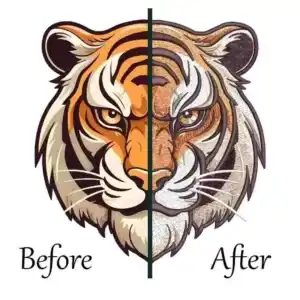
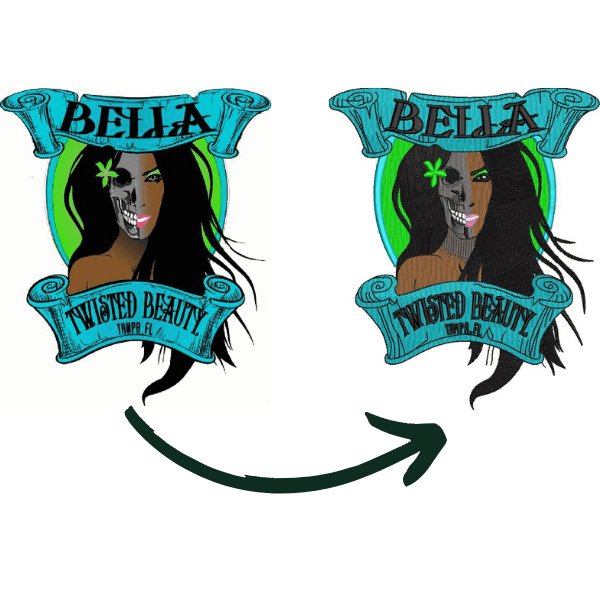
When you see a digital image, it is made of pixels, but an embroidery machine does not understand pixels. It understands stitches. That is why a process called digitizing is needed. In this process, the image is converted into stitch instructions.
These instructions tell the machine where to stitch, which direction to follow, and how dense the stitches should be. If the density is too high, it can break the needle. If it is too low, the fabric may show through.
When learning what is an embroidery machine, many beginners overlook this step, but it is one of the most important parts of getting clean results.
DIY Digitizing vs. Embroidery Digitizing Service
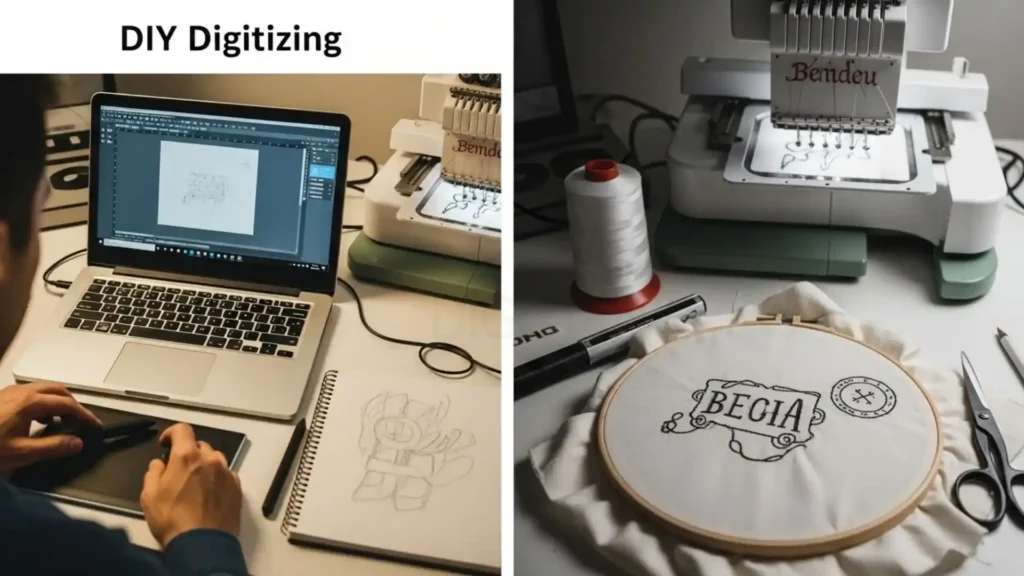
Some people try to create their own designs using the digitizing software, but it is not easy. Professional software like Wilcom or Hatch is expensive and takes time to learn. Because of this, many small businesses prefer using a machine embroidery digitizing service in USA.
These services have experts who prepare designs properly for different fabrics. This helps avoid problems like thread breaks, bad stitching, or wasted materials. When you understand what is an embroidery machine, you also understand that a good design file can save both time and money.
Buyer’s Checklist: What to Know Before You Buy an Embroidery Machine?
Before you spend money on a machine, it helps to understand what is an embroidery machine, how it fits your needs, and what features matter most. This checklist will guide you through the key points so you don’t waste time or cash on the wrong model.
1. Define Your Main Use
First, decide what you’ll mainly use the machine for:
- Personal projects and gifts (monograms, home décor)
- Small side‑hustle (custom shirts, caps, kids’ clothes)
- Full‑time business or shop
If you’re just starting out, asking what is an embroidery machine in the context of your own use will help you avoid overspending on advanced features you won’t need.
How Often Will You Use It?
Think about how many hours you’ll embroider each week.
- Light use: a simple embroidery machine for beginners may be enough.
- Frequent or business use: a more robust computerized embroidery machine will handle the workload better and last longer.
2. Choose the Right Type of Machine

Home machines are smaller, quieter, and easier to use, while commercial machines are built for speed and heavy use. For most beginners, understanding what is an embroidery machine at the home‑level is enough to get started. Later, you can upgrade if you grow into a business.
Single‑Needle vs. Multi‑Needle
- Single‑needle machines change thread colors by hand, which is fine for small runs.
- Multi‑needle machines automatically switch colors, saving time on complex designs.
For now, a single‑needle computerized embroidery machine is usually the best balance of price and features.
3. Check Key Features and Specs
Hoop Size and Embroidery Area

Make sure the hoop size matches the sorts of projects you want to do.
- Small hoops are fine for names and small logos.
- Larger hoops allow big designs like jacket backs or full‑front chest logos.
Ask yourself, “what is an embroidery machine going to do for me?” and pick a hoop size that matches the type of projects you usually work on.
Stitch Speed and Tension Control

Remember:
- Basic home machines may stitch around 300–600 stitches per minute.
- Higher‑end units can reach 800–1,000+ stitches per minute.
Better tension control means fewer skipped stitches and less thread breakage, which helps especially on tricky fabrics.
Screen, Software, and Connectivity
Look for:
- A clear screen that shows your design and settings.
- USB or memory‑card support (or Wi‑Fi on more advanced models).
- Easy file transfer from your computer or tablet.
These features make a computerized embroidery machine much easier to use and update when you understand what is an embroidery machine.
4. Consider Space, Noise, and Power
Measure your workspace before you buy. Embroidery machines need space for the body, hoop, fabric, and any extra table or stand. If you’re tight on space, a compact home machine is smarter than a big commercial unit.
Noise Level and Power Supply
Embroidery machines can be surprisingly loud, especially at higher speeds.
- For home use, check that the noise is acceptable in your living or bedroom area.
- Ensure your power supply (voltage and socket type) matches the machine’s requirements, especially if you’re importing or buying second‑hand.
5. Budget and Hidden Costs
Set a realistic budget, but also think about hidden costs:
- Hoops (standard, extra‑large, specialty shapes)
- Stabilizers, needles, extra bobbins, cleaning tools
- Software, design files, or a digitizing service later on
Understanding what is an embroidery machine in terms of total cost, not just the sticker price, helps you avoid surprises.
New vs. Refurbished or Used
New machines usually come with a warranty and support, while used or refurbished units can be much cheaper.
- If you’re a beginner, a new, basic machine is often safer.
- If you’re experienced, a high‑quality used computerized embroidery machine can be a great value.
6. Warranty, Service, and Support

When you understand what is an embroidery machine, you also realize how important service and support are. Check whether there’s a local service center or technician who can repair the machine.
A perfect machine won’t help much if nobody can fix it when it breaks. Look for brands that offer reliable support and spare parts.
Compare:
- How long the warranty lasts
- Whether it covers parts, labor, software issues, or only the frame
- Any extra paid service packages
Good warranty and support are just as important as the features.
7. Try It Out or Watch Real‑World Demos
If possible, visit a store or watch clear online demos that show:
- How the machine threads
- How the hoop is changed
- How the design is loaded and previewed
- How the machine sounds and moves at different speeds
Seeing a what is an embroidery machine unit in action helps you judge whether it feels comfortable and easy to use for your skill level.
8. Ask Yourself These Final Questions
Before you click “buy,” ask:
- Does this machine fit my budget, space, and main use?
- Is it easy enough for a beginner, or is it too advanced?
- Does it have the hoop size and features I really need now and in the next 1–2 years?
If you can answer yes to most of these, you’re much more likely to end up with a computerized embroidery machine that matches your real‑world needs and makes your creative or business goals easier to reach.
What Is the Real Embroidery Machine Cost in 2026?
If you’re in the USA and asking “what is an embroidery machine” from a price point of view, the real cost in 2026 depends on whether you want a basic home model, a serious hobby machine, or a full‑blown commercial unit.
The good news is there are options for almost every budget, but the embroidery machine cost can still surprise you if you only look at the sticker price.
1. Budget‑Friendly Home Machines

For beginners, small studios, or home crafters, a basic embroidery machine is usually the first step. In the USA, these models typically start around $300–$700 USD.
At this price, you get a simple what is an embroidery machine experience: small hoop size, limited built‑in designs, USB or memory‑card support, and one needle.
Recommended models:
- Brother SE600 – Sewing & embroidery combo, great for beginners, around $350–$450. It has a 4″×4″ hoop, built‑in designs, and USB support.
- Brother PE535 – Embroidery‑only machine, under $600, with 70+ built‑in designs and a simple, clear screen.
- Brother SE1900 – Sewing & embroidery model, slightly more advanced, often under $700, with a larger screen and more features.
These machines are great if you:
- Only want to decorate t‑shirts, towels, or kids’ clothes at home.
- Don’t plan to run large orders or long‑term daily production.
- Prefer something easy to learn and store in a small space.
The embroidery machine cost at this level is low, but remember you may still spend extra on hoops, stabilizer, and thread.
2. Mid‑Range and Advanced Home Machines
If you’re more serious maybe thinking of a side hustle or selling small batches, mid‑range machines are a common choice. In the USA, these what is an embroidery machine units usually fall in the $800–$2,000 USD range.
At this price, you often get:
- Larger embroidery fields and more hoop options.
- Higher stitch speeds and better tension control.
- More built‑in designs, bigger screens, and sometimes Wi‑Fi or advanced editing tools.
Recommended models:
- Brother SE2000 – Sewing and embroidery combo, around $800–$1,000. It has a larger embroidery field, more built‑in designs, and a color touch screen, making it great for side‑hustle work.
- Janome Memory Craft 400E – Embroidery machine focused on beginners who want more precision, around $1,300–$1,500. It offers a big embroidery field (almost 8″×8″) and many built‑in designs.
- Janome Memory Craft 500E – Slightly more advanced, often under $2,000, with extra features like higher stitch speed and smoother embroidery for more complex projects.
The embroidery machine cost here is higher, but the extra features translate into better quality, faster stitching, and more flexibility for custom work.
3. Commercial and Multi‑Head Machines
For serious businesses, team‑wear shops, or promotional‑product companies, the real embroidery machine cost jumps into a different category.
Single‑head commercial machines in the USA usually start around $3,000–$8,000 USD, depending on brand, features, and condition.
If you want a multi‑head system (several heads running at once), prices can easily reach $10,000–$30,000+ USD or more. These are full production machines built for heavy‑duty, all‑day work.
Common choices in 2026 (USA market):
- Brother SE2000 – Even though it’s in the mid‑range price, many small shops use it because it’s reliable and has enough features for light‑production work.
- Janome 001MB7 / similar multi‑needle units – Higher‑end machines designed for professional studios; typically $3,000–$6,000+ depending on configuration.
- Smartstich S‑1501 or similar commercial single‑head machines – Sold as entry‑level commercial units around $3,000–$5,000, with features like auto‑thread trim and larger frames.
When people ask “what is an embroidery machine” in a business sense, they’re usually talking about this level of equipment.
4. Extra Costs to Include in Your Budget
When you look only at the machine itself, the embroidery machine cost might seem clear, but the real expense includes extra items:
- Hoops (extra and specialty hoops for hats, sleeves, bags).
- Stabilizers, needles, bobbins, and quality thread.
- Software, design files, digitizing services, or upgrades.
- Shipping, taxes, and possible installation or training.
If you’re planning a small business, it’s smart to add at least 15–25% extra on top of the base embroidery machine cost to cover these extras.
5. New vs. Used Machines in 2026
In the USA, used or refurbished machines can cut the embroidery machine cost by 30–50% compared to brand‑new units. Many small shops and hobbyists buy lightly used models from local dealers or online marketplaces.
However, used machines may not come with a full warranty or local service support. So, while the upfront embroidery machine cost is lower, repairs or missing parts can add hidden expenses later.
By thinking through who you are (hobbyist, small seller, or full‑time shop) and how often you’ll use it, you can decide whether the embroidery machine cost in 2026 in the USA fits your real‑world needs and budget.
Final Thoughts
Choosing your first or next machine is a journey where you balance your creative ideas with your real budget. Now you clearly understand what is an embroidery machine and how it works, along with key differences like embroidery machine vs sewing machine, from basic home machines to powerful industrial systems used in large production.
Always remember, the machine alone is not everything. Your skills in hooping, the stabilizer you choose, and especially the quality of your digitizing will decide your final results. With the right approach, this field can open many opportunities, whether for a hobby or a business.
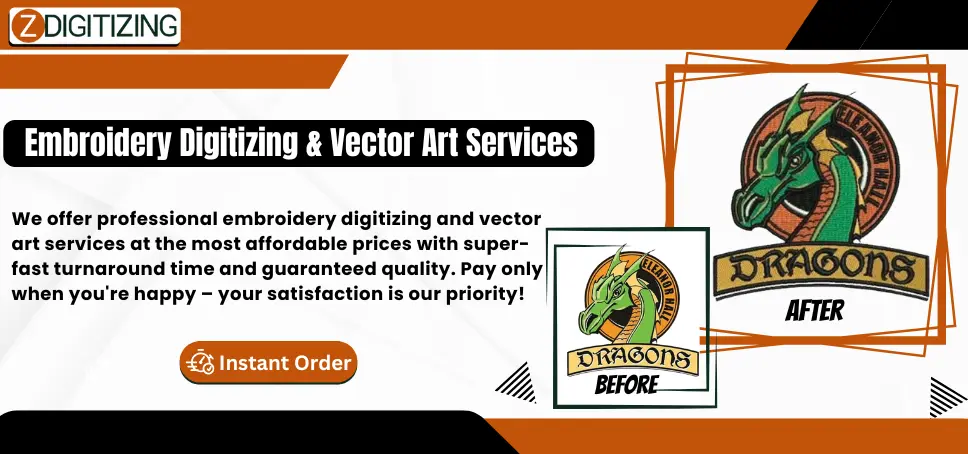
If you are still unsure about designs or want professional results without wasting time, our company ZDigitizing is here to help. We provide expert digitizing services along with jacket back digitizing services.
Our team works 24/7 to handle your orders quickly and efficiently. We also offer fast turnaround times, usually between 4 to 12 hours, and you get 50% off on your first order. You can simply place your order and get high-quality results without stress.
Now that you fully understand what is an embroidery machine, the next smart step is to combine it with professional digitizing to get the best output every time.