Finding the best embroidery digitizing service for hats involves more than comparing prices or choosing the fastest turnaround. Caps are one of the most demanding items to embroider, and even a well-designed logo can stitch poorly if it isn’t digitized specifically for the shape, seams, and structure of the hat.
Whether you’re ordering a single logo or managing production for a commercial embroidery shop, selecting the right embroidery digitizing service can reduce thread breaks, improve stitch quality, and help your machines run more efficiently. This guide explains what to look for, common mistakes to avoid, and the technical factors that separate professional cap digitizing from standard embroidery files.
Best Embroidery Digitizing Service for Hats
Why Hat Embroidery Requires Specialized Digitizing
Unlike flat garments such as polos or jackets, hats present a unique embroidery surface. Their curved front panels, center seams, varying fabric structures, and limited stitching area all affect how a design sews. A file that performs perfectly on a shirt can produce uneven lettering, gaps, or distorted shapes when used on a cap.
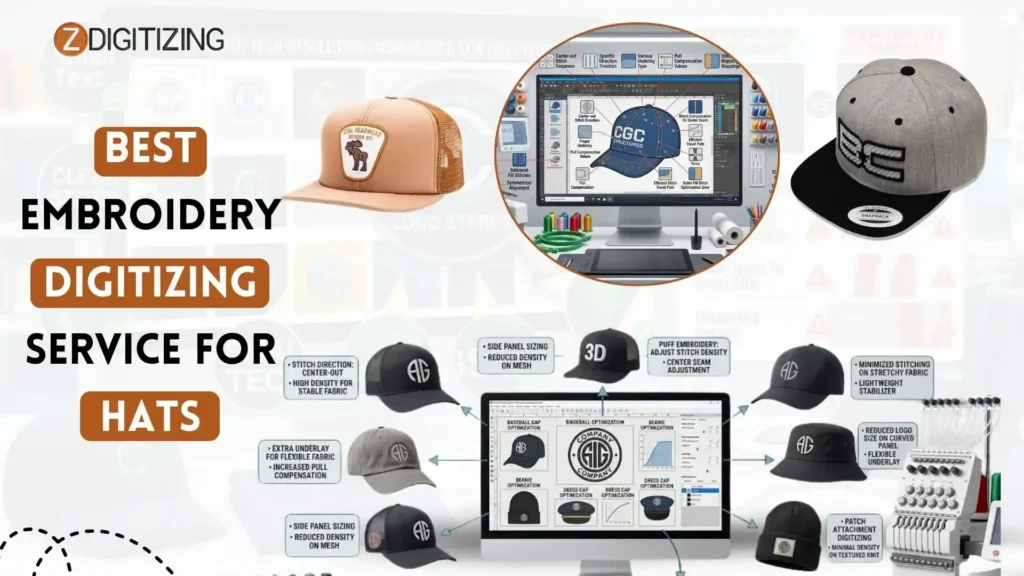
Because of these differences, professional digitizing services for embroidery create hat files using techniques tailored specifically for caps rather than simply resizing an existing design. Factors like stitch direction, sequencing, underlay, and pull compensation are adjusted to match the type of hat and the placement of the logo.

A quality digitizing service for embroidery will also ask about the cap style, such as structured, unstructured, trucker, or snapback—before creating the file. That extra attention helps ensure cleaner embroidery and fewer production issues from the very first sew-out.
What Makes the Best Embroidery Digitizing Service for Hats?
Not every company that offers embroidery digitizing services has the experience needed for hat digitizing or professional cap embroidery digitizing. Caps require a different digitizing approach than flat garments, so choosing a provider with real cap experience can save you from costly production problems later.
Rather than relying on marketing claims, evaluate a service based on how well it prepares embroidery files for real production. A provider that understands cap construction will create files that sew smoothly, maintain clean detail, and require fewer machine adjustments.
When comparing the best embroidery digitizing service for hats, pay attention to these qualities:
- Proven experience with cap embroidery digitizing services rather than general logo digitizing
- Manual digitizing instead of relying solely on automatic software
- Knowledge of structured, unstructured, trucker, and snapback hats
- Proper stitch sequencing for curved cap panels
- Support for 3D puff, appliqué, and fine lettering when required
- Multiple machine file formats with native files available on request
- Clear revision policy and responsive customer support
A provider that meets these standards is far more likely to deliver production-ready files that run efficiently across different embroidery machines and hat styles.
Pro Tip: Before placing a large order, request a sample of a recently digitized cap design—not just the finished embroidered hat. Reviewing the actual stitch file or sew-out helps you judge lettering clarity, stitch flow, and overall digitizing quality more accurately than promotional photos alone.
7 Things to Check Before Choosing a Hat Digitizing Service
Choosing a provider for custom embroidery digitizing shouldn’t come down to price alone. A well-digitized cap file can save hours of machine downtime, while a poor-quality file may lead to repeated edits, wasted materials, and inconsistent embroidery. Before placing an order, use this checklist to compare your options.
1. Make Sure They Have Real Cap Digitizing Experience
Hat embroidery requires different techniques than flat garments. Look for a portfolio that demonstrates successful cap logo digitizing, structured hats, trucker hats, snapbacks, and 3D puff embroidery.
2. Ask Whether the Design Is Digitized Specifically for Hats
A professional digitizing embroidery service creates a separate file for caps rather than reusing a design made for shirts. Hat-specific files are planned around the cap’s shape, seam placement, and embroidery area.
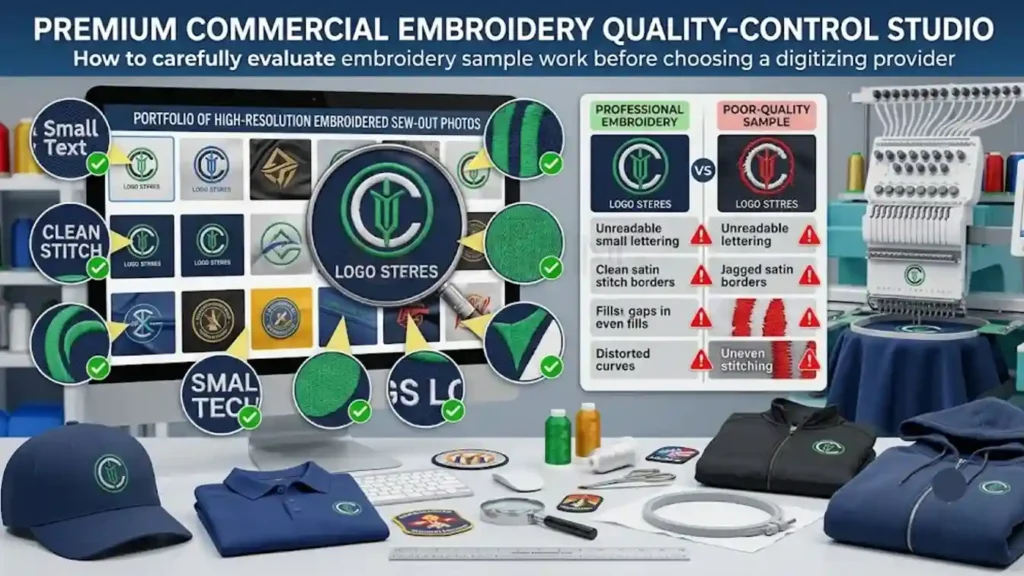
3. Review Their Sample Work Carefully
Don’t focus only on the finished embroidery. Zoom in and check whether small text is readable, satin borders look clean, and curves appear smooth without gaps or distortion.
4. Check Which File Formats Are Included
Most professional embroidery digitizing services provide multiple machine formats such as DST, PES, EXP, JEF, or VP3. If you may need future edits, ask whether a native editable file is also available.
5. Understand the Revision Policy
Minor adjustments are common after the first sew-out. A reliable provider should explain what revisions are included and how quickly corrected files are returned.
6. Compare Turnaround Without Sacrificing Quality
Rush delivery is useful, but speed shouldn’t come at the expense of stitch quality. Consistent, production-ready files are usually more valuable than receiving a design a few hours earlier.
7. Choose a Team That Understands Production
Experienced digitizers for embroidery often ask questions about the hat style, logo size, placement, fabric, or special effects before they begin. That attention to detail usually leads to better embroidery results and fewer production issues.
Pro Tip: If a provider starts digitizing without asking anything about your hat or design requirements, treat it as a warning sign. A few questions before the work begins often prevent hours of troubleshooting after the file reaches the embroidery machine.
Hat Types Need Different Digitizing Approaches
One mistake many buyers make is assuming the same embroidery file will produce identical results on every hat. In reality, different cap styles vary in structure, fabric stability, panel construction, and embroidery area. That’s why experienced embroidery digitizing services adjust the file based on the specific hat being embroidered.
Hat Type | What the Digitizer Should Consider |
Structured Cap | Firm front panels require stitch sequencing that minimizes distortion around the center seam. |
Unstructured Cap | Softer fabric shifts more easily, so stitch settings need better control to maintain shape. |
Snapback | The flat front panel offers a stable embroidery area, making it suitable for bold logos and detailed designs. |
Trucker Hat | The foam front panel behaves differently from the mesh back, requiring balanced stitch coverage to avoid distortion. |
Flexfit Cap | Stretch fabrics often need additional adjustments to help the embroidery hold its shape after wear. |
Beanie | Knit material can stretch during stitching, so simple artwork and careful stitch planning usually produce better results. |
Bucket Hat | Curved panels and seams reduce the usable embroidery area, making placement and design size especially important. |
A professional hat digitizing company won’t simply resize an existing logo. Instead, they create embroidery digitizing for hats that’s tailored to each cap style, resulting in cleaner stitching and better production performance.

Bottom Line: If your business decorates multiple hat styles, ask your digitizer whether separate files are recommended. Investing in hat-specific versions often produces cleaner embroidery and reduces production issues compared to using a single file for every cap.
Why a Shirt Embroidery File Usually Doesn’t Work on a Hat
A logo may look identical on screen, but the embroidery file used for a polo shirt isn’t always suitable for a hat. Flat garments provide a stable embroidery surface, while caps introduce curves, seams, and tighter embroidery areas that affect how stitches behave.
Because of these differences, professional hat digitizing services often create a separate version of the same logo for hats. This helps maintain cleaner outlines, sharper lettering, and more consistent stitch quality during production.
Some of the biggest differences include:
- Stitch sequencing planned for curved cap panels instead of flat fabric.
- Adjustments that reduce distortion around the center seam.
- Better control of small lettering and fine details.
- Stitch settings tailored to the specific hat style and material.
Using a hat-specific file may seem like a small detail, but it can significantly improve embroidery quality while reducing thread breaks, unnecessary machine stops, and costly rework.
Pro Tip: If you regularly embroider the same logo on both apparel and caps, keep separate embroidery files for each application. A design optimized for one product won’t always deliver the best results on another.
Technical Details That Separate Professional Hat Digitizing from Average Work
Many embroidery problems begin long before the machine starts stitching. The quality of the digitizing determines how smoothly a design runs, how well it holds its shape, and whether fine details remain clear on the finished hat.
Professional cap digitizing service pay close attention to several technical factors that are often overlooked:
- Stitch sequencing: Planning the stitch order helps keep the design balanced and reduces distortion on curved cap panels.
- Pull compensation: Small adjustments are made to offset how stitches naturally pull the fabric, improving the accuracy of shapes and lettering.
- Underlay stitches: A solid foundation supports the top stitches, helping the embroidery stay clean and stable.
- Seam awareness: For hats with a center seam, the stitch path is planned to reduce gaps and uneven stitching across the front panel.
These adjustments may not be visible in the embroidery file itself, but they make a noticeable difference in stitch quality, production efficiency, and the finished appearance of the design.

Expert Insight: When comparing providers, ask how they prepare files for hats rather than simply asking if they offer cap digitizing. An experienced digitizer should be able to explain the techniques they use to improve stitch quality on curved surfaces.
3D Puff Hat Digitizing Requires Additional Expertise
Not every embroidery digitizing service specializes in 3D puff embroidery. Unlike standard flat stitching, 3D puff uses foam beneath the thread to create a raised effect, which requires a different digitizing approach to achieve clean edges and consistent coverage.
A well-digitized c design should:
- Maintain clean, well-defined raised lettering.
- Use stitch settings that fully cover the foam without exposing its edges.
- Avoid overly small details that may not stitch cleanly.
- Be planned specifically for hats rather than converted from a flat embroidery file.
If you regularly embroider caps with raised logos, it’s worth choosing a provider that can show examples of previous 3D puff work instead of treating it as a standard digitizing job.

Pro Tip: Simple, bold artwork usually produces better 3D puff results than intricate logos with thin lines or tiny text. If your design includes very fine details, ask whether a standard flat embroidery version would provide a cleaner finish.
Common Mistakes That Lead to Poor Hat Embroidery
Even high-quality embroidery machines can’t compensate for a poorly prepared design. Many embroidery problems begin before production starts, often because important details are overlooked during hat digitizing or when placing the order.
Some of the most common mistakes include:
- Using the same embroidery file for hats and flat garments without creating a dedicated cap digitizing version.
- Choosing a provider based only on the lowest price instead of proven quality and experience.
- Sending low-resolution artwork that limits the accuracy of cap logo digitizing.
- Not mentioning the hat style, fabric, or placement before the design is digitized.
- Expecting very small text or intricate details to stitch cleanly on every cap.
- Skipping a test sew-out before starting a large production run.
Most of these issues are easy to avoid by working with experienced hat digitizing services that ask the right questions before creating the embroidery file.
Pro Tip: If you’re ordering hats for the first time, provide your digitizer with the cap style, logo dimensions, placement, and a clear reference image. A detailed brief usually results in more accurate hat embroidery digitizing and reduces the need for revisions.
Red Flags to Watch For When Choosing a Hat Digitizing Service
A professional provider should be transparent about their process and confident in the quality of their work. If you notice any of the following warning signs, it’s worth asking more questions before placing an order.
- They use the same embroidery file for hats, shirts, jackets, and other garments without making adjustments.
- They can’t provide recent examples of hat or cap digitizing projects.
- The revision policy is unclear or every small change comes with an additional fee.
- They don’t ask about the hat style, logo size, placement, or special requirements before starting the design.
- Only one machine file format is offered, with no option to request additional formats.
- Pricing looks unusually low without explaining what’s included in the service.
- Customer support becomes difficult to reach once the file has been delivered.
Choosing a reliable best embroidery digitizing service for hats isn’t just about getting an embroidery file—it’s about working with a team that understands production requirements and is willing to support you if adjustments are needed.
How Much Does Hat Embroidery Digitizing Cost?
The cost of custom embroidery digitizing for hats depends on factors such as the complexity of the artwork, stitch count, lettering size, and whether the design includes special techniques like 3D puff. While pricing varies between providers, choosing the cheapest option isn’t always the most cost-effective decision if the file requires multiple revisions or causes production issues.
Service | Typical Price Range |
Standard hat logo digitizing | $10–$25 per design |
3D puff hat digitizing | $15–$35 per design |
Rush service (if available) | Usually an additional fee |
Bulk or contract orders | Often qualify for discounted pricing |
Before placing an order, confirm exactly what is included. Some embroidery digitizing services include multiple machine formats, minor revisions, and production-ready files in the quoted price, while others may charge separately for these services.
Pro Tip: Instead of comparing prices alone, compare the overall value. A slightly higher-priced file that stitches correctly the first time is often far less expensive than correcting production errors or paying for repeated edits.
Final Thoughts
Finding the best embroidery digitizing service for hats isn’t about choosing the cheapest quote or the fastest turnaround. It’s about working with a digitizer who understands how hats actually sew—from center-out sequencing and pull compensation to proper underlay, stitch density, and cap-specific adjustments.
Before placing a large production order, start with a sample design, review the sew-out carefully, and communicate your cap style, embroidery size, and fabric details. A small investment in quality digitizing can prevent thread breaks, distorted logos, wasted garments, and costly production delays later.
If you’re looking for production-ready custom embroidery digitizing backed by experienced professionals, ZDigitizing offers manual digitizing for structured caps, trucker hats, snapbacks, 3D puff designs, jacket back digitizing, and other challenging applications. New customers can also receive 50% OFF their first order, making it easy to test the quality before committing to larger projects.