Choosing the best embroidery fabric for beginners can make the difference between clean, professional-looking stitches and frustrating results. Medium-weight woven cotton is the best place to start because it’s stable, easy to hoop, and forgiving for both hand and machine embroidery. Linen, Aida cloth, felt, and canvas are also excellent choices depending on your project.
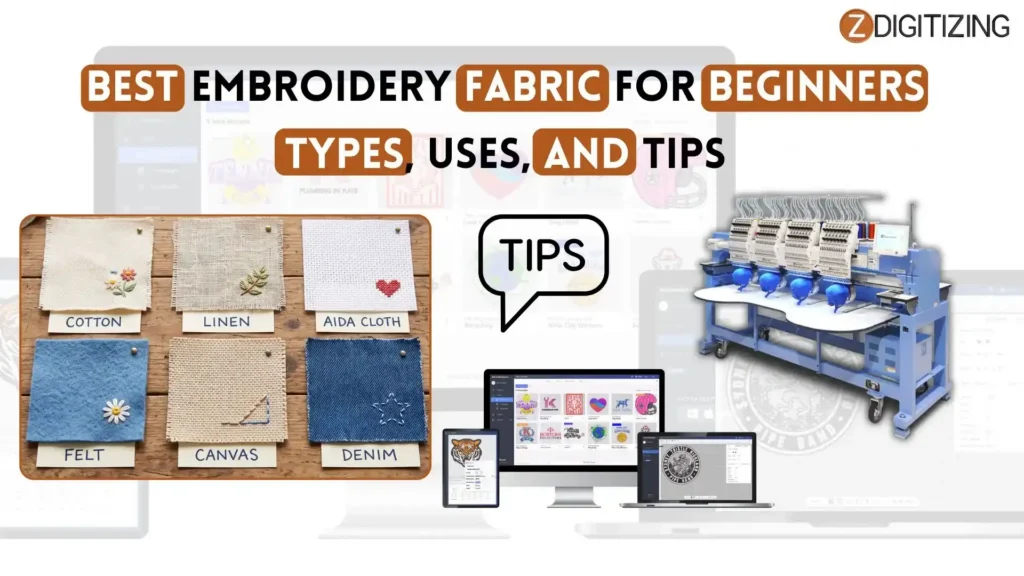
In this guide, you’ll learn which fabrics are easiest to embroider, how different materials affect stitch quality, when to use stabilizers, and practical tips to avoid common beginner mistakes, so you can confidently choose the right fabric for every embroidery project.
Best Embroidery Fabric for Beginners: Types, Uses, and Tips
Best Embroidery Fabric for Beginners
The best embroidery fabric for beginners is medium-weight woven cotton because it’s easy to work with, holds stitches well, and stays stable inside the hoop. However, cotton isn’t the only good option. Depending on your project, fabrics like linen, Aida cloth, felt, canvas, and denim can also produce excellent results for both beginners and experienced embroiderers.
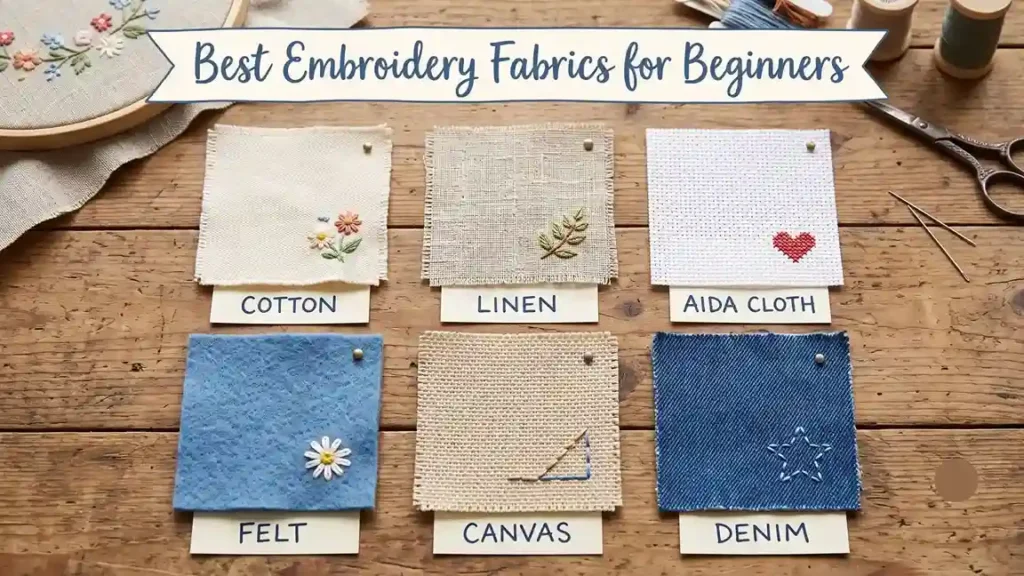
Best Embroidery Fabrics at a Glance
Fabric | Best For | Hand Embroidery | Machine Embroidery | Beginner Friendly |
Cotton | Everyday embroidery, samplers, apparel | Yes | Yes | Excellent |
Linen | Decorative embroidery, home décor | Yes | Yes | Excellent |
Aida Cloth | Cross stitch and counted embroidery | Yes | Limited | Excellent |
Felt | Crafts, ornaments, appliqué | Yes | Yes | Excellent |
Canvas | Tote bags, patches, heavy-duty projects | Yes | Yes | Good |
Denim | Jackets, jeans, bags | Yes | Yes | Good |
The right fabric depends on the type of embroidery you’re planning to do. If you’re learning basic stitches or trying embroidery for the first time, start with cotton. If you’re making patches, tote bags, or decorative projects, heavier fabrics like canvas or denim may be a better choice.
Cotton: The Best Overall Choice for Beginners
If you’re buying fabric for your first embroidery project, cotton is the safest and most reliable option. Its tight weave keeps stitches even, making it easier to create clean outlines and smooth fills without the fabric stretching or shifting.
Cotton is also widely available, affordable, and works well with most embroidery thread, making it a favorite for practice pieces, home décor, clothing, and everyday embroidery projects.
Best For
- Learning basic embroidery stitches
- Practice samplers
- Floral embroidery
- Clothing and tote bags
- Most beginner projects
Pros
- Stable and easy to hoop
- Affordable and easy to find
- Holds stitches neatly
- Suitable for both hand and machine embroidery
- Available in different colors and weights
Cons
- Lightweight cotton may wrinkle if not stabilized properly.
- Very thin cotton fabrics can show puckering under dense embroidery designs.
Expert Tip: Choose medium-weight quilting cotton whenever possible. It provides enough stability for beginners while remaining easy to stitch and comfortable to handle.
Linen: Perfect for Decorative Embroidery
Linen is another excellent choice if you want a more natural and elegant finish. It has a slightly textured surface that gives embroidery a classic handmade appearance, making it popular for table runners, wall art, napkins, and decorative home textiles.
Although linen is slightly less forgiving than cotton, beginners can still achieve beautiful results by choosing a medium-weight fabric with a tight weave.
Best For
- Home décor
- Decorative embroidery
- Monograms
- Gift projects
- Wall hoops
Pros
- Strong natural fibers
- Beautiful texture
- Durable and long-lasting
- Produces a premium embroidered finish
Cons
- More expensive than cotton
- Loose-weave linen can make detailed stitching difficult
Expert Tip: Wash and press linen before embroidering. This helps reduce shrinkage later and gives you a smoother surface to work on.
Aida Cloth: Best for Counted Embroidery
If you’re interested in cross stitch or counted-thread embroidery, Aida cloth is one of the easiest fabrics to learn on. Its evenly spaced holes act as a built-in guide, making it simple to keep stitches uniform without constantly measuring placement.
Because of its grid-like structure, Aida isn’t commonly used as fabric for machine embroidery, but it’s an excellent option for beginners practicing decorative hand embroidery and cross-stitch patterns.
Best For
- Cross stitch
- Counted-thread embroidery
- Learning stitch placement
- Decorative samplers
Pros
- Evenly spaced holes
- Easy to count stitches
- Beginner friendly
- Available in different fabric counts
Cons
- Not suitable for every embroidery style
- Less versatile than cotton or linen
Expert Tip: A 14-count Aida cloth is the most beginner-friendly option because the holes are large enough to make stitching comfortable while still producing neat results.
Felt: A Forgiving Fabric for Creative Projects
Felt is one of the easiest materials to embroider because it doesn’t fray when cut. This makes it ideal for ornaments, keychains, children’s crafts, appliqué projects, and decorative patches.
Unlike woven fabrics, felt is thick enough to support simple embroidery designs without requiring complicated preparation, allowing beginners to focus on improving their stitching techniques.
Best For
- Ornaments
- Keychains
- Kids’ crafts
- Small decorative items
- Appliqué projects
Pros
- Doesn’t fray
- Easy to cut
- Stable surface
- Great for beginners
Cons
- Too thick for some detailed embroidery
- Limited use in clothing projects
Expert Tip: Choose high-quality wool or wool-blend felt instead of inexpensive craft felt if you want cleaner stitches and better durability.
Canvas: Best for Heavy-Duty Embroidery Projects
Canvas is a durable woven fabric that works well for embroidery projects that need extra strength. Its thick construction provides excellent support for stitches, making it a great choice for tote bags, aprons, backpacks, patches, and other items that receive frequent use.
Although canvas is slightly heavier to stitch through than cotton or linen, beginners can still achieve excellent results with the right embroidery needle and proper stabilization.
Best For
- Tote bags
- Aprons
- Backpacks
- Patches
- Home décor
- Workwear
Pros
- Strong and long-lasting
- Handles dense embroidery well
- Holds its shape during stitching
- Ideal for decorative and commercial projects
Cons
- Can feel stiff for hand embroidery
- Thick canvas may require a stronger needle
Expert Tip: If you’re using a machine, slow the embroidery speed slightly on heavy canvas. This helps the machine place stitches more accurately and reduces unnecessary thread breaks.
Denim: Ideal for Jackets, Jeans, and Fashion Projects
Denim is another excellent woven fabric that’s popular for fashion embroidery. It provides a stable surface that supports detailed embroidery while adding a stylish, textured appearance to finished designs.
Medium-weight denim is generally easier for beginners than very thick workwear denim. It offers enough stability without becoming difficult to hoop or stitch.
Best For
- Denim jackets
- Jeans
- Shirts
- Bags
- Fashion embroidery
- Custom apparel
Pros
- Durable and stable
- Excellent stitch definition
- Great for decorative designs
- Suitable for both hand and machine embroidery
Cons
- Heavy denim may require a larger needle
- Multiple fabric layers can be difficult to embroider
Expert Tip: Avoid placing dense embroidery over bulky seams or pockets. Stitching on a flat area produces cleaner results and puts less strain on your embroidery machine.
Woven vs Knit Fabric: Which Is Better for Embroidery?
Choosing between woven vs knit fabric is just as important as selecting the fabric itself. While both can be embroidered successfully, they behave very differently once the needle starts stitching.
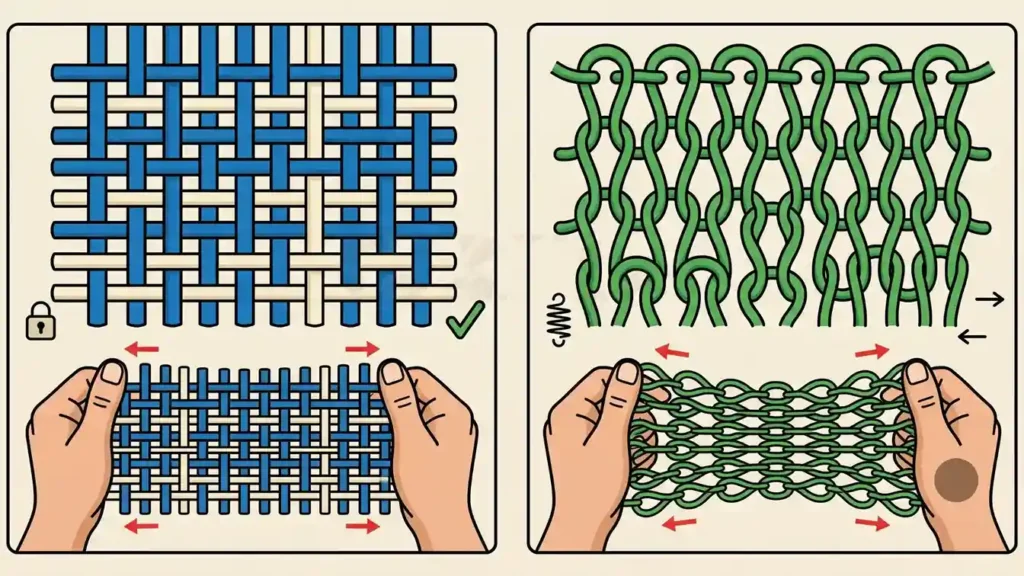
For beginners, woven fabrics are almost always the better choice because they stay stable throughout the embroidery process. Knit fabrics naturally stretch, making them more likely to shift, distort, or develop puckering if they aren’t stabilized correctly.
Feature | Woven Fabric | Knit Fabric |
Stretch | Very little | High |
Stability | Excellent | Moderate |
Easy to Hoop | Yes | Requires care |
Beginner Friendly | Excellent | Moderate |
Recommended Stabilizer | Tear-away | Cutaway |
If you’re just starting, choose woven fabrics like cotton, linen, canvas, or denim whenever possible. Once you become comfortable with hooping, stabilizers, and stitch settings, you can begin experimenting with knit fabrics such as T-shirts and sweatshirts.
Hand Embroidery vs Machine Embroidery Fabric
Many beginners assume the same fabric works equally well for every type of embroidery. While that’s often true for cotton and linen, hand embroidery vs machine embroidery fabric requirements are slightly different.
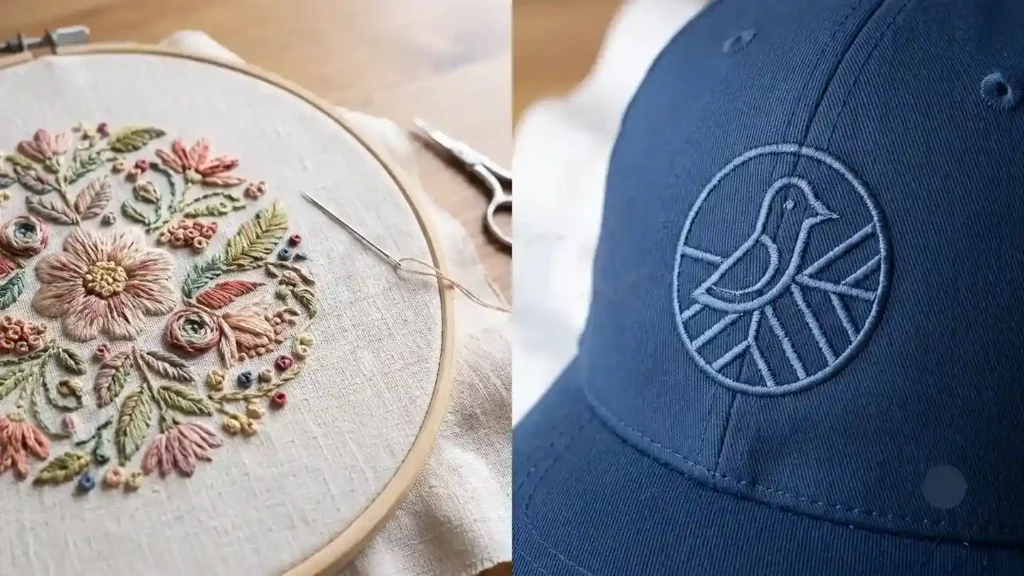
Hand embroidery gives you complete control over every stitch, allowing you to work with a wider variety of fabrics. Machine embroidery, however, places thousands of stitches in a short time, which creates more tension on the fabric. Because of this, stable fabrics generally produce better results.
Fabric | Hand Embroidery | Machine Embroidery |
Cotton | Excellent | Excellent |
Linen | Excellent | Very Good |
Canvas | Good | Excellent |
Denim | Good | Excellent |
Felt | Excellent | Good |
Knit Fabric | Moderate | Good (with cutaway stabilizer) |
When working with fabric for machine embroidery, remember that the fabric is only one part of the equation. The stabilizer, hooping technique, needle, thread, and embroidery file all work together to determine the final quality of the design.
A professionally prepared embroidery file adjusts stitch density, underlay, and pull compensation according to the fabric being used. This is why businesses often invest in embroidery digitizing rather than using generic auto-converted files. A properly digitized design places less stress on the fabric, resulting in cleaner outlines and significantly reducing the chances of puckering.
How to Choose the Right Fabric for Your Embroidery Project
With so many embroidery fabric types available, choosing the right one becomes much easier when you focus on a few practical factors instead of trying to memorize every fabric name.

1. Consider the Type of Project
Different projects require different fabrics.
Project | Recommended Fabric |
Practice embroidery | Cotton |
Cross stitch | Aida Cloth |
Home décor | Linen |
Tote bags | Canvas |
Jackets & Jeans | Denim |
Ornaments & Crafts | Felt |
2. Look for a Stable Weave
Tightly woven fabrics hold stitches more evenly and are much easier to embroider than loose or stretchy materials. If you’re unsure, gently pull the fabric in both directions. Excessive stretch usually means you’ll need additional stabilization.
3. Choose the Right Fabric Weight
Medium-weight fabrics are generally the easiest to work with because they balance flexibility and stability.
- Light weight: Better for delicate embroidery but often needs extra support.
- Medium weight: Best choice for most beginners.
- Heavy weight: Ideal for bags, jackets, and durable items.
4. Match the Fabric with Your Design
Simple line-art designs work well on most beginner fabrics, while dense logos and filled designs place more stress on the material.
If you’re stitching detailed logos or commercial embroidery, manual digitizing plays an important role in adjusting stitch paths, underlay, and density to suit the chosen fabric. Even high-quality fabric can produce poor results if the design isn’t prepared specifically for that material.
Quick Tip: If you’re ever unsure which fabric to buy, start with medium-weight cotton. It remains the most versatile and beginner-friendly option for learning new embroidery techniques while delivering consistently clean results.
How to Prepare Embroidery Fabric Before Stitching
Choosing the best embroidery fabric for beginners is only the first step. Preparing the fabric correctly before you start stitching helps prevent wrinkles, uneven stitches, and fabric distortion. Spending a few extra minutes on preparation can significantly improve your final results.

Pre-Wash the Fabric (When Needed)
Natural fabrics like cotton and linen may shrink slightly after washing. If you embroider first and wash later, the fabric can shrink around the stitches, causing the design to pucker.
Pre-washing is recommended for:
- Cotton
- Linen
- Denim
- Clothing that will be washed regularly
You can usually skip pre-washing for felt, canvas, and fabrics that won’t be laundered.
Quick Tip: Wash the fabric the same way you plan to wash the finished project. This helps prevent unexpected shrinkage later.
2. Iron Out Every Wrinkle
Wrinkled fabric doesn’t sit evenly inside the hoop, which can affect stitch placement and create uneven tension.
Before embroidering:
- Iron the fabric until it’s completely flat.
- Let it cool before hooping.
- Avoid stretching the fabric while ironing.
A smooth surface allows stitches to sit more evenly and produces a cleaner finish.
3. Choose the Right Stabilizer
Many beginners blame the fabric when embroidery puckers, but the real problem is often using the wrong stabilizer.
As a general guide:
Fabric Type | Recommended Stabilizer |
Cotton | Tear-away |
Linen | Tear-away |
Canvas | Tear-away |
Denim | Tear-away or Cutaway |
Knit Fabrics | Cutaway |
Sheer Fabrics | Water-soluble |
Matching the stabilizer to the fabric provides better support during stitching and improves embroidery quality.
4. Hoop the Fabric Correctly
Proper embroidery hoop fabric placement is just as important as choosing the right material.
The fabric should be secure inside the hoop without being stretched excessively. Over-tightening may seem like a good idea, but it often causes the fabric to relax after stitching, leading to puckering.
A simple way to check hoop tension is the “tap test.” Gently tap the hooped fabric, it should feel firm like the surface of a drum, not loose or overly stretched.
Pro Tip: Never pull the fabric tighter after tightening the hoop. Instead, place the fabric smoothly in the hoop first, then tighten the outer ring evenly.
Preventing Fabric Puckering During Embroidery
One of the most common frustrations for beginners is seeing wrinkles appear around an otherwise beautiful embroidery design. Fortunately, puckering is usually preventable when the fabric, stabilizer, and embroidery settings work together.
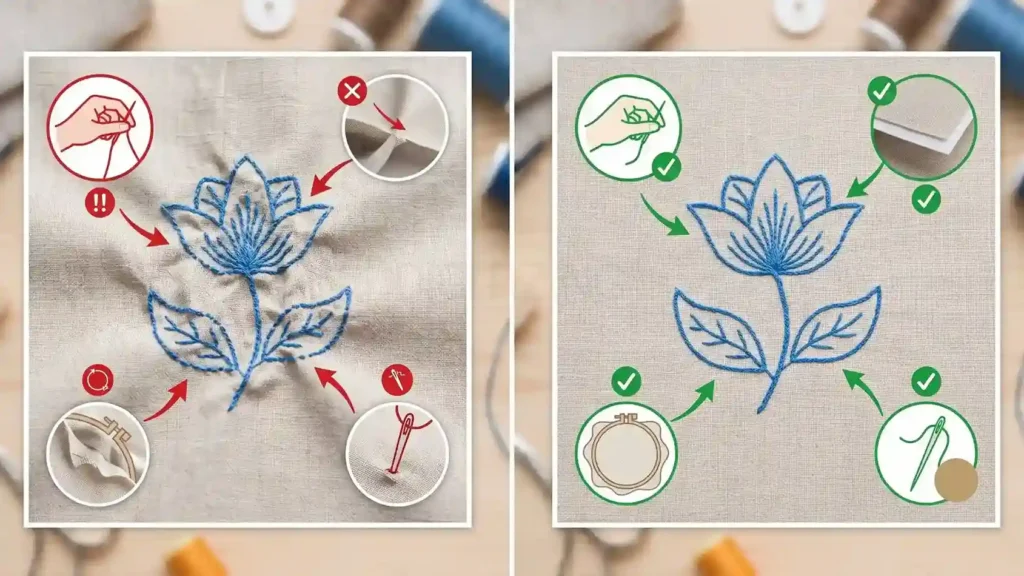
The following checklist will help you avoid puckering before it starts.
Puckering Prevention Checklist
- Choose a stable woven fabric whenever possible.
- Match the stabilizer to the fabric type.
- Pre-wash fabrics that are likely to shrink.
- Hoop the fabric evenly without overstretching it.
- Use a sharp embroidery needle that’s appropriate for the fabric.
- Select high-quality embroidery thread to maintain consistent stitch formation.
- Reduce machine speed slightly when embroidering thick fabrics.
- Test your design on a fabric scrap before stitching the final project.
Common Beginner Mistakes to Avoid
Most embroidery mistakes aren’t caused by expensive equipment or poor-quality thread. They’re usually the result of small decisions made before the first stitch is sewn.
Avoid these common mistakes to improve your embroidery from the very beginning.
Mistake | Why It’s a Problem | Better Approach |
Choosing stretchy fabric for your first project | Fabric shifts during stitching | Start with woven cotton or linen |
Skipping stabilizer | Fabric moves and puckers | Match the stabilizer to the fabric |
Using the wrong needle | Damages fabric or creates uneven stitches | Choose the correct embroidery needle for the material |
Hooping too tightly | Causes distortion after stitching | Hoop the fabric firmly, not stretched |
Using dense designs on thin fabric | Creates wrinkles and distortion | Match the design to the fabric weight |
Not testing first | Small problems become permanent | Stitch a sample on scrap fabric |
Learning from these mistakes early will save both time and materials while helping you develop better embroidery habits.
Fabrics Beginners Should Avoid
Not every fabric is suitable for a first embroidery project. Some materials require advanced techniques, specialty stabilizers, or extensive experience to produce clean results.
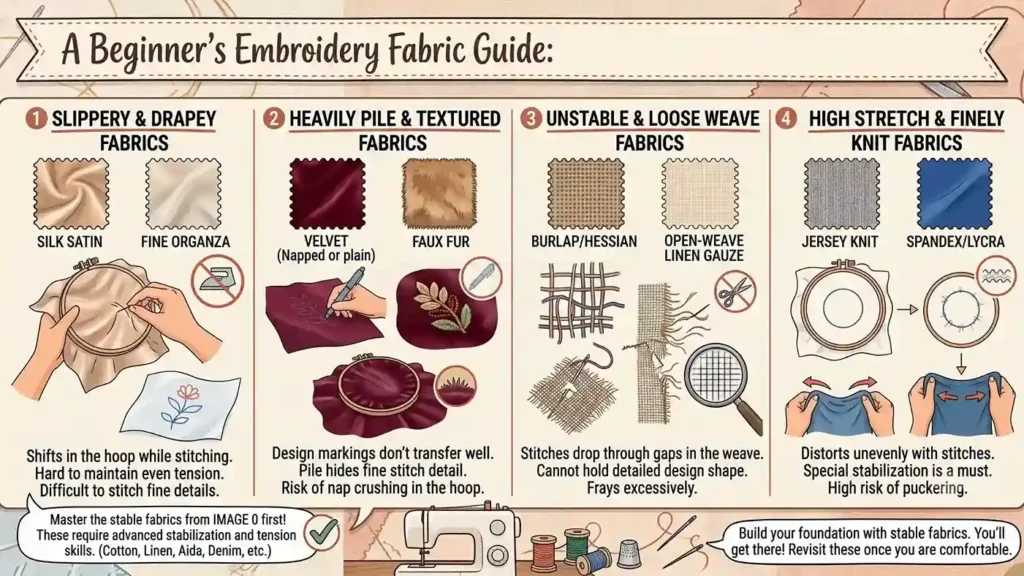
If you’re still learning, it’s best to avoid the following fabrics until you’re more confident with embroidery.
Fabric | Why Beginners Should Avoid It |
Jersey & Spandex | Highly stretchy and difficult to stabilize |
Chiffon & Organza | Extremely lightweight and delicate |
Satin | Slippery surface causes shifting |
Velvet | Raised pile hides stitch definition |
Silk | Delicate and easily damaged |
Thick Leather | Requires specialized needles and machine settings |
These fabrics can certainly be embroidered successfully, but they leave very little room for error. Starting with stable woven fabrics will help you build confidence before moving on to more challenging materials.
Expert Tip: Master cotton and linen first. Once you’re consistently achieving clean, balanced stitches, you’ll find it much easier to work with specialty fabrics later.
Can You Embroider on Any Fabric?
A common question beginners ask is “can you embroider on any fabric?” The short answer is yes, but not every fabric is equally easy to embroider.
Almost any fabric can be embroidered if you use the correct stabilizer, needle, thread, and machine settings. However, some fabrics are much more beginner-friendly than others.
For your first few projects, stick with stable woven fabrics like cotton or linen. They’re easier to hoop, hold stitches more evenly, and require less troubleshooting than stretchy or delicate materials.
As your skills improve, you can confidently move on to fabrics like jersey, fleece, velvet, leather, or performance fabrics by adjusting your stabilizer and embroidery settings.
Beginner-Friendly vs Challenging Fabrics
Easy to Embroider | More Challenging |
Cotton | Jersey Knit |
Linen | Spandex |
Canvas | Chiffon |
Felt | Satin |
Denim | Velvet |
Aida Cloth | Leather |
Expert Tip: Instead of asking whether a fabric can be embroidered, ask whether it’s suitable for your current skill level. Starting with forgiving fabrics helps you learn faster and produce cleaner embroidery.
Assembling a Starter Kit for Beginners
If you’re putting together a starter embroidery kit for beginners, avoid buying unnecessary accessories right away. Focus on a streamlined setup containing medium-weight woven cotton, an appropriate wooden or plastic hoop, assorted needles, quality polyester thread, and tear-away stabilizer. Having these core embroidery tools on hand allows you to practice fundamentals before upgrading to specialty supplies.
Essential Machine Embroidery Tips for Better Fabric Performance
Even with high-quality fabric, applying proper machine techniques prevents fabric distortion and thread breaks. Follow these practical machine embroidery tips to achieve professional results:
- Stitch a Test Swatch: Always test your design on a scrap piece of your chosen fabric before embroidering the final item.
- Match Backing Weight: Never rely on a single stabilizer; pair light stabilizers with lightweight fabrics and cutaway backings with stretchy knits.
- Swap Needles Regularly: Replace dull or bent needles to prevent snagging fabric threads or skipping stitches.
- Maintain Drum-Tight Hooping: Keep the fabric flat and secure in the hoop without pulling or stretching the weave.
- Adjust Machine Speed: Slow down your machine’s SPM (stitches per minute) when stitching thick, dense fabrics like canvas or denim.
- Store Fabric Properly: Keep raw fabric rolled or lying flat to avoid permanent creases that interfere with hoop tension.
Why Quality Digitizing Matters for Different Fabrics
Choosing the right fabric is only part of producing professional embroidery. The embroidery file itself must also be designed for the material you’re stitching on.
For embroidery businesses handling customer orders or tight production schedules, working with fast embroidery digitizing services in USA can help reduce turnaround time while ensuring designs are optimized for different fabric types.
Similarly, projects involving layered fabrics benefit from premium applique digitizing, where accurate placement, secure tack-down stitches, and clean satin borders help create a polished final result without unnecessary bulk.
The key takeaway is simple: great embroidery comes from the combination of the right fabric, proper stabilization, and a professionally prepared embroidery file, not from any one factor alone.
Conclusion
Choosing the best embroidery fabric for beginners doesn’t have to be complicated. By selecting the right fabric for your project, preparing it properly, and using the appropriate tools and techniques, you’ll achieve cleaner stitches, fewer mistakes, and more professional-looking embroidery from the start. As your skills grow, you can confidently explore different fabrics and embroidery methods for a wider range of creative projects.
If you’re working with machine embroidery, pairing the right fabric with professionally digitized designs can make an even bigger difference in the final result. New customers can enjoy 50% off their first order on our professional embroidery digitizing services, making it easier to get high-quality embroidery files for your next project.