Many people worry their favorite shirt will get ruined when they try to learn how to iron on embroidered patches because the patch might melt or fall off. To iron on patches without damaging fabric, set your iron to medium heat with no steam, cover the patch with a thin cloth, press hard for 30–45 seconds, flip the shirt, press the back for 30 seconds, then let it cool for 5–10 minutes. If you’ve worried about damaging your clothes, you’re not alone. But ironing patches is easy at home if you use the right method.

This guide shows you what tools you need, how to pick the right heat, mistakes to avoid, and how to wash your patched clothes safely. You’ll get perfect results every time.
How to Iron on Embroidered Patches Without Damaging Fabric?
Materials You Need Before Ironing On Embroidered Patches
Before you start how to iron on embroidered patches, gather these essential items. Having everything ready makes the process smoother and prevents mistakes that could damage your fabric or patch.
1. Embroidered Patch with Iron-On Backing
Your patch must have an iron-on adhesive backing (usually a shiny layer on the reverse side). Not all custom embroidered patches come with this, some are designed only for sewing.
Check that your patch is labeled “iron-on” before beginning. If you’re creating your own, ensure premium applique digitizing includes heat-compatible adhesive.
2. Iron (Cotton or Medium Heat Setting, Steam OFF)

Use a standard household iron. Set it to cotton or medium heat (around 300°F/150°C). Most importantly, turn OFF the steam function.
Steam adds moisture that prevents the adhesive from bonding properly to fabric. Dry heat is essential for how to iron on embroidered patches to work correctly.
3. Ironing Board or Hard Flat Surface

Place your garment on a hard, stable surface like an ironing board. Avoid soft surfaces like beds, couches, or towels stacked on tables. These absorb heat unevenly, causing poor adhesion.
When comparing iron on vs embroidery, using a hard surface is important because it concentrates heat directly where it is needed, especially when learning how to iron on embroidered patches.
4. Thin Cloth, Pressing Cloth, or Tea Towel
This is your most important protective tool. Place a thin, clean cloth (like a cotton handkerchief, pillowcase, or tea towel) over the patch before ironing. This prevents direct heat from scorching the embroidery threads or fabric underneath.
Without this cloth, you risk melting the patch or creating burn marks, common mistakes when figuring out how to iron on embroidered patches.
5. Garment or Fabric Item (Clean, Dry, Wrinkle-Free)
Your clothing item should be clean, completely dry, and smooth. Wrinkles create uneven surfaces that prevent proper adhesion. Remove any stains or dirt first, as adhesive won’t bond well to contaminated fabric.
Step-by-Step Guide: How to Iron On Embroidered Patches
Follow these seven precise steps to master how to make an embroidered patch without damaging fabric. Each step is critical, skip none, and you’ll achieve professional, lasting results.
Step 1 – Prep Your Fabric

Start by cleaning and drying your garment. Wash it if needed, then let it air dry completely. Do not use a dryer, as heat can leave residue. Once dry, smooth out all wrinkles by lightly ironing the area first (without the patch).
Lay the garment flat on your ironing board or hard surface. The area should be completely smooth, no bumps or folds. This prep ensures the adhesive bonds evenly, which is foundational for how to make an iron on embroidery patch.
Step 2 – Set Your Iron to the Right Temperature

Turn on your iron and set it to cotton or medium heat. Wait 2–3 minutes for it to reach full temperature. Crucially, disable the steam function. If your iron has a steam button, press it off. If it has a steam vent, ensure it’s closed.
Dry heat activates the adhesive properly. Steam creates moisture barriers that weaken bonding. This temperature setting is the most important factor in how to iron on embroidered patches correctly.
Step 3 – Position the Patch Exactly Where You Want It
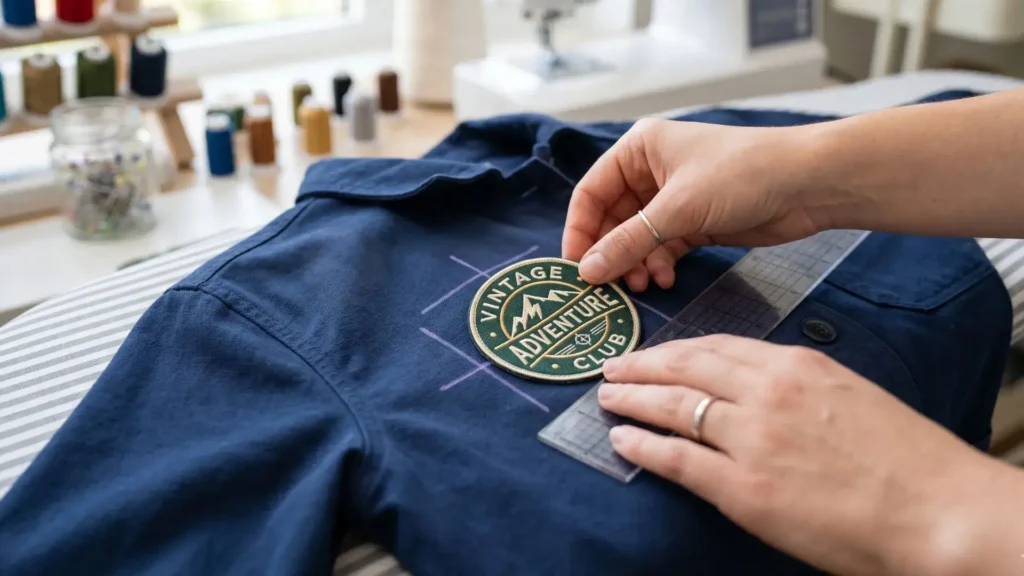
Place your custom embroidered patch adhesive-side down (shiny side against fabric). Position it precisely where you want it permanently. Double-check alignment from multiple angles. Once you press down, moving the patch becomes difficult and may damage the fabric.
If unsure, use a piece of tape to mark the position temporarily before removing it. Proper placement is critical because how to iron on embroidered patches requires precision from the start.
Step 4 – Cover the Patch With a Thin Cloth

Place your pressing cloth, thin towel, or cotton handkerchief directly over the patch. Ensure it covers the entire patch completely, with no edges exposed. The cloth acts as a heat shield, preventing direct contact between the iron and embroidery threads.
Without this, high heat can melt synthetic threads or scorch natural fibers. This protective step is non-negotiable when learning how to iron on embroidered patches.
Step 5 – Press Iron Firmly for 30–45 Seconds

Place your hot iron directly on top of the cloth-covered patch. Apply firm, steady pressure. Do not move the iron back and forth; keep it stationary. Press for 30–45 seconds continuously. You should feel the heat transferring through the cloth.
This constant pressure activates the adhesive and bonds it to the fabric. Moving the iron causes shifting and uneven bonding, a common mistake in how to iron embroidered patches.
Step 6 – Flip Garment Inside Out and Iron the Back

Turn the garment over so the inside is facing up. Locate the area under where your patch sits. Place the iron on this reverse side and press firmly for 30 seconds. This heats the adhesive from both sides, creating a stronger bond.
Many people skip this step, but it’s essential for durability. Ironing the back ensures the patch won’t peel after washing, making this step vital for how to iron on embroidered patches.
Step 7 – Let the Patch Cool Completely (5–10 Minutes)
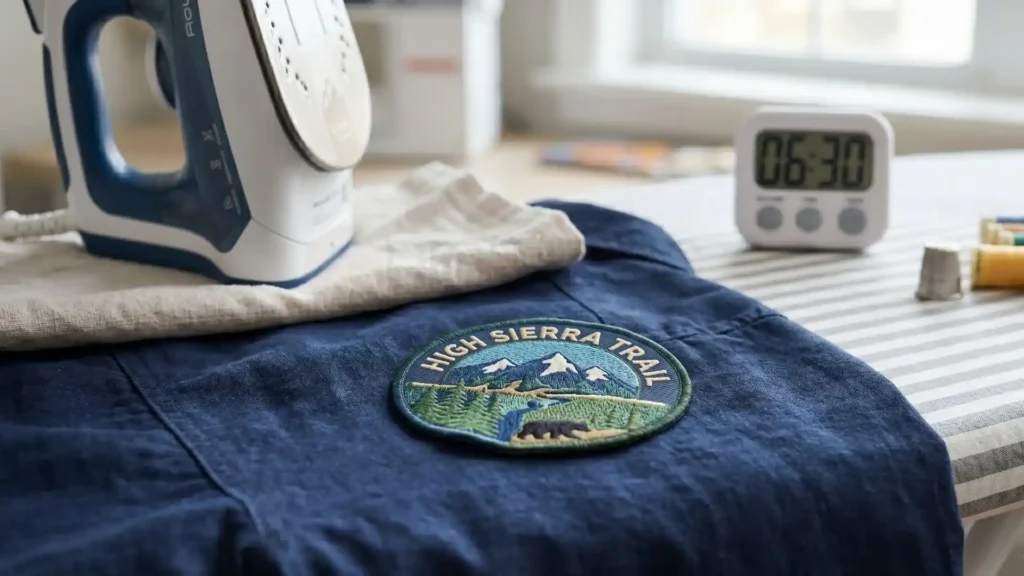
Remove the iron and cloth. Let the patch sit untouched for 5–10 minutes. Do not touch, move, or wear the garment yet. Cooling allows the adhesive to fully set and harden.
After cooling, gently check the edges. If any corner is lifting, re-cover with cloth and press for 10–15 more seconds. Proper cooling is the final critical step in how to iron on embroidered patches for long-lasting results.
How to Iron Embroidered Patches on Different Fabric Types?
Not all fabrics handle heat the same way. Understanding how to iron on embroidered patches on different materials prevents damage and ensures secure adhesion. Here’s fabric-specific guidance.
Iron-On Patches on Denim and Cotton (Easy Fabrics)
Denim and cotton are the easiest fabrics for how to iron on embroidered patches. These materials tolerate high heat well without damage. Use the cotton setting on your iron (medium-high heat, around 300°F/150°C).
No special protection beyond the pressing cloth is needed. Denim jackets, cotton shirts, and canvas bags are ideal for custom embroidered patches because they bond strongly and last through many washes.
Iron-On Patches on Fleece and Synthetic Fabrics (Heat-Sensitive)
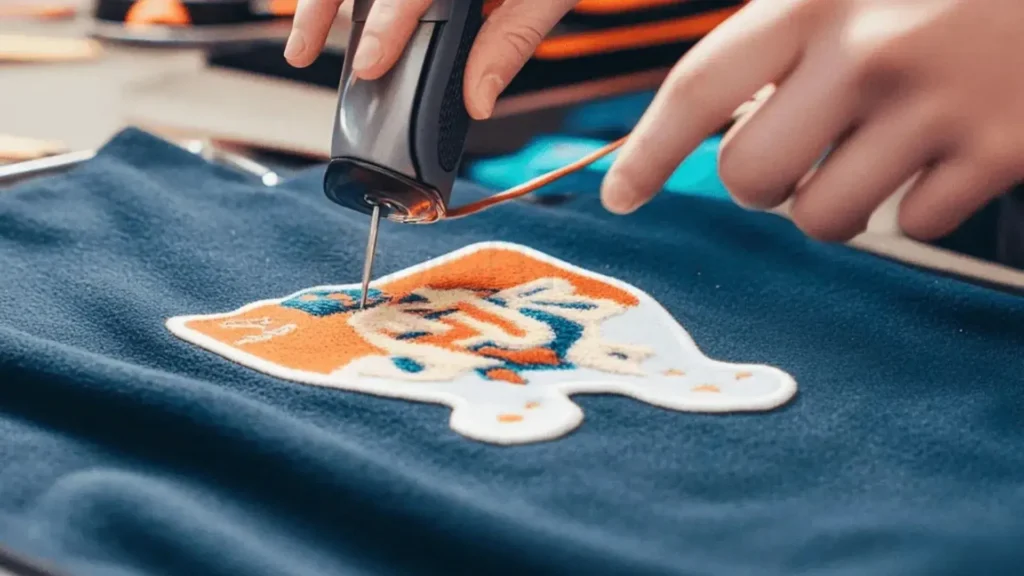
Fleece, polyester, and other synthetics are heat-sensitive. They can melt or shrink under high heat. When learning how to iron on embroidered patches on these fabrics, use low heat (under 200°F/95°C).
Iron only from the backside (reverse side of garment) to reduce direct heat exposure. Always use a pressing cloth.
Test on a hidden area first to ensure the fabric doesn’t discolor or warp. This cautious approach is essential for how to iron on embroidered patches on delicate synthetics.
Can You Iron Patches on Leather, Wool, or Nylon?
No, you cannot safely iron embroidered patches for clothing made of leather, wool, or nylon. These materials are extremely heat-sensitive and will scorch, shrink, or melt. Leather becomes brittle, wool shrinks permanently, and nylon melts.
For these fabrics, always choose sew on embroidered patches instead. Sewing provides secure attachment without heat damage. This is a critical distinction when deciding how to iron on embroidered patches versus alternative methods.
Iron-On Patches on Polyester and Nylon Jackets
Polyester and nylon jackets (like windbreakers or athletic jackets) require careful handling. Use medium heat (around 250°F/120°C) with a pressing cloth. Before applying, test on an inside seam or hidden area to check for discoloration or melting.
If the test area is safe, proceed with ironing. These fabrics bond less strongly than denim, so expect the patch to last 15–25 washes instead of 30+. This cautious method is part of how to iron on embroidered patches on sensitive outerwear.
Common Mistakes That Damage Fabric or Patches
Even with the right steps, mistakes happen. Knowing what to avoid when learning how to embroider a patch saves time, prevents damage, and ensures professional results.
Using Steam Instead of Dry Heat

Steam is the most common mistake. Many people assume steam helps an adhesive bond, but it actually prevents it. Moisture from steam creates a barrier between the adhesive and fabric, causing weak bonding.
The patch may peel after just a few washes. Always turn the steam OFF when figuring out how to iron on embroidered patches. Dry heat is essential for proper activation.
Moving the Iron Back and Forth
Sliding the iron shifts the patch, causing messy edges and a weak bond. The adhesive needs constant pressure in one spot to bond properly. When you move the iron, some areas get less heat, weakening the bond.
Keep the iron stationary for the full 30–45 seconds. This stationary pressing is crucial for how to iron on embroidered patches to work correctly.
Ironing on Soft Surfaces Like Beds
Soft surfaces absorb heat unevenly. When you iron on a bed, heat spreads into the soft material instead of concentrating on the patch. This results in weak bonding and patches that peel quickly.
Always use a hard ironing board, wooden table, or cardboard placed on a table. Hard surfaces concentrate heat directly where needed, which is essential for iron on embroidered patches successfully.
Not Covering the Patch With a Cloth
Direct iron contact melts embroidery threads and scorches fabric. The pressing cloth protects both the patch and garment. Without it, synthetic threads can melt into sticky residue, and natural fibers can burn.
This protection is non-negotiable when learning how to iron on embroidered patches. Always use a thin cloth as a heat shield.
Skipping the Back-Side Ironing
Many people skip ironing the backside, but this step creates significantly stronger bonding. Heating adhesive from both sides ensures it penetrates fabric fibers completely.
Skipping this causes patches to peel faster, especially after washing. Always flip and iron the back for 30 seconds—this is essential for durable how to iron on embroidered patches results.
Sew On Embroidered Patches vs Iron On: Which Lasts Better?
Choosing between sew-on and iron-on depends on your needs. Here’s a detailed comparison to help you decide which attachment method works best.
Criteria | Sew On Patches | Iron On Patches |
Durability | ✅ Long-lasting (permanent, years) | ❌ Can peel after 20–30 washes |
Application Time | ❌ Slower (15–30 minutes sewing) | ✅ Quick & easy (5–10 minutes) |
Skill Level | ❌ Requires sewing skill | ✅ Beginner-friendly, no skills needed |
Fabric Suitability | ✅ Works with ALL fabrics (denim, leather, wool, canvas) | ❌ Limited to iron-safe fabrics only |
Wash Resistance | ✅ High ( survives 50+ washes) | ❌ Medium (15–30 washes) |
Removal | ❌ Difficult (leaves stitch holes) | ✅ Easy (peel off or re-heat) |
When to Choose Sew On Patches Instead
Choose sew on embroidered patches when:
- Working with delicate fabrics (leather, wool, nylon) that can’t handle heat
- Customizing uniforms, workwear, or heavy-duty jackets needing long-term durability
- You want the patch to last forever without peeling
- Adding big embroidered patches that need extra security due to size
Sewing provides permanent attachment that won’t peel, making it ideal for professional or heavy-use applications.
Can You Iron Then Sew for Extra Security?
Yes, you can combine both methods for maximum hold. First, iron the patch for perfect placement and initial bonding. Then, sew around the edges with thread for permanent security.
This “iron then sew” method gives you the ease of iron-on positioning plus the durability of sewing. Many professionals use this dual approach for custom patch applications on jackets and uniforms.
How to Wash Clothes With Embroidered Patches (After Ironing)?
Once you’ve mastered how to iron on embroidered patches, proper washing maintains the bond and keeps your patch vibrant. Follow these care instructions.
Hand Washing Is Safest for Patched Garments
Hand washing is the most gentle method. Wash the item with mild soap and lukewarm water instead of hot. Submerge the garment, then gently scrub patches with your fingers, no harsh rubbing. Avoid soaking for more than 15 minutes.
Rinse thoroughly with cool water. Hand washing preserves adhesive strength and prevents patch edges from lifting.
Machine Washing Guidelines
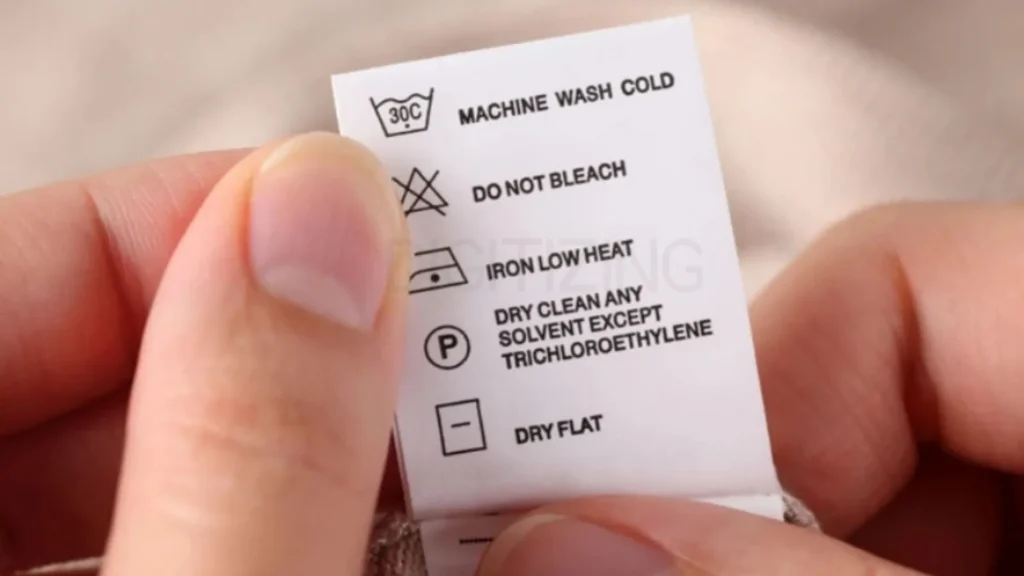
If you must use a machine, follow these steps:
- Turn the garment inside out before washing
- Use the gentle or delicate cycle only
- Set the water to cold (not warm or hot)
- Use mild detergent, no bleach
- Wash separately from items with zippers or hooks that could scratch the patch
Machine washing is less gentle than hand washing, but following these guidelines helps patches last 20–25 washes instead of peeling quickly. This care routine is essential after how to iron on embroidered patches.
Avoid High Heat Dryers
High heat from dryers weakens adhesive bonds. The heat can melt adhesive slightly, causing patches to peel. Instead, air dry your garment flat on a clean surface.
Hang drying is okay, but avoid direct sunlight, which can fade embroidery colors. Air drying preserves adhesive strength, making it crucial for maintaining how to iron embroidered patches results.
Re-Activating Adhesive If Patch Peels
If patch edges start lifting after washing, you can re-activate the adhesive:
- Place a pressing cloth over the patch
- Set the iron to medium heat (no steam)
- Press firmly for 10–15 seconds
- Let cool completely before wearing
This re-ironing restores bonding strength. Most patches can be reactivated 2–3 times before needing sewing instead. This troubleshooting tip extends the life of how to iron on embroidered patches applications.
How to Make Embroidered Patches (Custom Patches)?
While this guide focuses on how to iron on embroidered patches, many readers also want to create their own custom patches. Here’s a brief overview of the creation process.
Custom Embroidered Patch Options
When ordering custom embroidered patch designs, you choose:
- Design: Your logo, text, or artwork
- Size: From small (1 inch) to large (6+ inches for big embroidered patches)
- Shape: Round, square, rectangular, or custom die-cut
- Backing: Iron-on (for easy application) or sew-on (for durability)
- Thread Colors: Unlimited options for cool embroidered patches
These options let you create embroidered patches for clothing that match your style perfectly.
How to Make Patches with an Embroidery Machine?
Making how to make embroidered patches with embroidery machine requires:
- Premium digitizing: Convert your design into embroidery machine code
- Embroidery fabric: Stabilizer-backed twill or cotton fabric
- Embroidery threads: Polyester or rayon for vibrant colors
- Cutting tool: To trim patch edges after embroidery
The machine stitches your design, then you cut around it and add adhesive backing for iron-on use. This process creates professional create your own embroidered patch results at home.
Woven vs Embroidered Patch: Which Should You Choose?
Understanding woven and embroidered patch differences helps you choose the right type:
Feature | Embroidered Patch | Woven Patch |
Texture | 3D, raised threads | Flat, smooth surface |
Detail Level | Bold designs, thick text | Fine details, small text |
Color Vibrancy | Highly vibrant | Slightly muted |
Best For | Jackets, bags, bold clothing | Shirts, uniforms, detailed logos |
For cool embroidered patches with bold, 3D texture, choose embroidered. For fine text and details, choose woven
Create Your Own Embroidered Patch Design
To create your own embroidered patch:
- Sketch your design or use digital art software
- Choose size and shape (round, square, custom)
- Select thread colors for maximum impact
- Decide on iron-on or sew-on backing
- Order from a custom patch manufacturer or digitize for home embroidery
Popular designs include embroidered patches for clothing like logos, mascots, quotes, or artistic patterns. Big embroidered patches work well on jackets, while small ones fit shirts and hats.
Conclusion
You now know exactly how to iron on embroidered patches without damaging fabric. The process is simple: prep your fabric, set the iron to cotton heat with steam off, position the patch, cover with a cloth, press firmly for 30–45 seconds, flip and iron the back, then let cool completely.
The key takeaways are:
- Use dry heat (no steam)
- Cover the patch with a cloth
- Press firmly without moving the iron
- Iron the back for extra durability
- Let cool completely before wearing
For heat-sensitive fabrics like leather, wool, or nylon, choose sew on embroidered patches instead. Iron-on works best on cotton, denim, and polyester.
The quality of your patches starts before they even reach you. Professional machine embroidery digitizing service in Germany ensures every stitch is precise, colors stay vibrant, and designs match your original vision. Expert digitizing guarantees sharp details and lasting durability.
ZDigitizing provides digitizing services with over 10+ years of experience. Our expert digitizers deliver quality guaranteed on every file. We have a 24/7 working team and 24/7 customer support for immediate help. You’ll receive a preview before payment, and minor edits are free. Our prices are already lower than the market, plus you get 50% OFF on your first order.
Visit ZDigitizing today and place your first order to get 50% OFF. Experience the difference of expert craftsmanship for all your custom embroidered patch projects.