In most cases, learning how to wash embroidery clothes safely comes down to using cold or cool water, mild detergent, gentle agitation, and low heat. Turn the garment inside out before washing, avoid bleach and harsh chemicals, and air-dry whenever possible. Always check the care label first, especially for delicate fabrics, hand embroidery, patches, appliqué, or specialty threads.

This guide explains washing embroidered clothes step by step, including when to hand wash or machine wash, how to remove stains, how to dry and iron embroidered garments, and what to do when embroidery starts fading, puckering, fraying, or lifting.
How to Wash Embroidery Clothes?
Before Washing: Check the Garment and Embroidery
The safest washing method depends on more than the stitches themselves. Before putting embroidery on clothing into water, check the garment’s care label, fabric, thread type, and any attached decorative elements.

Check the Care Label First
The care label should always take priority over general washing advice. It tells you whether the garment can be machine washed, hand washed, tumble dried, ironed, or professionally cleaned.
If the label says “dry clean only,” do not assume that ordinary embroidery-care instructions make home washing safe.
Identify the Fabric
Cotton, polyester, denim, wool, silk, and synthetic fabrics can respond very differently to heat, moisture, and agitation.
For example, a washable polyester embroidered polo may tolerate a gentle machine cycle, while silk, wool, vintage fabric, or delicate hand embroidery may require much more careful handling.
Inspect the Embroidery
Look closely at the design before washing. Check for:
- Loose threads
- Frayed edges
- Raised or dense stitching
- Metallic thread
- Beads or sequins
- Appliqué
- Sewn-on patches
- Heat-applied or adhesive-backed patches
If a thread is already loose, do not pull it. Washing can turn a small problem into a larger one.
Hand Wash vs. Machine Wash Embroidery
Hand washing is generally the safer choice for delicate pieces, but many everyday embroidered garments can be machine washed when their care labels allow it. The right choice depends on the fabric, embroidery construction, and embellishments.
Garment type | Preferred washing approach |
Cotton or polyester embroidered shirt | Gentle machine wash may be suitable |
Embroidered sweatshirt | Gentle machine wash if permitted |
Hand-embroidered garment | Hand wash if the label permits |
Vintage or heirloom embroidery | Conservative hand care or professional cleaning |
Metallic thread | Hand washing is safer |
Beads or sequins | Hand wash whenever possible |
Adhesive-backed patch | Gentle washing and low/no heat |
Dense or raised embroidery | Hand wash or protected gentle machine wash |
Silk or wool | Follow the fabric-specific care label |
Unknown material or missing label | Use the most conservative method |
For most sturdy machine-embroidered clothing, the best washing method for embroidery is a gentle cycle with cold or cool water, mild detergent, the garment turned inside out, and minimal agitation. For delicate embroidery, hand washing reduces mechanical stress.
How to Hand Wash Embroidered Clothes
Hand washing gives you greater control over friction and agitation, making it useful for delicate washing embroidered clothes situations.
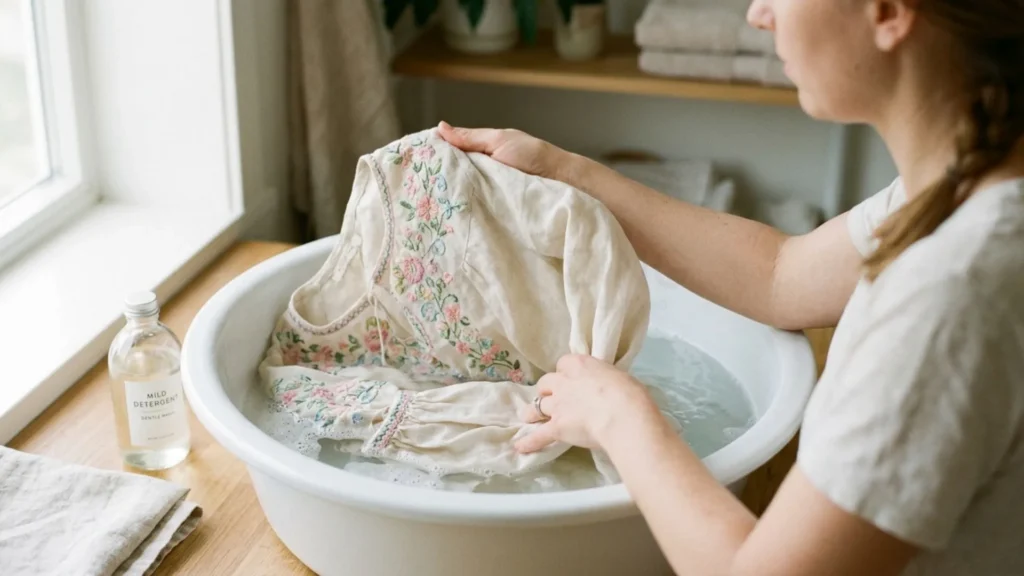
- Turn the garment inside out.
- Fill a clean basin with cool or cold water.
- Opt for a light dose of delicate washing liquid.
- Gently move the garment through the water.
- Avoid rubbing or scrubbing the embroidery.
- Rinse thoroughly with cool water.
- Press excess water out with a clean towel.
- Reshape the garment and air-dry it.
Never wring or twist the embroidered area to remove water.
How to Machine Wash Embroidered Clothes
Machine washing can be appropriate for sturdy embroidered clothing when the care label permits it. The goal is to reduce friction, snagging, heat, and excessive agitation.
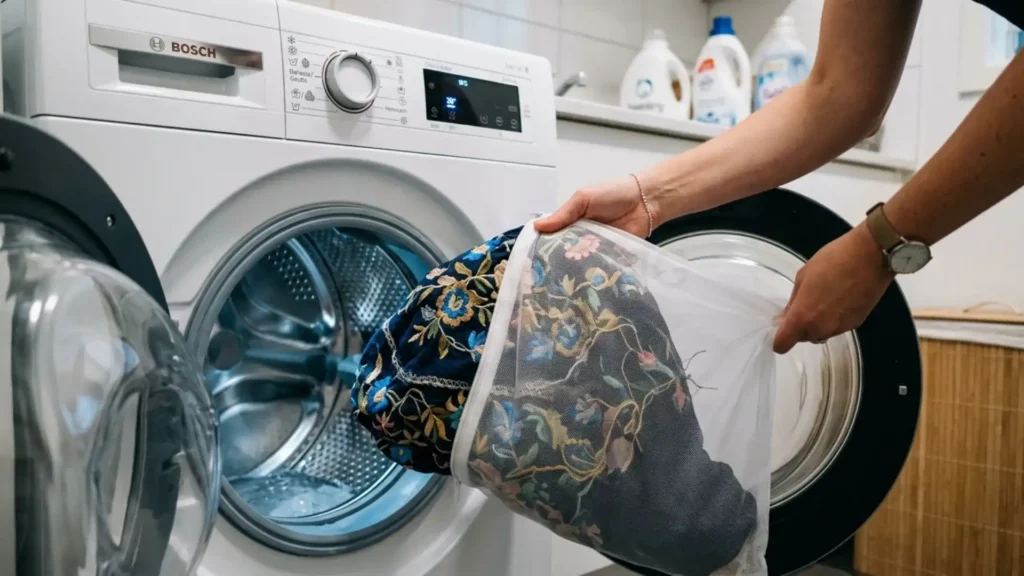
Follow these steps:
- Turn the garment inside out.
- Close zippers, hooks, and fasteners on other garments.
- Put delicate embroidered items in a mesh laundry bag.
- Select cold or cool water.
- Choose the gentle, delicate, or hand-wash cycle.
- Use a small amount of mild detergent.
- Select a low or delicate spin, typically around 400–600 RPM when the machine allows manual RPM selection.
- Do not overload the washer.
- Keep the garment away from rough items such as towels, heavy denim, exposed Velcro, or garments with sharp hardware.
- Remove it promptly after the cycle finishes.
Not every washing machine displays RPM, so if yours does not, simply choose its lowest practical spin or delicate setting.
What to Avoid When Washing Embroidered Clothes
Avoid chlorine bleach, harsh chemicals, aggressive stain removers, high-temperature water, vigorous scrubbing, wringing, and twisting.
Also avoid washing embroidered garments alongside rough fabrics or clothing with exposed zippers, hooks, Velcro, or other hardware that could catch the stitches.
For dark or newly dyed garments, washing separately the first time can also reduce the risk of dye transfer.
Avoid prolonged soaking unless the garment’s care label specifically permits it. Extended soaking can increase the risk of dye bleeding, fabric distortion, and adhesive or backing problems, particularly with patches and delicate embroidery.
How to Clean Embroidered Clothes and Remove Stains
For how to clean embroidered clothes, start with spot cleaning when only a small area is dirty. Treating the stain locally can reduce unnecessary washing and limit repeated friction on the embroidery.

Step-by-Step Spot Cleaning
- Blot the stain promptly. Use a clean, absorbent cloth to lift fresh spills without rubbing.
- Work from the outside inward. This helps prevent the stain from spreading.
- Test the cleaning solution first. Apply a small amount of diluted mild detergent or a fabric-safe stain product to a hidden area.
- Dab instead of scrubbing. Keep the cleaning action away from aggressive rubbing of the stitches.
- Rinse gently. Use cool water to remove detergent residue from the treated area.
- Blot excess moisture. Press with a clean towel rather than twisting the garment.
- Allow it to air-dry. Check the result before applying another treatment.
For oily stains, use only a small amount of a mild product that is compatible with the garment’s fabric, then rinse thoroughly.
For ink, paint, blood, cosmetics, or old stains, avoid experimenting with strong household chemicals. A valuable or delicate garment is better handled by a professional cleaner when the care label requires it.
What Should You Not Use on Embroidery?
Avoid assuming that a product is safe simply because it is commonly recommended for laundry. Chlorine bleach, strong solvents, acetone, abrasive cleaners, undiluted vinegar, and untested stain removers can affect thread, fabric, dyes, or backing.
The same applies to oxygen or “non-chlorine” bleach: it is not automatically safe for every embroidered garment. Use it only when the care instructions permit it and the materials have been tested for colorfastness.
How to Wash an Embroidery Patch for Clothes
An embroidery patch for clothes needs slightly different care because the patch can be sewn on, heat-applied, or attached with adhesive. The attachment method may be more vulnerable to heat and agitation than the embroidery itself.

Sewn-On Patches
A securely sewn patch can usually be washed according to the garment’s care label.
Turn the garment inside out, use cold water, and choose a gentle cycle if machine washing is allowed. Avoid rough garments that could catch the patch edges.
Heat-Applied and Adhesive Patches
Heat-applied patches require more caution because excessive heat can weaken or soften the adhesive.
Avoid hot washing and high-temperature tumble drying. Air drying is generally the safer option.
If the patch is already lifting, repeated washing may make the problem worse. Do not rely on glue or household adhesives as a quick repair. A damaged patch may need proper reattachment.
Special Care for Appliqué, Metallic Thread, and Embellished Embroidery
Not every embroidered design reacts to washing in the same way. Appliqué, metallic thread, beads, sequins, and raised embroidery can require more conservative care than standard polyester machine embroidery.

Appliqué
Appliqué has an additional fabric layer attached to the garment, so its edges can fray or lift under excessive rubbing.
Use gentle washing, avoid scrubbing the appliqué, and keep high heat away from the garment unless the care label specifically permits it.
Metallic Thread
Metallic embroidery threads can be more sensitive to friction, chemicals, and heat than standard polyester threads.
Hand washing is the conservative option. Avoid bleach, strong cleaning chemicals, high heat, and direct ironing over the design.
Beads and Sequins
Beads and sequins can snag on other garments or become loose during aggressive washing.
Hand wash when possible. If machine washing is explicitly permitted, place the garment in a mesh bag and avoid tumble drying unless the care label specifically allows it.
Dense or Raised Embroidery
Dense and raised embroidery can hold more moisture and experience greater mechanical stress.
Use gentle washing, avoid wringing, and support the garment properly while drying so the wet weight does not distort the fabric or design.
Rayon and Polyester Thread
Thread composition also matters. Polyester thread is generally more resistant to routine laundering than rayon, but that does not make it immune to friction, heat, or dye transfer.
Rayon requires more caution when wet because agitation can contribute to fuzzing, weakening, or distortion.
How to Dry Embroidered Clothes Safely
Washing is only part of washing custom embroidery care. Incorrect drying can undo some of the protection provided by a gentle wash.

Air drying is generally the safest option.
After washing:
- Press excess water between clean towels.
- Never wring or twist the garment.
- Reshape it while damp.
- Lay heavy, stretchy, or delicate garments flat.
- Keep the garment away from prolonged direct sunlight.
- Do not hang a saturated heavy garment if its weight could stretch the fabric.
If the care label allows tumble drying, use the lowest permitted heat or an air-only setting. High heat can shrink the base fabric, distort backing, loosen adhesive patches, flatten raised embroidery, and affect heat-sensitive decorative materials.
Can You Iron or Steam Embroidered Clothes?
Yes, but the embroidery should not be treated like ordinary flat fabric. Direct heat and pressure can flatten stitches, damage specialty threads, or affect adhesive-backed designs.

When ironing is permitted:
- Turn the garment inside out.
- Use the lowest temperature suitable for the most heat-sensitive material.
- Place the embroidered area face down on a clean, thick towel.
- Use a plain pressing cloth when appropriate.
- Press and lift instead of aggressively sliding the iron.
- Never place the iron directly over embroidery, plastic sequins, or adhesive patches.
For metallic, adhesive-backed, heavily embellished, or uncertain embroidery, avoid steam unless the garment’s care instructions specifically permit it. Heat and moisture can affect backing, adhesives, dyes, and synthetic components.
Why Does Embroidery Pucker, Fade, or Fray After Washing?
When you’re wondering why does my embroidery look bad, laundering may be responsible if the design changes after washing. However, washing can also expose a production problem that was already present.

Problem | Likely cause | Practical response |
Loose threads | Snagging, abrasion, or excessive agitation | Reduce friction and never pull the threads |
Puckering | Excessive stitch density, poor tension, unsuitable stabilizer, shrinkage, or heat | Wash gently and avoid heat; serious cases may require repair |
Fading | Harsh chemicals, UV exposure, hot washing, or unstable dyes | Use cold water, mild detergent, and shade drying |
Shrinkage | Hot water, high dryer heat, or fabric characteristics | Follow the care label and avoid high heat |
Fraying/fuzziness | Friction, exposed stitches, or rough laundry partners | Use a gentle cycle and reduce rubbing |
Flattened embroidery | Tumble drying, direct ironing, or compression | Air-dry and iron from the reverse side |
Color bleeding | Unstable dyes, heat, or prolonged soaking | Wash separately and use cold water |
Patch lifting | Adhesive failure, heat, agitation, or chemicals | Avoid high heat and repair the patch if necessary |
Why Puckering Deserves Special Attention
Puckering is not always caused by washing.
If the embroidery was created with excessive stitch density, unsuitable underlay, incorrect compensation, poor tension, or an inappropriate design structure for the fabric, laundering may make that weakness more visible.
Gentle washing can help prevent additional distortion, but it cannot completely correct an embroidery file or production problem.
How Embroidery Digitizing Affects Wash Durability
When a design repeatedly puckers, becomes excessively stiff, or loses proper registration after normal laundering, the problem may originate before the garment ever reaches the washing machine.

Proper embroidery digitizing considers how a design will behave on its intended fabric. A digitizer may adjust:
- Stitch density
- Underlay
- Stitch direction
- Pull compensation
- Stitch length
- Stitch sequencing
- Fabric-specific settings
These decisions can help prevent unnecessary stress on the fabric and produce a more balanced sew-out.
For appliqué designs, an experienced applique digitizing service can also account for placement, edge stitching, coverage, and the relationship between the appliqué fabric and the garment.
Professional digitizing does not replace correct washing care or guarantee that embroidery will never deteriorate. It addresses the production side of the problem, while proper laundering protects the finished garment during use.
How ZDigitizing Helps Solve Embroidery Production Problems
When embroidery problems repeatedly appear after ordinary washing, the solution is not always another laundry product or a different washing cycle. Sometimes the design itself needs to be prepared more appropriately for the garment.

ZDigitizing focuses on production-ready embroidery files designed around the actual requirements of the garment and design.
Its digitizing process can address factors such as stitch density, underlay, stitch direction, sequencing, and fabric-specific compensation before production begins. This is particularly useful when a design will be repeatedly laundered as workwear, uniforms, branded apparel, or promotional clothing.
If you are searching for affordable embroidery digitizing services in USA or comparing professional embroidery digitizing providers, the important question is not simply how cheaply a file can be converted. The quality of the resulting sew-out matters because an unsuitable file can create unnecessary production problems such as excessive density, poor registration, thread buildup, or fabric distortion.

Conclusion
With the right care, learning how to wash embroidery clothes does not have to be complicated: follow the garment label, reduce heat and friction, use mild detergent, turn the item inside out, and air-dry whenever practical.
For delicate embroidery, patches, appliqué, metallic thread, or embellishments, use a more conservative approach. And if puckering or distortion continues despite proper washing, the underlying embroidery design and production preparation may need attention.
For businesses that need reliable production-ready embroidery files, ZDigitizing provides professional digitizing support designed around garment and design requirements. New customers can receive 50% off their first order, making it easier to test the service while keeping initial design-preparation costs lower.
Frequently Asked Questions
It is better to avoid them. Towels, heavy denim, exposed zippers, hooks, and Velcro create additional friction or snagging that can damage embroidery. Wash with softer, compatible garments instead.
If the garment is dark, newly dyed, or its colorfastness is uncertain, washing it separately the first time is a sensible precaution. It can reduce the risk of dye transferring onto other clothing.
It is generally better to avoid prolonged soaking unless the garment’s care label specifically allows it. Extended soaking can increase dye bleeding and may affect delicate threads, backing, appliqué, or adhesive patches.
Not completely. Proper digitizing can reduce production-related causes such as excessive stitch density, unsuitable underlay, poor compensation, and incorrect stitch structure, but garment shrinkage, washing conditions, fabric behavior, and other factors can still cause distortion.
Air drying is generally the safer choice for embroidered garments, especially delicate or embellished pieces. A dryer may still be appropriate when the care label permits it, but use the lowest suitable heat and avoid overheating patches, raised embroidery, or specialty materials.