If you’ve ever wondered what screen print transfers are, you’re not alone. They have become one of the most popular ways to decorate T-shirts, hoodies, bags, hats, and other apparel without printing directly onto the garment. Instead, the design is printed onto a special transfer sheet first and then applied using heat and pressure.

In this guide, you’ll learn how screen print transfers work, their benefits, the equipment you’ll need, how they compare with other printing methods, and whether they’re the right choice for your project.
Screen Print Transfers Explained: Everything You Need to Know
What Are Screen Print Transfers?
Screen print transfers are pre-printed designs created using plastisol ink on specially coated transfer paper instead of being printed directly onto a garment. Once the transfer is prepared, it’s applied to fabric using a heat press for screen print transfers, creating a durable print that closely resembles traditional screen printing.
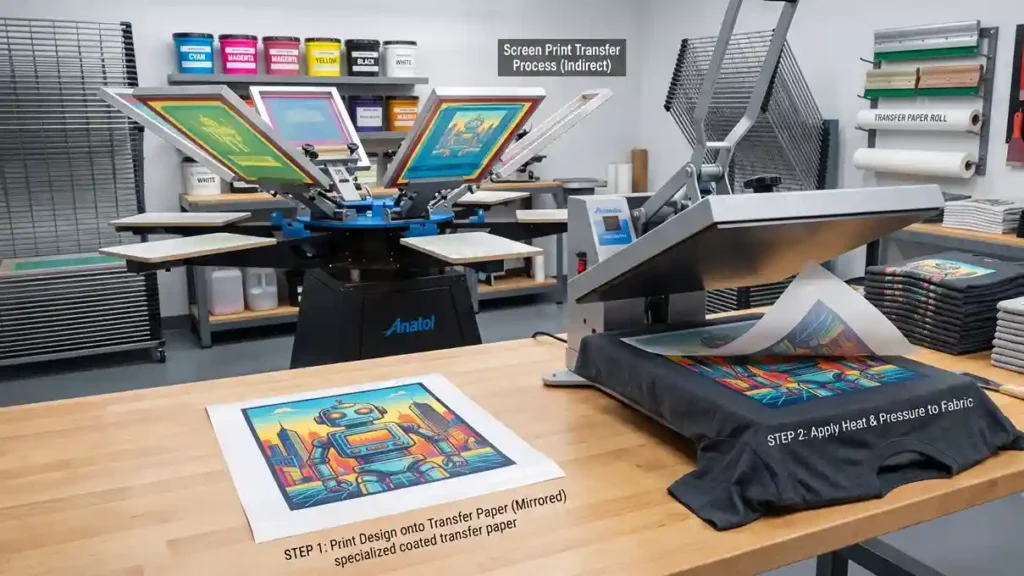
At first glance, they may look similar to other heat-applied graphics, but they’re actually produced using the same printing process as conventional screen printing. The key difference is where the design is printed first. Instead of decorating the garment immediately, the design is transferred onto release paper, stored, and only heat pressed onto the garment when needed.
This extra step gives businesses much greater production flexibility. Rather than setting up a screen printing press every time a customer places an order, print shops can prepare screen printed heat transfers in advance and apply them only when the correct garment, size, or color is ready. The result is faster production, lower setup costs, and easier inventory management.
Today, screen printing transfers are widely used by:
- Custom apparel brands
- Print shops
- Sportswear manufacturers
- School and team uniform suppliers
- Promotional product businesses
- Etsy and small online clothing stores
Some of the most popular products include:
- T-shirts
- Hoodies
- Tote bags
- Caps
- Team uniforms
- Workwear
- Promotional apparel
Unlike sublimation, which works best on polyester, plastisol screen print transfers produce excellent results on cotton and cotton-blend garments. That’s one of the main reasons they continue to be a preferred choice for apparel decorators looking for vibrant colors, sharp details, and long-lasting durability.
Why Are They Called Screen Print Transfers?
The name describes how they’re produced, not how they’re applied.
Instead of printing directly onto fabric, the design is created using the traditional screen printing process on a special release paper. After the ink reaches the correct gel stage, the transfer can be stored for later use and applied to a garment using a heat press.
This two-step workflow is what separates screen print heat transfers from conventional screen printing. The printing happens first, while the garment decoration happens only when it’s needed.

Why Do Print Shops Prefer Screen Print Transfers?
For many print shops, the biggest advantage of screen print transfers isn’t just faster production—it’s a more efficient workflow.
Instead of printing every garment as orders come in, shops can produce transfers in advance and store them until they’re needed. When an order arrives, the operator simply applies the transfer with a heat press, eliminating the need to set up screens and mix inks for every repeat job.
This approach makes production easier to manage, especially when the same design is used across different garment styles, sizes, or colors. It also helps businesses respond quickly to customer orders without sacrificing print quality.
As a result, best screen print transfers are widely used for:
Small-batch orders
Personalized names and numbers
Print-on-demand apparel
Pop-up events and live printing
Multi-garment orders using the same artwork
For growing apparel businesses, this flexibility reduces production bottlenecks, improves turnaround times, and allows staff to spend more time fulfilling orders instead of constantly preparing printing equipment.
Expert Insight: Many experienced print shops schedule transfer production during quieter periods and apply them only after customer orders are confirmed. This simple workflow helps maximize equipment utilization while keeping production running smoothly during busy seasons.
Screen Print Transfers vs. DTF: Which Is Better?
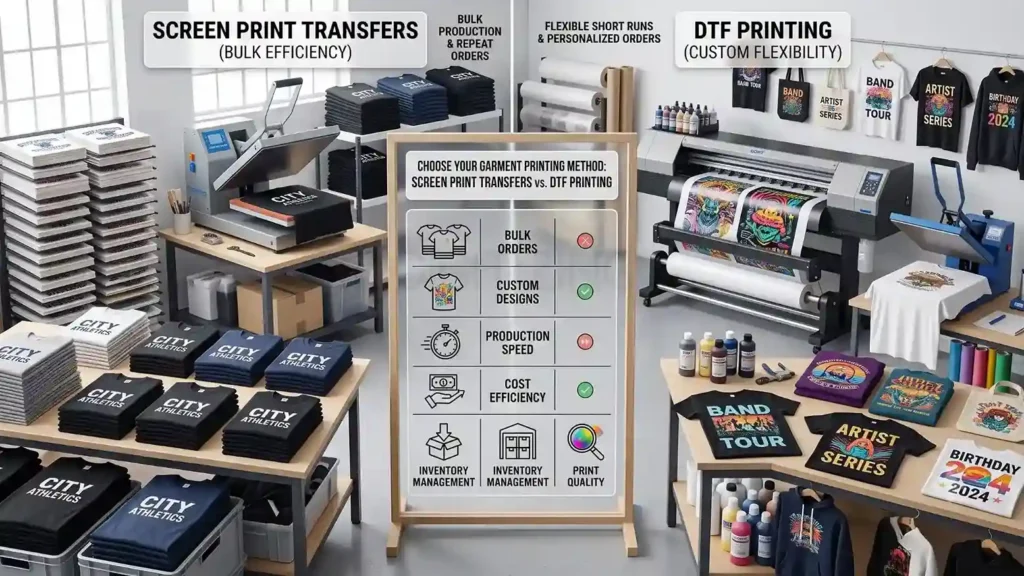
Choosing between screen print transfers vs DTF print transfers depends on your fabric, order size, design complexity, and production goals. While both methods use a heat press to apply designs, they differ in durability, cost, appearance, and the types of projects they’re best suited for.
For example, plastisol screen print transfers are often the preferred choice for bulk orders and cotton garments because they offer excellent durability and a classic screen-printed feel. DTF, on the other hand, is more flexible for short runs, full-color artwork, and intricate designs without requiring screen setup.
Screen Print Transfers vs. DTF Comparison
Feature | Screen Print Transfers | DTF (Direct-to-Film) |
Best for | Medium to large production runs | Small orders and full-color designs |
Fabric compatibility | Cotton, cotton blends, polyester | Cotton, polyester, blends, nylon, and more |
Print feel | Soft, traditional screen-printed finish | Slightly thicker film feel |
Durability | Excellent when applied correctly | Excellent, but may feel heavier over time |
Color quality | Solid colors with vibrant opacity | Outstanding for gradients and photo-quality images |
Setup | Requires screens and transfer production | Minimal setup required |
Cost efficiency | More economical for repeat and bulk orders | Better for one-off or low-volume jobs |
Production speed | Fast once transfers are prepared | Faster for custom and personalized orders |
Which One Should You Choose?
If your business regularly prints the same artwork on multiple garments, screen print transfers are usually the more cost-effective option. Once the transfers have been produced, they can be stored and applied whenever new orders arrive, making repeat production fast and consistent.
If every order is different or includes complex, full-color graphics, DTF may be the better choice because it doesn’t require screens or transfer inventory.
Bottom Line: Neither method is universally better. The right choice depends on your production workflow, garment type, and order volume. Many professional print shops use both technologies together, selecting the one that delivers the best balance of quality, efficiency, and cost for each project.
How Do Screen Print Transfers Work?
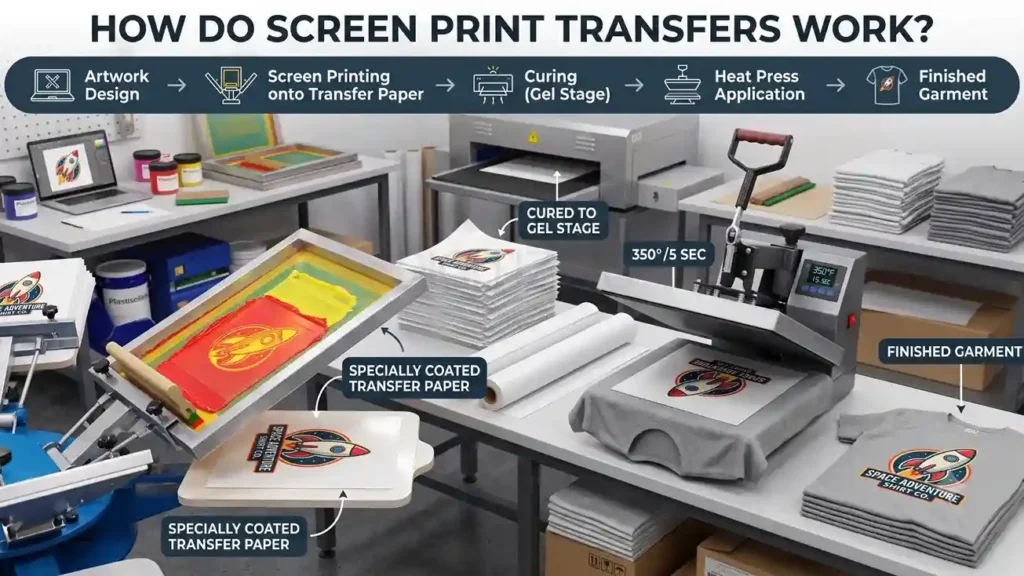
Understanding how screen print transfers work makes it much easier to decide whether they’re the right solution for your business or personal projects. Although the finished design is applied with a heat press, the transfer itself is created through a traditional screen printing process. The difference is that the artwork is printed onto transfer paper first instead of directly onto the garment.
Step 1: Prepare the Artwork
Every project starts with a digital design. The artwork is separated by color and prepared for screen printing, just as it would be for a standard print job.
Unlike sublimation, the artwork for screen print transfers is generally not mirrored because the transfer is flipped during application. Always confirm the artwork orientation before production to avoid reversed text or logos.
Expert Tip: Small fonts, fine outlines, and intricate details should be checked carefully before printing. Minor artwork adjustments at this stage can prevent costly production mistakes later.

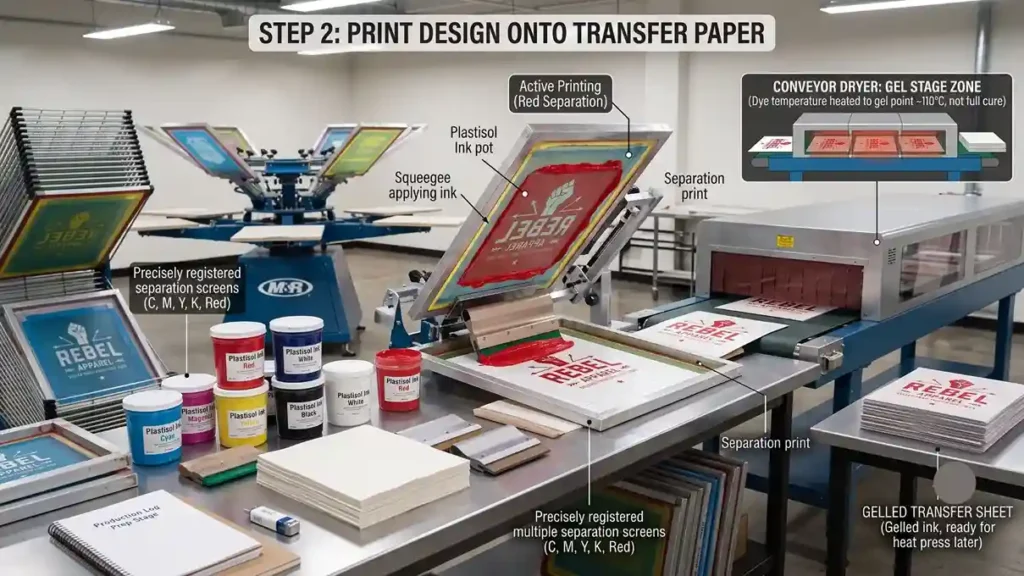
Step 2: Print the Design onto Transfer Paper
Next, the design is printed onto specially coated transfer paper using plastisol ink and a screen printing press. This is where plastisol screen print transfers are created.
Instead of fully curing the ink, printers heat it just enough to reach the gel stage. This allows the design to remain transferable while preserving excellent adhesion during the final heat press application.
Step 3: Apply Adhesive Powder (If Required)
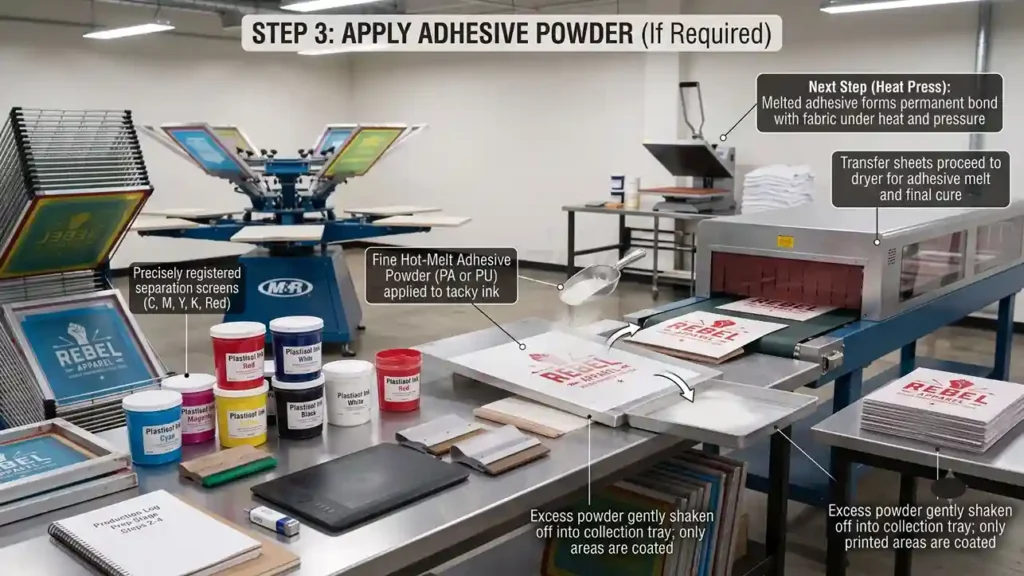
Depending on the transfer system being used, a hot-melt adhesive powder is applied to the back of the printed design while the ink is still tacky.
During heat pressing, this adhesive melts and bonds the artwork permanently to the garment, creating a durable print that withstands repeated washing.
Not every transfer requires this step, but it is common for many commercial screen printed heat transfers.
Step 4: Heat Press the Transfer onto the Garment
Once the transfer is ready, place it on the garment and apply it using a heat press for screen print transfers.
The correct temperature, pressure, and pressing time depend on the manufacturer’s recommendations. When applied correctly, the plastisol ink permanently bonds with the fabric to create a smooth, durable finish.

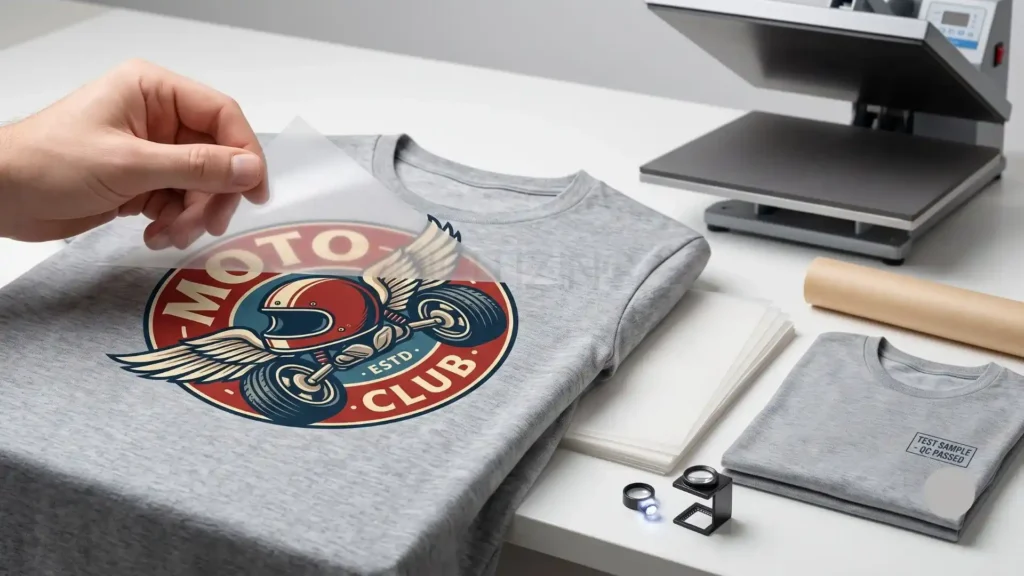
Step 5: Peel and Inspect the Finished Print
After pressing, remove the carrier sheet according to the transfer’s instructions. Some screen print heat transfers require a hot peel, while others perform best with a warm or cold peel.
The finished print should appear vibrant, smooth, and securely bonded to the fabric without lifting, cracking, or uneven edges.
Before starting full production, test one transfer on a sample garment to verify the heat settings and peel method.
Key Takeaway
Although the process involves several steps, screen print transfers simplify garment decoration by separating printing from application. Once the transfers have been produced, they can be stored and applied whenever needed, making them an efficient choice for repeat orders, seasonal collections, and custom apparel businesses.
Can You Make Screen Print Transfers at Home?
Yes—but it depends on the type of transfers you want to produce.
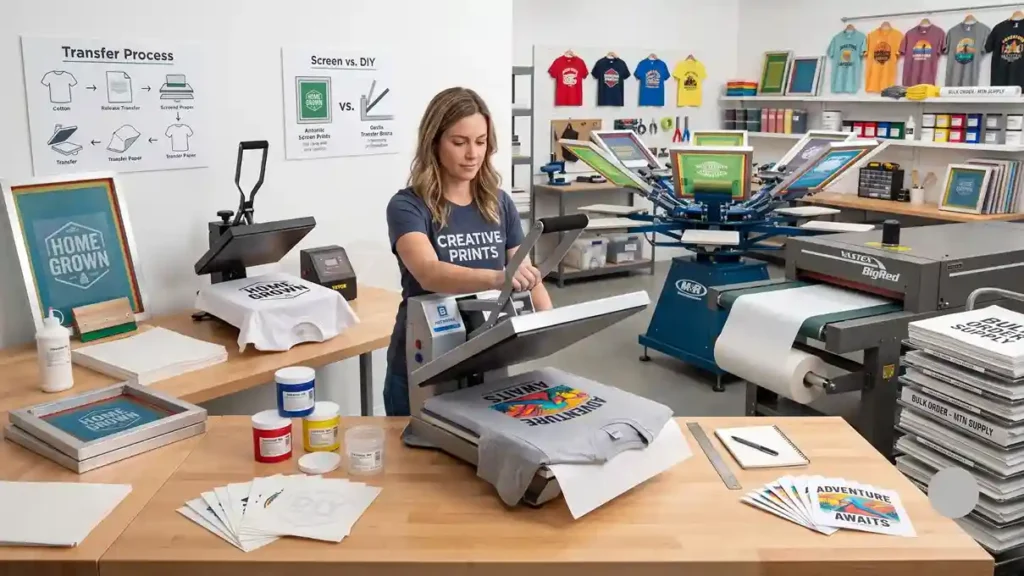
Professional screen print transfers are created using specialized screen printing equipment, plastisol ink, and controlled curing methods. While it’s possible to make them at home, achieving commercial-quality results requires the right tools, practice, and consistent heat control.
For beginners, it’s often more practical to order custom screen print transfers from a professional supplier and apply them with a heat press. This allows you to produce high-quality apparel without investing in a complete screen printing setup.
DIY vs. Buying Ready-Made Transfers
Whether you should make your own transfers or purchase them depends on your production goals.
Factor | Make Your Own Transfers | Buy Ready-Made Transfers |
Initial investment | Higher | Lower |
Learning curve | Moderate to high | Very low |
Best for | Print shops and frequent production | Small businesses, startups, hobbyists |
Design flexibility | Complete control | Depends on supplier |
Production speed | Faster after setup | Fast—simply heat press and peel |
If you’re decorating garments occasionally or running a small apparel business, purchasing professionally made screen printed heat transfers is usually the most cost-effective option. However, businesses producing large volumes every week often benefit from creating their own transfers in-house.
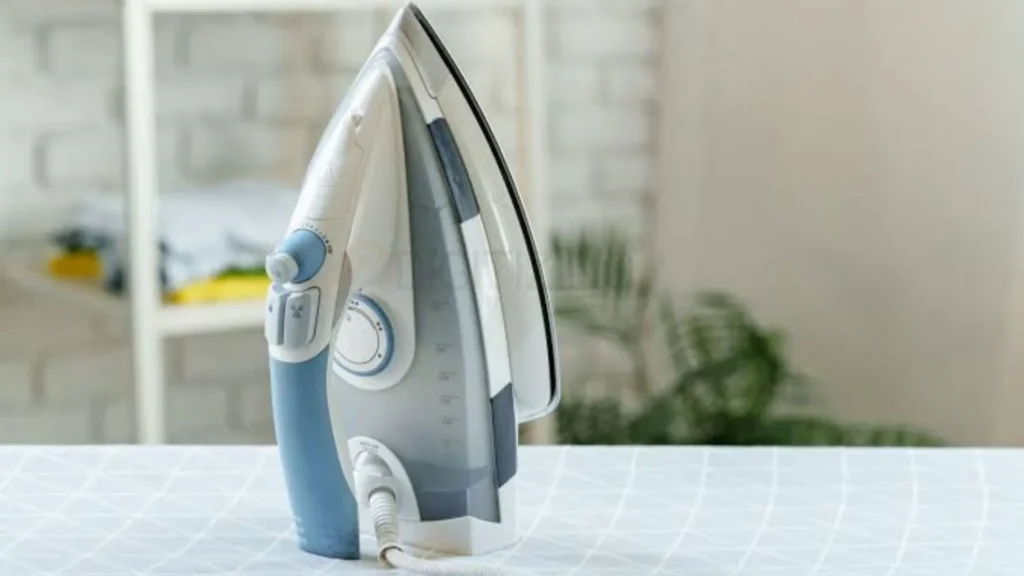
Can You Use a Household Iron?
Technically, yes—but it’s rarely recommended.
A household iron doesn’t provide the consistent temperature, pressure, or even heat distribution needed for reliable screen print transfers. This often leads to poor adhesion, uneven prints, or designs that peel after washing.
For consistent results, use a screen print transfer, as it applies uniform heat and pressure across the entire design.
Common Beginner Mistakes
If you’re making screen print transfers for the first time, avoid these common mistakes:
- Using incorrect heat press settings.
- Applying uneven pressure.
- Peeling the transfer before the recommended peel time.
- Using low-quality transfer paper or plastisol ink.
- Skipping a test press before starting a full production run.
Expert Insight: Before pressing customer garments, always test one transfer on a similar fabric. Different transfer brands may recommend different temperatures, pressure levels, and peel methods, and a quick test can prevent costly mistakes on the final product.
Key Takeaway
You don’t need a complete screen printing shop to start using screen print transfers. Many successful apparel businesses begin by ordering professionally made transfers and investing only in a quality heat press. As production grows, they gradually transfer production in-house to reduce costs and increase flexibility.
What Equipment Do You Need for Screen Print Transfers?
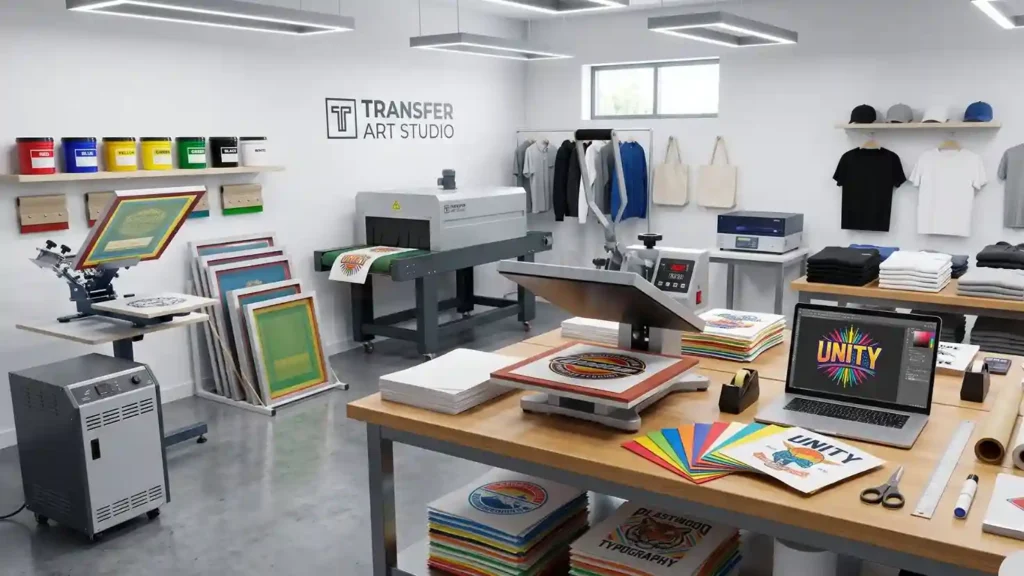
Whether you’re applying ready-made screen print transfers or producing your own, using the right equipment has a direct impact on print quality, consistency, and production speed. The good news is that not everyone needs a complete commercial setup. Your equipment should match your production volume and business goals.
Essential Equipment
Heat Press
A quality heat press for screen print transfers is the most important investment. It applies consistent heat, pressure, and time to ensure the transfer bonds properly with the garment.
When choosing a heat press, look for:
- Digital temperature and timer controls
- Even heat distribution across the platen
- Adjustable pressure settings
- A platen size that matches your most common products
A household iron may work for simple crafts, but it can’t provide the consistent results needed for professional apparel decoration.
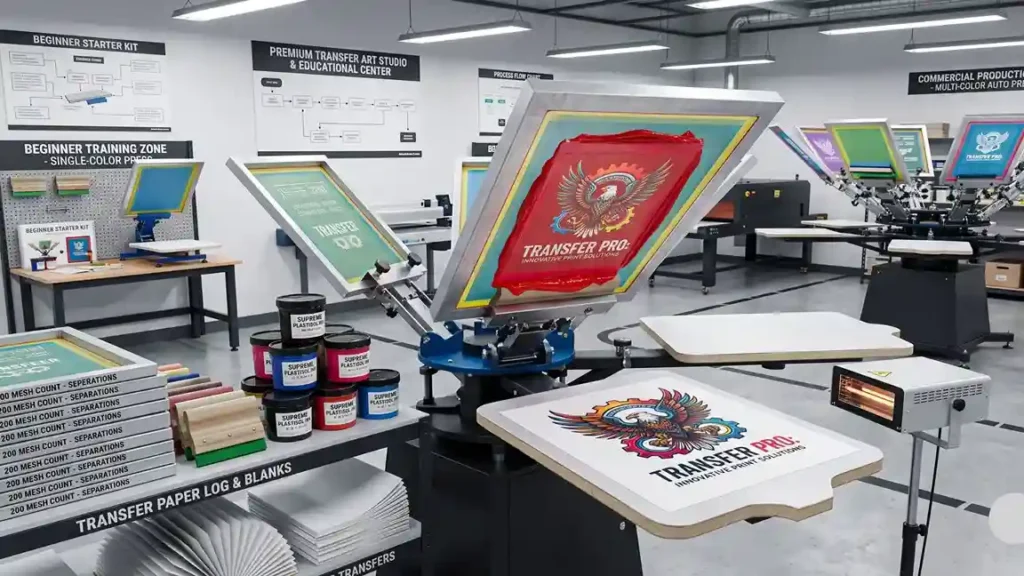
Screen Printing Press
If you plan to manufacture your own screen print transfers, you’ll need a screen printing press.
This is the equipment used to push plastisol ink through a mesh screen and onto transfer paper. Single-color presses are suitable for beginners, while multi-color presses improve registration accuracy and production efficiency.
Transfer Paper
Not all transfer papers perform the same.
Professional screen printing transfers require specially coated release paper that allows the design to release cleanly during heat pressing. Choosing the correct paper helps improve color transfer, edge definition, and overall print quality.
Plastisol Ink
Plastisol screen print transfers rely on plastisol ink because it remains stable during transfer production and cures properly during the final heat press application.
Using the correct ink helps produce:
- Vibrant colors
- Strong wash durability
- Excellent stretch resistance
- Consistent print quality
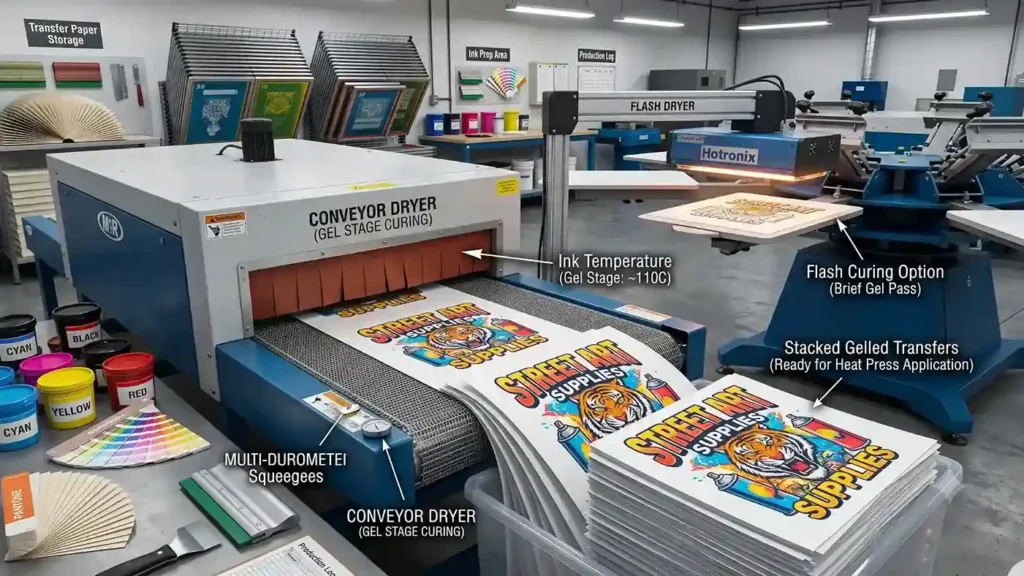
Conveyor Dryer or Flash Dryer
If you’re producing transfers yourself, the printed ink needs to reach the correct gel stage before storage.
Most commercial print shops use either:
- A flash dryer
- A conveyor dryer
This controlled heating process prepares the transfer for final application without fully curing the ink.
Transfer Adhesive Powder (When Required)
Some transfer systems require a hot-melt adhesive powder applied to the back of the printed design.
During heat pressing, this adhesive melts and creates a strong bond between the transfer and the garment.
Not every transfer process uses adhesive powder, so always follow the manufacturer’s recommendations.
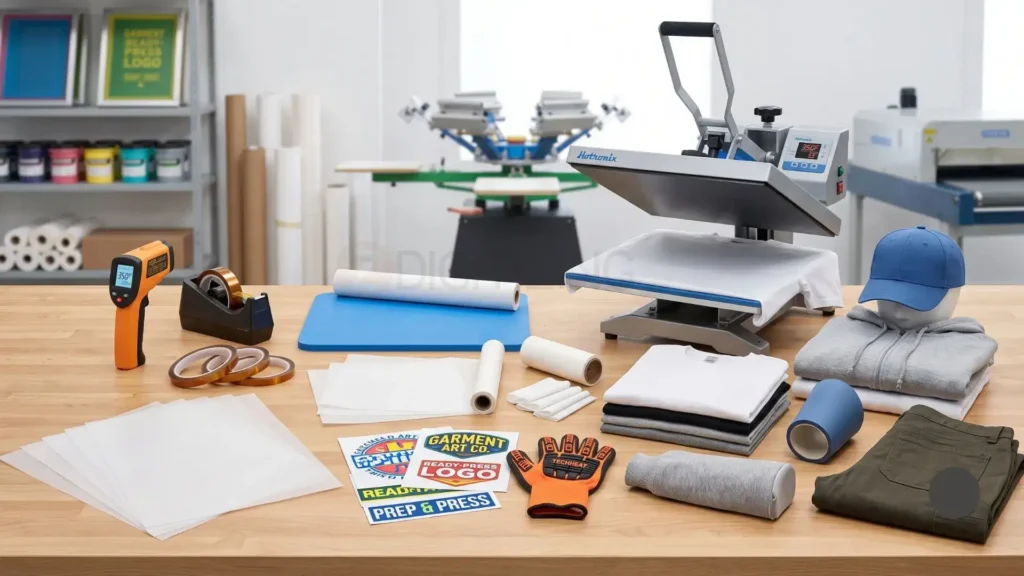
Helpful Accessories
While these aren’t mandatory, they can improve consistency and reduce production errors.
- Heat-resistant tape
- Teflon or protective parchment sheet
- Temperature gun
- Silicone pad (for uneven garments)
- Lint roller
- Heat-resistant gloves
These accessories become especially useful when decorating caps, sleeves, heavy hoodies, or textured fabrics.
Recommended Setup Based on Your Needs
User Type | Recommended Equipment |
Hobbyist | Heat press, ready-made custom screen print transfers, protective sheet |
Small Business | Heat press, quality transfers, basic accessories, temperature gun |
Growing Print Shop | Heat press, screen printing press, flash dryer, plastisol ink, transfer paper |
Commercial Production | Automatic press, conveyor dryer, registration system, complete transfer production setup |
Expert Insight
Many successful apparel businesses don’t purchase every piece of equipment on day one. They often begin by ordering the best screen print transfers from reliable suppliers and investing in a quality heat press first. As order volume increases, they gradually bring transfer production in-house to gain more control over costs, turnaround time, and customization.
Key Takeaway
The best equipment isn’t necessarily the most expensive—it’s the equipment that fits your workflow. If you’re just getting started, a reliable heat press for screen print transfers and professionally produced transfers are usually enough to deliver excellent results. As your business grows, you can expand into manufacturing your own screen print transfers with specialized printing equipment.
Why Choose Screen Print Transfers?
Whether you’re running a print shop, launching a clothing brand, or creating custom apparel for events, screen print transfers offer a practical balance of quality, efficiency, and affordability. They combine the durability of traditional screen printing with the convenience of heat application, making them a preferred choice for businesses of all sizes.
Consistent, Professional Print Quality
One of the biggest advantages of screen print transfers is their ability to produce crisp details, bold colors, and smooth finishes that closely resemble direct screen printing. Because the design is created using plastisol ink, it delivers excellent opacity on both light and dark garments while maintaining a soft, professional appearance.
Unlike some decoration methods that can leave a heavy film on the fabric, properly applied plastisol transfers become part of the garment’s surface, creating a clean finish that customers expect from premium apparel.

Ideal for Repeat Orders
If you regularly print the same logo or artwork, custom screen print transfers can save significant production time. Instead of preparing screens every time an order arrives, you simply store the finished transfers and apply them whenever needed.
This makes them an excellent choice for:
- Company uniforms
- School apparel
- Sports team merchandise
- Brand collections
- Promotional clothing
For businesses that frequently receive repeat orders, this workflow improves consistency while reducing setup costs.
Cost-Effective for Medium and Large Runs
Although producing transfers requires initial setup, the cost per print becomes much lower as production volume increases. Once the transfers are printed, they can be applied to different garment sizes and colors without recreating the artwork each time.
This efficiency is one of the main reasons many commercial decorators continue to rely on screen printing transfers for ongoing production.
Long-Lasting Performance
When applied with the correct temperature, pressure, and pressing time, quality plastisol transfers can withstand repeated washing without significant cracking, peeling, or fading.
Their durability makes them suitable for products that receive frequent use, including:
- Workwear
- Team uniforms
- Athletic apparel
- Promotional garments
- Everyday clothing
For businesses, fewer print failures also mean fewer customer complaints and replacement costs.
Flexible Production Workflow
One of the most overlooked advantages of screen print heat transfers is production flexibility.
Instead of printing garments only after an order is placed, businesses can manufacture transfers in advance and keep them ready for future use. When an order comes in, the operator simply selects the correct garment and applies the transfer using a heat press.
This approach helps reduce production bottlenecks during busy seasons while making it easier to manage multiple garment colors, sizes, and personalized orders.
Expert Insight: Many professional decorators keep their most popular transfer designs in stock throughout the year. This allows them to fulfill repeat orders much faster without interrupting ongoing screen printing production.

Limitations of Screen Print Transfers
While screen print transfers offer excellent durability and production efficiency, they’re not the ideal solution for every project. Understanding their limitations will help you choose the right printing method based on your fabric, artwork, and production needs.
Less Suitable for One-Off, Full-Color Designs
If every order features a different design or includes photo-quality artwork with gradients, creating new screens for each transfer can become time-consuming and expensive.
In these situations, digital methods like DTF are often more practical because they don’t require screen preparation. This is one of the main considerations when comparing screen print transfers vs DTF for short-run or highly customized orders.
Initial Setup Takes More Time
Unlike digital printing, producing screen printed heat transfers requires artwork separation, screen preparation, ink printing, and proper gelling before the transfer is ready to use.
Although this setup pays off for repeat and bulk orders, it may not be the most efficient option for businesses producing only a few garments with unique designs.
Correct Heat Press Settings Are Essential
Even the highest-quality transfer can fail if it’s applied incorrectly. Temperature, pressure, and pressing time must match the manufacturer’s recommendations to achieve proper adhesion.
Using an unsuitable heat press for screen print transfers or incorrect settings can result in poor bonding, edge lifting, or reduced wash durability.
Specialty Finishes May Require Additional Care
Specialty products such as glitter screen print transfers or metallic finishes can create eye-catching designs, but they often require more precise heat settings and handling than standard plastisol transfers.
Following the supplier’s application instructions helps maintain the finish and improve long-term durability.

Not Every Fabric Performs the Same
Although plastisol screen print transfers work exceptionally well on cotton and cotton-blend garments, different fabrics may require specific transfer formulations or application settings.
Performance fabrics, stretch materials, and heat-sensitive garments often need lower-temperature transfers designed specifically for those fabrics.
Key Takeaway
No printing method is perfect for every application. Screen print transfers are an excellent choice for repeat designs, branded apparel, team uniforms, and medium-to-large production runs. However, if you’re producing one-off full-color graphics or working with specialty fabrics, another printing method may be a better fit.
Common Applications of Screen Print Transfers
One of the biggest advantages of screen print transfers is their versatility. Once the transfers are prepared, the same design can be applied to different garments and products without repeating the entire screen printing process. This makes them a practical choice for both small businesses and large-scale production.
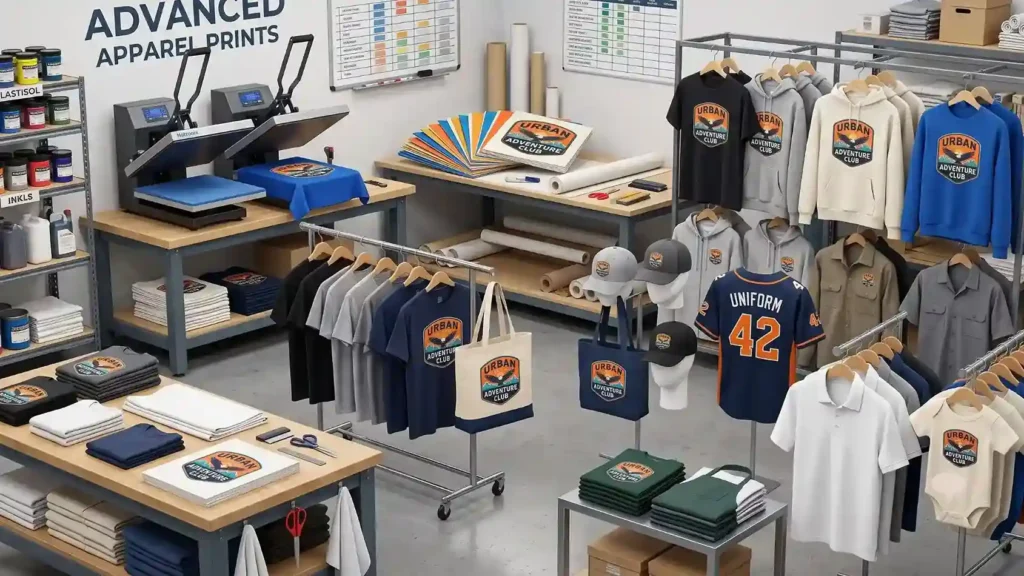
Some of the most common applications include:
- Custom apparel: T-shirts, hoodies, sweatshirts, and workwear are among the most popular products made with custom screen print transfers, especially for businesses, schools, and corporate branding.
- Sports uniforms: Teams often use screen print transfers for player names, numbers, and logos because they produce durable prints that withstand frequent washing and regular wear.
- Promotional merchandise: Tote bags, aprons, and other fabric accessories can be customized quickly for marketing campaigns, trade shows, and company events.
- Seasonal collections: Many apparel brands create limited-edition designs such as Halloween screen print transfers, holiday graphics, and even trending products like Grinch screen print transfers during the festive season without committing to large garment inventories.
- Specialty finishes: Businesses looking to offer premium designs often use glitter screen print transfers, metallic inks, or puff effects to create eye-catching apparel for fashion brands, events, and retail collections.
Because transfers can be printed in advance and applied only when orders are received, they’re especially valuable for print-on-demand stores, personalized apparel, and repeat business orders.
Expert Insight
Instead of stocking dozens of pre-printed garments, many apparel businesses store transfers by design. This saves storage space, reduces unsold inventory, and makes it easier to decorate garments only after a customer places an order.
Conclusion
Screen print transfers offer the durability of traditional screen printing with the flexibility of heat application, making them an excellent choice for custom apparel, team uniforms, promotional products, and growing clothing brands. Whether you purchase professionally made transfers or produce your own, choosing the right materials, equipment, and application settings is the key to achieving consistent, long-lasting results.
Ultimately, the best printing method depends on your garment type, artwork, production volume, and business goals. By understanding how screen print transfers work and when they outperform alternatives like DTF or sublimation, you can confidently choose the right solution for every project.
If you also need production-ready artwork, ZDigitizing offers premium embroidery digitizing services in Rome, vector art conversion, back and sleeve digitizing services, fast turnaround times, and affordable pricing and 50% off on your first order, to help you produce high-quality prints with confidence.