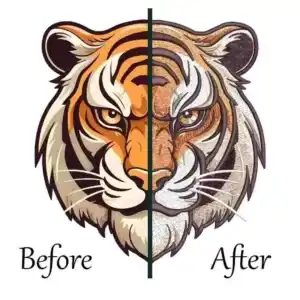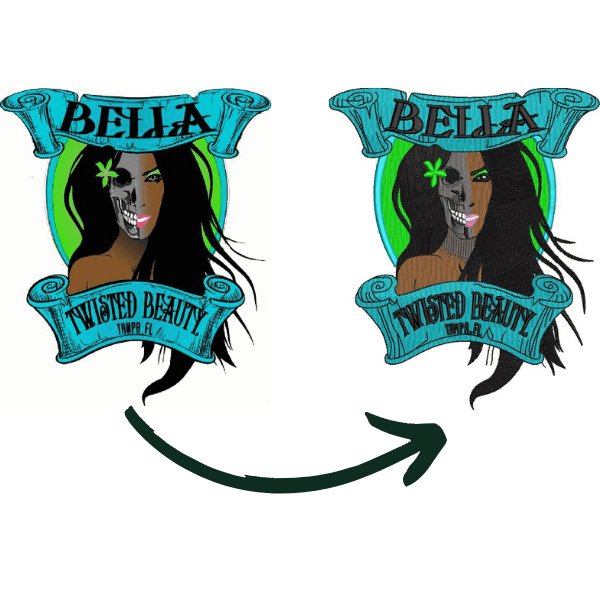
The Best Logo Digitizing Service for Embroidery starts with one simple goal: preserving your logo exactly as your customers recognize it. A professionally digitized logo should stitch cleanly, maintain sharp details, and perform consistently across different garments without unnecessary edits or production issues.
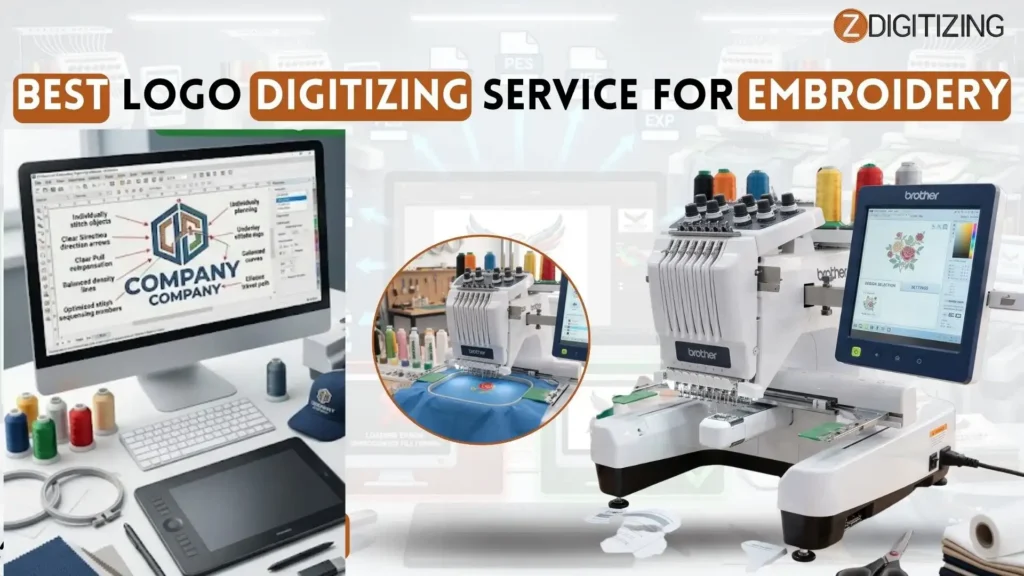
In this guide, you’ll learn what separates an average digitizing provider from one that truly understands logo embroidery, so you can choose a service that protects your brand and delivers reliable results every time.
Best Logo Digitizing Service for Embroidery
What Makes the Best Logo Digitizing Service for Embroidery?
Not every company that offers embroidery digitizing delivers the same level of quality. While many providers advertise fast turnaround and affordable pricing, the best logo digitizing service for embroidery focuses on creating production-ready files that stitch cleanly, minimize machine issues, and accurately represent your brand.
A professionally digitized logo should run smoothly on commercial embroidery machines, maintain sharp details, and perform consistently across different garments. Achieving that requires more than simply converting artwork into stitches—it demands experience, manual digitizing, fabric-specific adjustments, and careful quality control.
A quality logo digitizing service should provide:
- Manual digitizing instead of relying entirely on automatic software, especially for detailed logos and small lettering.
- Production-ready embroidery files that minimize thread breaks, puckering, and unnecessary trims.
- Fabric-specific optimization for garments such as polos, caps, jackets, uniforms, patches, and performance wear.
- Support for multiple embroidery machine formats, including DST, PES, EXP, JEF, VP3, and other commonly used file types.
- Consistent quality across repeat orders, ensuring every version of your logo stitches the same way.
- Clear communication and a fair revision policy if adjustments are needed after a test sew-out.
- Real embroidered samples or sew-outs that demonstrate actual stitch quality instead of only digital previews.
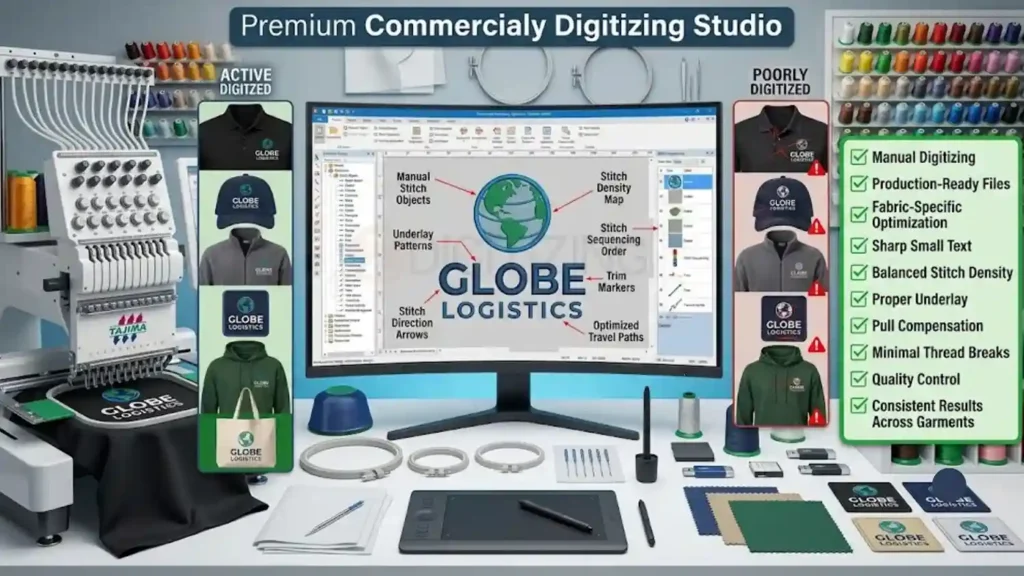
Remember, the best logo digitizing service for embroidery isn’t defined by marketing claims alone. It’s the provider that consistently delivers embroidery files your machine can run efficiently while maintaining the professional appearance your customers expect.
Pro Tip: Before committing to a large order, ask for one recently completed sew-out that resembles your project. Seeing how a real logo stitches on fabric tells you far more than polished digital artwork.
How to Compare Logo Digitizing Services Before Choosing One
Once you’ve identified a few potential providers, avoid making your decision based solely on price or turnaround time. Two companies may offer similar rates, yet the quality of their embroidery files can be completely different.
The best logo digitizing service for embroidery should consistently deliver accurate stitch files, communicate clearly, and help you avoid costly production issues. Instead of relying on marketing claims, compare providers using the factors below.
Compare Their Portfolio Beyond Digital Mockups
Many companies showcase polished digital previews, but these don’t reveal how the logo performs on an actual embroidery machine.
Ask to see real embroidered samples on products such as polos, caps, jackets, uniforms, or patches. A quality portfolio should demonstrate clean lettering, smooth fill stitches, balanced density, and consistent results across different garment types.
If a provider only shares software screenshots without actual sew-outs, it’s worth asking for additional proof of their work.
Expert Tip: Try to review logos that are similar in complexity to your own. A company that handles detailed corporate logos well is more likely to deliver reliable results for your project.
Read Customer Reviews for Production Experience
Customer reviews are most valuable when they describe the actual embroidery experience rather than simply giving a five-star rating.
Look for comments mentioning:
- Consistent stitch quality across multiple orders.
- Clean results on small text and detailed logos.
- Fast and helpful communication.
- Fair handling of revisions.
- Files that stitched correctly without repeated adjustments.
Long-term customers often indicate consistent quality, which is far more valuable than dozens of generic positive reviews.
Compare What’s Included in the Service
A lower price doesn’t always mean better value. Some providers include multiple embroidery formats, free revisions, and technical support, while others charge extra for every additional request.
Before placing an order, compare what each company includes, such as:
Compare | Why It Matters |
Revision Policy | Helps you correct minor issues without additional costs. |
Machine File Formats | Ensures compatibility with your embroidery equipment. |
Native Files (if available) | Makes future logo updates easier. |
Turnaround Time | Helps you meet production deadlines. |
Customer Support | Provides assistance if stitching issues arise after delivery. |
Choosing a provider based on overall value rather than the lowest quote often leads to fewer production problems and lower costs over time.

Signs of a High-Quality Digitized Logo
Choosing the right provider becomes much easier when you know what a professionally digitized logo should look like. Even if you’re not an embroidery expert, there are several indicators that reveal whether a design has been digitized with care or generated using a quick automated process.
A high-quality embroidery file should produce clean, consistent results on the first sew-out while minimizing production problems such as thread breaks, puckering, and distorted lettering.
Here are the key signs to look for:
Sharp and Readable Lettering
Small text is often the first area where poor digitizing becomes noticeable. Professional embroidery digitizing logo services adjust stitch types, spacing, and pull compensation so letters remain readable without merging together or losing their shape.
Balanced Stitch Density
Excessive stitch density can cause thread breaks, fabric puckering, and bulky embroidery, while insufficient density leaves visible gaps between stitches. Experienced professionals adjust density according to the logo design and the garment being embroidered instead of using the same settings for every project.
Smooth Stitch Pathing
An efficient stitch sequence reduces unnecessary trims, jump stitches, and machine stops. Well-planned pathing not only improves the appearance of the finished embroidery but also shortens production time and reduces thread waste.
Clean Registration Between Colors
When a logo contains multiple colors, each section should align accurately with the next. Proper registration ensures outlines remain crisp, color blocks meet correctly, and the finished embroidery closely matches the original artwork.
Consistent Results Across Different Garments
A dependable digitizing service for embroidery doesn’t simply create one file and use it everywhere. The best providers understand that caps, polos, jackets, patches, and performance fabrics often require different stitch settings to achieve the same professional result.

Why Manual Logo Digitizing Still Delivers Better Results
One of the biggest differences between an average provider and the best logo digitizing service for embroidery is how the design is created. While some companies rely heavily on automatic conversion software, experienced digitizers manually build stitch files to suit the artwork, garment, and embroidery machine.
Automatic software can quickly convert a logo to an embroidery file, but it often struggles with small lettering, fine details, overlapping elements, and complex shapes. The result may look acceptable on-screen yet produce thread breaks, uneven stitches, or distorted embroidery during production.
Manual logo embroidery digitizing, on the other hand, gives the digitizer complete control over stitch direction, density, underlay, pull compensation, and stitch sequencing. These adjustments help the finished embroidery look cleaner while improving machine efficiency and reducing unnecessary production issues.
Manual vs Automatic Logo Digitizing
Manual Digitizing | Automatic Conversion |
Optimized for each logo individually | Uses software-generated stitch patterns |
Better for detailed logos and small text | Often struggles with fine details |
Fabric-specific adjustments | Limited fabric optimization |
Cleaner stitch paths and fewer trims | May create inefficient stitch sequences |
Higher first-run success rate | Often requires additional revisions |
That doesn’t mean automatic software has no place. For very simple artwork with basic shapes, it can produce acceptable results. However, for company logos that represent a brand, manual digitizing is usually the better long-term investment because it prioritizes embroidery quality rather than speed alone.

Expert Insight: If a provider promises extremely low prices with unusually fast delivery, ask whether your logo will be manually digitized or primarily generated through automatic software. The answer can tell you a lot about the quality you should expect.
Questions a Professional Logo Digitizing Service Should Ask Before Starting
Experienced digitizers know that the same logo doesn’t always stitch well on every product. Before creating an embroidery file, they gather important production details to ensure the design is optimized for your specific project.
If a company only asks you to upload your artwork and nothing else, there’s a good chance they’re following a generic workflow rather than creating a file tailored to your needs.
Here are some questions a professional provider should ask before they begin:
What garment will the logo be embroidered on?
A logo designed for a cotton polo often requires different stitch settings than one for a structured cap, fleece jacket, softshell, or towel. Knowing the material helps the digitizer choose the right density, underlay, and stitch sequence.
Where will the logo be placed?
A left-chest logo, cap front, jacket back, sleeve, and patch each have different size limitations and embroidery challenges. Placement affects how the design should be digitized.
What are the final embroidery dimensions?
Simply resizing a design isn’t always enough. Small logos may require thicker satin columns, simplified details, or adjusted lettering to maintain readability at the finished size.
Which embroidery machine format do you need?
Professional providers normally ask which machine you’re using so they can deliver the correct file format, whether it’s DST, PES, EXP, JEF, VP3, or another compatible format.
Will this logo be reused on future orders?
If you plan to embroider the same logo repeatedly, it’s worth discussing editable native files and future revision requirements before the project begins.

Common Logo Designs That Require Extra Digitizing Expertise
Not every logo presents the same level of difficulty. A simple one-color design with bold lettering can often be digitized quickly, while detailed corporate logos may require considerably more planning and manual adjustments.
Understanding what makes a logo challenging helps you set realistic expectations for pricing, turnaround time, and the level of expertise your project requires.
Small Lettering
Tiny text is one of the biggest challenges in embroidery. Letters that look sharp on a computer screen can become unreadable when stitched unless the digitizer adjusts spacing, stitch type, and column width carefully.
Multi-Color Corporate Logos
Logos with multiple colors require careful stitch sequencing to reduce unnecessary trims, improve registration, and keep color transitions clean throughout the embroidery process.
Fine Lines and Intricate Details
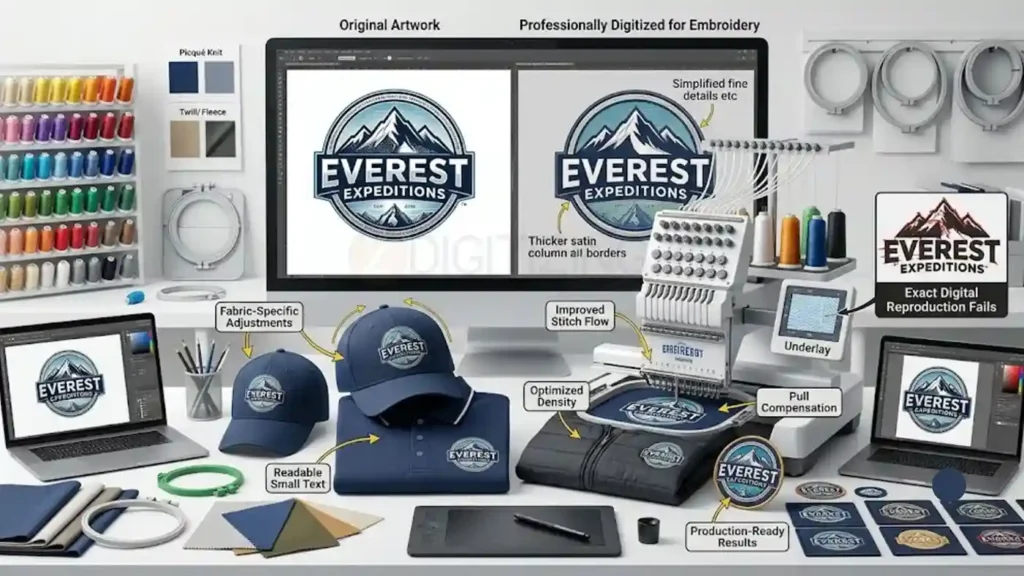
Very thin outlines, decorative elements, and closely spaced objects often need to be simplified before digitizing. A skilled digitizer knows how to preserve the overall appearance of the logo while making it suitable for embroidery.
Cap and Left-Chest Logos
Caps have a curved surface and center seam, while left-chest logos are usually embroidered within a limited area. Both require different digitizing strategies than larger flat designs to maintain clean results.
Gradient or Print-Only Artwork
Gradients, shadows, transparency effects, and extremely fine details don’t translate directly into embroidery. Instead of attempting to reproduce every visual effect, experienced digitizers adapt the artwork so it maintains the brand’s identity while remaining clean and production-ready.
Expert Insight: A professional digitizer doesn’t simply recreate every detail in the original artwork. They make informed adjustments so the embroidered version looks its best on fabric—not just on a computer screen.
What Should You Receive from a Professional Logo Digitizing Service?
Choosing the best logo digitizing service for embroidery isn’t only about receiving a machine file that stitches correctly today. A professional provider should also supply the files and support you need for future production, machine upgrades, and repeat orders.
Before placing your order, confirm exactly what you’ll receive after the digitizing is complete.
Production-Ready Machine Files
Your digitized logo should be delivered in the embroidery format compatible with your machine. Common formats include:
File Format | Compatible Machines |
DST | Tajima |
PES | Brother & Baby Lock |
EXP | Melco |
JEF | Janome |
VP3 | Husqvarna Viking |
XXX | Singer |
Receiving the correct machine format ensures the design runs properly without additional file conversion.
Editable Native Files (When Available)
If you expect to resize your logo, update text, or make future design changes, ask whether the provider can supply the original editable file. Native files allow modifications without rebuilding the entire design from scratch, saving both time and future digitizing costs.
A Production-Ready Design
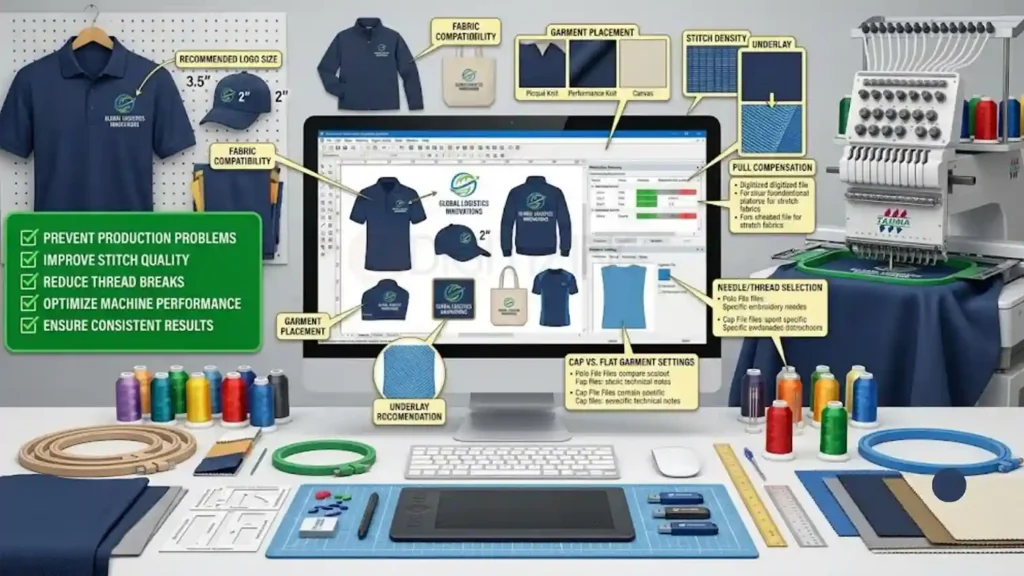
The finished file should be optimized for embroidery rather than simply converted from artwork. This means the stitch sequence, density, underlay, and pull compensation have already been adjusted to help the design run efficiently on an embroidery machine.
Clear Revision Support
Even well-digitized logos occasionally need a small adjustment after the first sew-out. A reliable provider should explain how revisions are handled, what’s included, and how quickly changes can be completed if required.
Helpful Production Guidance
Experienced digitizers often provide recommendations that improve embroidery results, such as suitable logo sizes, fabric considerations, or placement suggestions. This extra guidance can prevent production issues before they occur.
Trusted Logo Digitizing Services Worth Considering
By now, you know what separates an average provider from a reliable logo digitizing service. The next step is finding a company that matches your specific requirements. No single provider is the right choice for every embroidery business. Some specialize in fast turnaround, while others focus on complex corporate logos, large embroidery projects, or high-volume production.
Rather than ranking companies from best to worst, the comparison below highlights where each provider appears to perform best based on publicly available information, service offerings, and customer reputation. Use it as a starting point for your own evaluation before placing an order.
Company | Best For | Typical Turnaround* | Notable Strength |
ZDigitizing | Small businesses, quick logo orders | 4–12 hours (1-4 hours rush service) | Fast turnaround, wide file format support, unlimited revisions |
Absolute Digitizing | Complex logos and premium embroidery | 12-24 hours | Strong focus on manually digitized designs |
Eagle Digitizing | Jacket backs, large embroidery projects | 4-24 hours | Experience with large-format embroidery |
Quality Punch Digitizing | High-volume production and patches | 24–48 hours | Same-day options and vector art services |
EM Digitizer | Commercial embroidery businesses | Less than 24 hours | Flexible revisions and consistent turnaround |
Digit-It | Promotional products and branding businesses | Varies | Offers embroidery digitizing alongside branding services |
Turnaround times are based on publicly available information and may vary depending on design complexity and workload.
ZDigitizing
Best suited for: Small embroidery businesses, apparel decorators, and companies looking for fast turnaround on everyday logo digitizing.
ZDigitizing has built a strong reputation among embroidery businesses by combining relatively quick delivery with support for a wide range of embroidery machine formats. The company also offers revision support and file backup, making it a practical option for businesses that place repeat orders. If your priority is receiving production-ready logo files quickly without sacrificing consistency, it’s a provider worth considering.
Absolute Digitizing
Best suited for: Businesses that frequently embroider detailed corporate logos, fine lettering, or premium garments.
Absolute Digitizing positions itself as a quality-focused provider for more challenging embroidery projects. It is often recommended for intricate logo work where careful stitch planning and attention to detail matter more than achieving the fastest possible turnaround. Businesses producing premium apparel or detailed branding may find this approach particularly valuable.
Eagle Digitizing
Best suited for: Large embroidery designs, jacket backs, uniforms, and oversized branding.
Not every digitizer handles large embroidery projects equally well. Eagle Digitizing is recognized for working on larger design areas such as jacket backs, workwear, bags, and similar applications. Businesses producing oversized embroidery may benefit from a provider with experience beyond standard left-chest logos.
Quality Punch Digitizing
Best suited for: High-volume production, embroidery shops, and businesses that also require vector artwork.
Quality Punch Digitizing combines embroidery digitizing with related creative services, making it attractive for businesses managing multiple branding requirements. Same-day service is available for certain projects, which can be useful when production schedules become tight. Companies handling frequent orders may appreciate having both vector conversion and digitizing available from the same provider.
EM Digitizer
Best suited for: Commercial embroidery shops looking for reliable turnaround and responsive revisions.
EM Digitizer has earned positive feedback from many commercial embroidery customers for its turnaround speed and willingness to make adjustments when required. For businesses that process repeat logo orders and need dependable communication throughout production, it represents another option worth evaluating.
Digit-It
Best suited for: Promotional product companies and businesses looking for embroidery alongside other branding services.
Unlike providers that focus only on embroidery digitizing, Digit-It also offers related branding solutions. Businesses ordering embroidered products together with marketing or promotional materials may find its broader service offering convenient. Before ordering, it’s still worth confirming details such as revision policies, supported file formats, and expected delivery times for your specific project.
Expert Tip: Treat this comparison as the beginning of your research, not the final decision. Before committing to any provider, request a sample logo, compare an actual sew-out instead of a digital preview, and confirm details such as turnaround time, revision policy, supported embroidery formats, and whether the company can optimize the design for your intended garment. Those practical checks often tell you far more than marketing claims alone.
Common Mistakes to Avoid When Choosing a Logo Digitizing Service
Even experienced embroidery businesses sometimes choose the wrong digitizing partner. In many cases, the problem isn’t the price—it is overlooking the details that affect embroidery quality and long-term production.
Here are some of the most common mistakes to avoid before placing your first order.
Choosing a Provider Based Only on Price
A low price may look attractive initially, but poor stitch quality can lead to thread breaks, repeated sew-outs, wasted garments, and unhappy customers. Consider the overall value of the service rather than the lowest quote.
Expecting One File to Work on Every Garment
A logo that stitches perfectly on a polo shirt may require different settings for caps, jackets, patches, or performance fabrics. Reliable providers adjust stitch settings based on the final application instead of using one universal embroidery file.
Skipping a Test Sew-Out
Even professionally digitized files should be tested before full production. A single sample run allows you to identify small adjustments before embroidering dozens or hundreds of garments.
Forgetting to Request Editable Files
If you expect to resize your logo or make future design changes, ask whether editable native files are available. They can save both time and additional digitizing costs later.
Ignoring Communication Before Ordering
The way a company answers your questions often reflects the level of support you’ll receive after placing your order. Clear communication is just as valuable as technical skill when production deadlines are involved.

Quick Checklist Before You Choose a Logo Digitizing Service
Before placing your order, use this simple checklist to compare providers objectively.
Checklist | Why It Matters |
Reviews real embroidered samples instead of only digital previews | Gives a better indication of stitch quality. |
Understands your garment and fabric type | Helps optimize the design for better embroidery results. |
Provides the embroidery file formats you require | Ensures compatibility with your embroidery machine. |
Explains revision policies clearly | Prevents unexpected costs after the first sew-out. |
Maintains realistic turnaround times | Balances speed with consistent quality. |
Responds quickly to questions | Indicates reliable customer support. |
Has experience with projects similar to yours | Improves consistency and reduces production issues. |
Final Tip: If you’re undecided between two providers, order the same logo from both and compare the finished embroidery—not just the digital preview. The difference in stitch quality, detail, and machine performance often becomes obvious after the first sew-out.
Final Thoughts
Finding the best logo digitizing service for embroidery isn’t about choosing the biggest company or the cheapest quote. It’s about finding a team that understands embroidery production, communicates clearly, and delivers files that stitch correctly the first time.
Whether you need to digitize a logo, create embroidery files for uniforms, patches, caps, jackets, or other apparel, a professional digitizer should understand fabric behavior, stitch sequencing, underlay, pull compensation, and machine compatibility—not simply digitizing embroidery designs through automated software.
If you’re comparing providers, take advantage of their first order to evaluate their quality. Review the sew-out, request revisions if necessary, and see how they handle communication before committing to larger production runs.
At ZDigitizing, every design is reviewed by experienced digitizers to help ensure clean, production-ready embroidery files for commercial embroidery businesses, apparel decorators, and growing brands. If you’d like to test the quality yourself, new customers receive 50% OFF their first logo digitizing order, making it an easy way to compare the results before placing larger projects.