Pet embroidery is all about turning your pet’s picture into something you can touch, gift, or keep forever. When you stitch your pet, it’s not just a design, it’s their personality, their soft eyes, their little expressions. And the best part? With machine embroidery, you can create this in a clean, neat, and professional way without struggling.
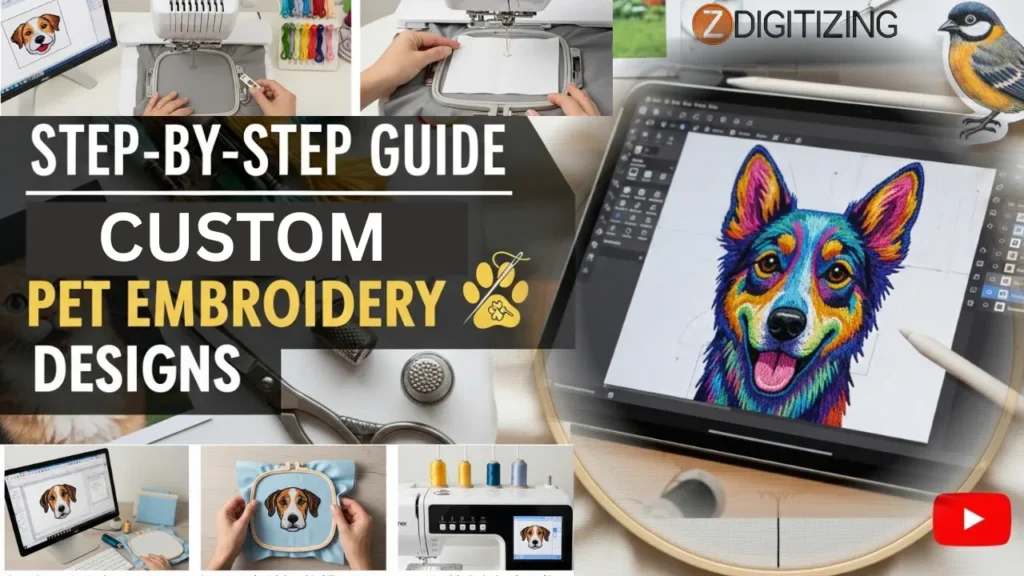
In this guide, we’ll walk together step-by-step, so you feel confident and actually enjoy the process from start to finish.
Step-by-Step Guide to Creating Custom Pet Embroidery Designs
What is Pet Embroidery?
It is the process of turning your pet’s photo into a stitched design using a machine, so their face, fur, and expressions can be beautifully recreated on fabric.
In this process, high-detail animal embroidery designs are created to match the real look of your pet, making the final result personal and meaningful. It’s often used for gifts, apparel, decor, or keepsakes, and has become a popular way to celebrate the bond we share with our pets.
Picture Selection Before Embroidery (Most Important Step)
Before starting custom pet embroidery, choosing the right picture is the key to getting a clean and realistic result.
The clearer the fur, eyes, and facial details appear in the photo, the better the digitizing and final stitch-out will look, whether you’re creating dog embroidery patterns, cat embroidery patterns, or any other embroidery design for pets.

A good picture keeps the pet’s expression natural and makes the embroidery look truly personal.
If You Already Have a Photo (Use These Criteria)
- The face should be clearly visible (no blur or pixelation)
- Both eyes must be clear and bright, no heavy shadows or glare
- Natural colors should be visible (avoid heavy filters)
- The fur pattern and texture should be noticeable
- The photo should be taken at eye-level, not from above or below
If You Need to Take a New Photo
- Use soft natural light (near a window / outdoor shade)
- Avoid using flash, it changes fur color and flattens details
- Hold the camera at eye-level with your pet
- Take several shots, so you can choose the best one
- Keep the background simple so the pet stands out clearly
Once you have a clear, well-lit reference photo, the embroidery will automatically come out sharper, more expressive, and more meaningful.
Digitizing Is the Foundation of Every Pet Embroidery Design
Alright, now that the picture is selected, here’s the real talk, before stitching, your image must be properly digitized. And this part is where most people get stuck.
Pet faces have tiny expressions, fur flow, eye details, soft shading, if the digitizing isn’t done right, the final embroidery will look flat, patchy, or even distorted. So trying to do it yourself at home usually leads to frustration and wasted time.

That’s exactly why we at ZDigitizing handle this step for you. We create pet embroidery digitizing files manually, no auto-software, so the design actually looks like your pet, not just a random animal shape.
We also provide all the major pet embroidery file formats (DST, PES, EXP, JEF, VP3, etc.) depending on your machine. And the professional embroidery techniques for pets we use (like layered fur shading, smooth color transitions, and highlight mapping) make the stitched result look real, soft, and full of personality.
In simple words: You send us the photo → We prepare the perfect embroidery file → You just stitch and enjoy a beautiful result.
What You’ll Need to Start the Embroidery (Let’s Get Ready!)
Now that your design is digitized, it’s time to prepare your setup. Having the right tools makes a big difference in how neat and realistic your pet paw embroidery comes out.

Don’t worry, everything is simple and easy to find.
- Embroidery Machine (Brother, Janome, Singer, Ricoma, any good model)
- Embroidery Thread – 40wt Polyester (Madeira / Isacord recommended)
- Bobbin Thread – 60wt White
- Embroidery Needles (75/11 for shirts, 80/12 for hoodies, Organ brand recommended)
- Fabric Options: Cotton Twill / Heavy Linen / Canvas / Hoodie Material
- Pet Embroidery Hoop (common sizes 4×4 and 5×7)
- Stabilizer Selection:
- Cut-Away Stabilizer (medium to heavy) for clothing
- Tear-Away Stabilizer for firm fabrics like tote bags
- Water-Soluble Topping for fluffy fabrics (fleece / sweaters)
- Stabilizer Brands: Sulky, Madeira, Gunold
With these supplies ready, your design will stitch cleanly, stay stable, and look perfect, exactly what makes great embroidery for pet lovers.
Step-by-Step: How to Stitch Your Pet Embroidery (Machine Method)
Now your picture is selected and your file is digitized by ZDigitizing, so we’re ready for stitching. From here, the goal is to stitch carefully and smoothly so your pet embroidery comes out detailed, clean, and expressive.
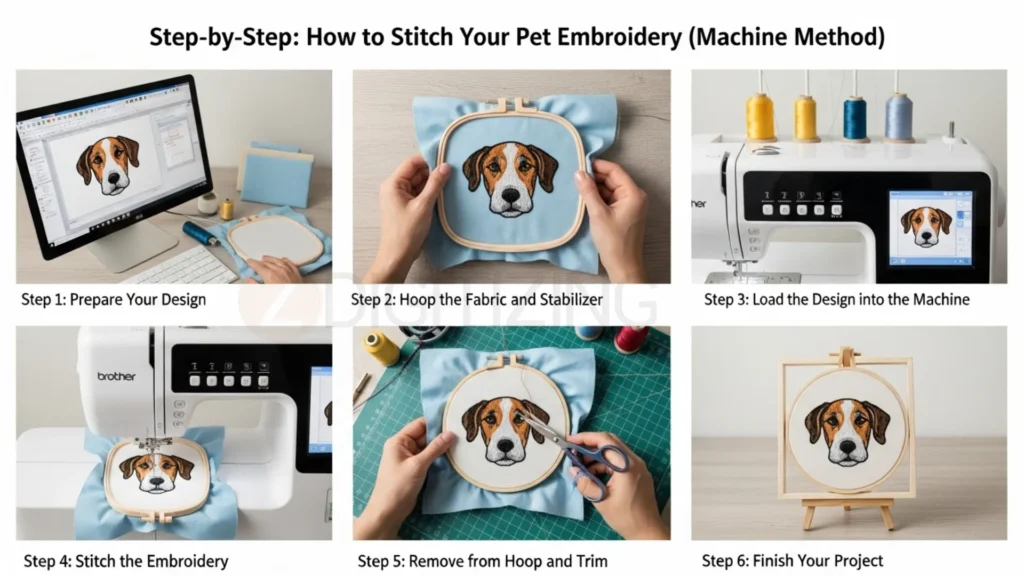
Just follow each step in order, no rush, no guessing needed.
Step 1: Load and Position the Design
- Load your file into the machine and open it on the screen.
- Center the design exactly where you want it on the fabric.
- Double-check the size and direction before starting.
Step 2: Hoop the Fabric Correctly
- Hoop your fabric firmly, it should feel tight like a drum.
- Make sure the fabric is flat so the embroidery does not pucker.
- Confirm that the hoop is locked in place in the machine.
Step 3: Start With a Quick Test Run
- Stitch a small part of the design on a sample fabric.
- This helps ensure clean stitching before working on the final piece.
- If everything looks smooth, you’re ready for the real run.
Step 4: Stitch the Eyes First
- Begin with the eyes, this brings life to the pet embroidery.
- Watch the stitching closely so the highlights stay sharp.
- Trim any small jump threads immediately.
Step 5: Move to the Nose and Center Area
- Stitch the nose, muzzle, and center face area next.
- This locks the expression of the pet and defines personality.
- Keep the stitching speed steady for smooth detail.
Step 6: Build the Fur in Layers
- Stitch in layers: dark → mid-tone → light.
- Follow the natural fur direction to avoid flat or stiff results.
- This is where your pet stitch design becomes soft and realistic.
Step 7: Add Final Highlights and Edges
- Add final light stitches around eyes, ears, and cheeks.
- These small details create depth and realism in your pet embroidery.
- Trim all threads so the surface looks clean.
Step 8: Remove the Hoop and Finish
- Unhoop gently, trim stabilizer from the back, and steam from the reverse side.
- Do not iron directly on top, you don’t want to flatten the texture.
- Let the fabric rest flat so the machine embroidery pet design settles nicely.
Helpful Tips for Better Pet Embroidery Results
- Keep your stitching speed slightly slow, pet paw embroidery has layered shading, and slower speed keeps the blends smooth.
- Always trim small jump threads as you go, so details (especially around the eyes and nose) stay clean and sharp.
- For fur shading, follow the natural direction of the fur, not straight lines, this makes the portrait look soft and realistic.
- Don’t skip the highlight stitches in the eyes, this tiny detail is what brings the pet to life.
- If the fabric begins to pull, stop and check tension. Embroidery pet design is dense, so even small tension changes can show.
- Let the design complete one color fully before changing thread; stopping too often can break the smooth gradient.
- After finishing, steam from the back side only. This relaxes stitches without flattening the texture.
- And always keep a little patience, pet embroidery is a detailed art, and the beauty is in those small finishing touches.
Gift Ideas You Can Create After the Embroidery Is Finished
Once your stitching is done, now comes the fun part, turning it into something meaningful and memorable. There are so many pet embroidery ideas that can easily become thoughtful gifts for yourself or someone who loves their pet.
These kinds of pieces become beautiful embroidered pet gifts, keepsakes, and even décor. They also make wonderful pet embroidery gifts for birthdays, holidays, or memorial moments. You can turn your finished designs into unique embroidery projects for pets that people actually use and cherish.
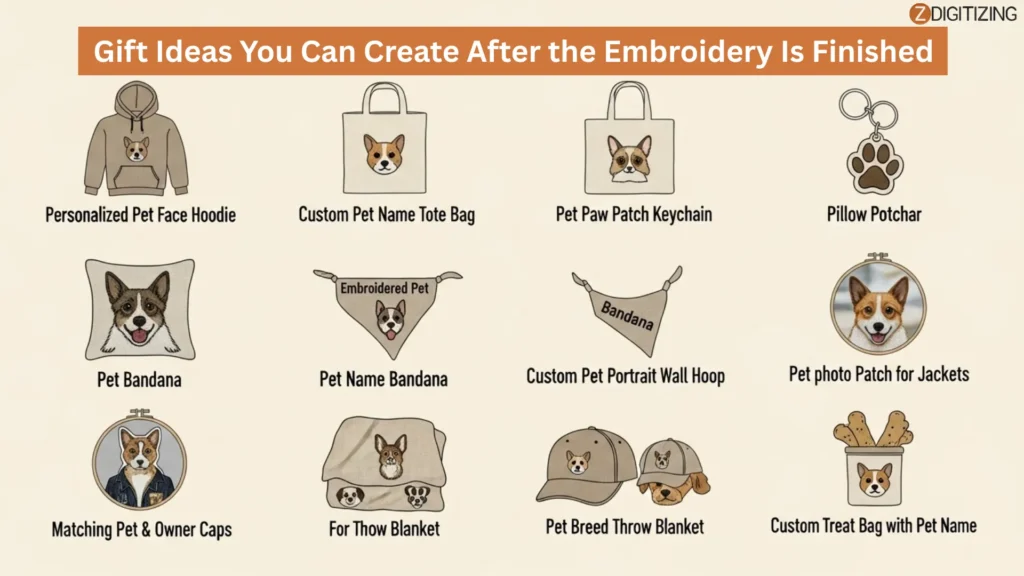
- Personalized Pet Face Hoodie
- Custom Pet Name Tote Bag
- Pet Paw Patch Keychain
- Embroidered Pet Portrait Pillow Cover
- Pet Name Bandana
- Custom Pet Portrait Wall Hoop
- Pet Photo Patch for Jackets
- Matching Pet & Owner Caps
- Pet Breed Throw Blanket
- Custom Treat Bag with Pet Name
Conclusion
This pet embroidery guide has walked you through the entire process in a simple and practical way, from selecting a good pet photo to having it digitized and finally stitching it step by step.
When you follow the process slowly and patiently, the result really comes out beautiful. You’ll be able to see your pet’s expression, their eyes, and those small details that make them feel special. And honestly, that’s the whole magic of pet embroidery, it’s personal.
Now one important thing to remember: The embroidery only looks good if the digitizing is done correctly. That’s the base of everything.
And that’s where ZDigitizing helps you. We don’t use auto-digitizing or shortcuts. We digitize manually, paying attention to fur direction, depth, and small expressions so your design actually looks like your pet. We offer all machine file formats, super fast delivery, and free revisions, so you get a stress-free and smooth stitching experience from start to finish.
ORDER NOW and get 50% OFF on your first digitizing order, and enjoy quality pet embroidery designs with super fast turnaround.
Just send your pet’s picture, and we’ll take care of the rest. 💛
FAQs
First, choose a clear, eye-level photo of your pet where the fur texture and facial details are easy to see. Then outline the main features like the head shape, eyes, nose, and fur direction. These outlines help guide the embroidery so the final result looks natural and expressive.
The most reliable method is using water-soluble stabilizer, because it keeps the design visible throughout stitching and washes away cleanly. You can also print the design on printable stabilizer sheets or trace it against a light source if your fabric is light enough.
Long-and-short stitch shading (also known as thread painting) works best because it blends colors smoothly. Start with darker shades first, then add mid-tones, and finish with lighter highlights to create soft, lifelike fur.
Use smooth quality thread in multiple close shades to match the pet’s fur. Thinner strands help keep details clean and prevent bulky stitches. Keep your fabric tight in an embroidery hoop so the texture remains even and controlled while stitching.
You’ll need digitizing software where you can import the pet’s photo and build stitch layers based on fur direction and shading. For the best results, manual digitizing is recommended. If you want it done professionally and ready to stitch, ZDigitizing can create the file for you with clean shading, proper stitch flow, and correct machine settings.