Quick Tips on How to Use Embroidery Thread Like a Pro?
Getting good embroidery results starts with knowing how to use embroidery thread correctly. Since embroidery thread is softer and shinier than regular sewing thread, it needs the right needle and proper machine settings to work smoothly. If your thread keeps breaking or tangling, don’t worry. In this guide, we’ll share simple tips to help you avoid common problems and get cleaner, more professional-looking embroidery every time.
Quick Tips on How to Use Embroidery Thread Like a Pro?
What Makes Embroidery Thread Different from Regular Sewing Thread?
To get the best results on your projects, you must understand the core differences between decorative fibers and utility fibers. Standard sewing thread is designed purely for structural strength.
It holds fabric pieces together tightly, possesses a high twist count, and features a functional matte finish. It is built to withstand constant friction and heavy structural stress over a long period.
Decorative thread serves an entirely different purpose on your fabric. It is engineered specifically to lie flat on top of the material, scatter light beautifully, and create dense, visually striking designs.
Because it values beauty over structural strength, it has a lower twist count. This physical difference explains why you must learn how to use embroidery thread with a distinct approach, as forcing it through a tight regular sewing setup will quickly shred its delicate outer plies.
Embroidery Thread vs Sewing Thread
Feature
Embroidery Thread
Regular Sewing Thread
Primary Purpose
Decoration, filling, and high-sheen design
Structural seams, construction, and durability
Tensile Strength
Lower (designed to lay flat without puckering)
Higher (designed to hold fabric pieces together)
Finish / Texture
High shine, gloss, or rich matte texture
Standard matte or low-luster finish
Common Materials
Polyester, Rayon, Silk, Cotton Floss
Polyester, Cotton-wrapped Polyester, Nylon
How to Use Embroidery Thread | Essential Tips
Mastering thread management and machine settings is the fastest way to achieve retail-quality embroidery designs. The following professional techniques will drastically reduce thread breaks, eliminate looping, and ensure flawless stitching on any fabric.
Use a Needle That Fits Your Thread Weight
Use a Bobbin Thread That Works with Your Top Thread
Slow Down the Machine Speed for Specialty Threads
Keep Your Threads in a Cool, Dry, and Dark Area
Use Thread Nets for Slippery Trilobal Polyester and Rayon
Adjust Top Tension Settings for Perfect Satin Stitches
Pass the “Tug Test” with High-Quality Stabilizers
Thread the Machine with the Presser Foot Up
1. Use a Needle That Fits Your Thread Weight
Match Your Needle Size to Your Thread Weight
Choosing the correct needle size is fundamental to mastering how to use embroidery thread without experiencing frustrating thread breaks.
Different types of machine embroidery thread, such as standard 40-weight polyester or thicker 12-weight cotton, require specific needle eyes to prevent friction.
When looking at embroidery thread for machines, a standard 75/11 needle works beautifully for 40-wt, but switching to a 90/14 topstitch needle is essential for metallic or thicker embroidery threads types to ensure smooth passages.
2. Use a Bobbin Thread That Works with Your Top Thread
Match Your Bobbin Thread to Your Top Thread
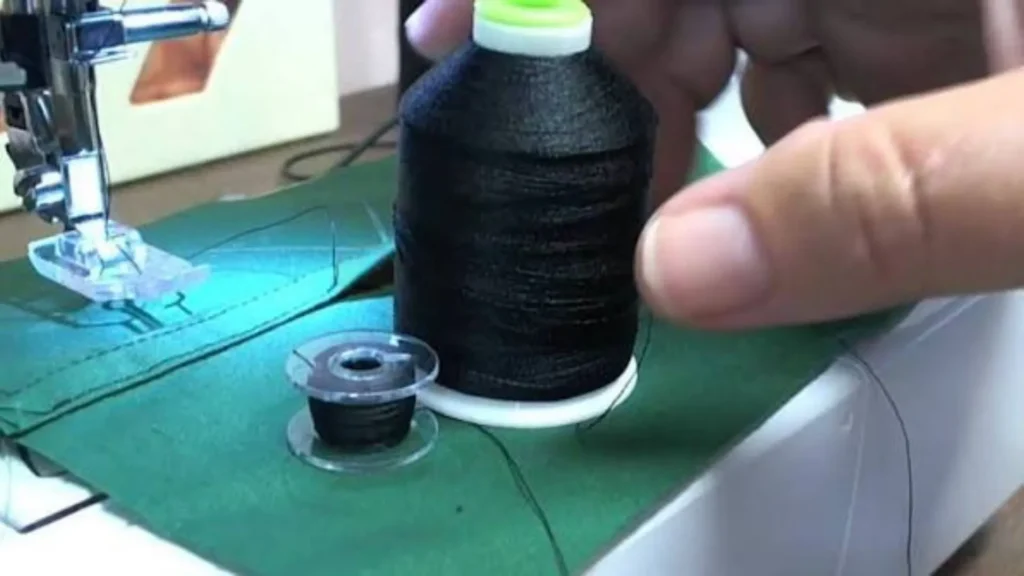
Understanding bobbin dynamics is a huge step toward learning how to knot embroidery thread and using embroidery thread effectively like an industry expert. Unlike regular sewing where you use the same spool on top and bottom, machine embroidery typically uses a much lighter 60-wt or 90-wt filament polyester bobbin thread.
Understanding embroidery thread vs sewing thread differences helps you realize that a specialized, lightweight bobbin thread prevents your design from becoming stiff and bulky, keeping the back of the design clean.
3. Slow Down the Machine Speed for Specialty Threads
Slow Down the Machine Speed for Specialty Threads
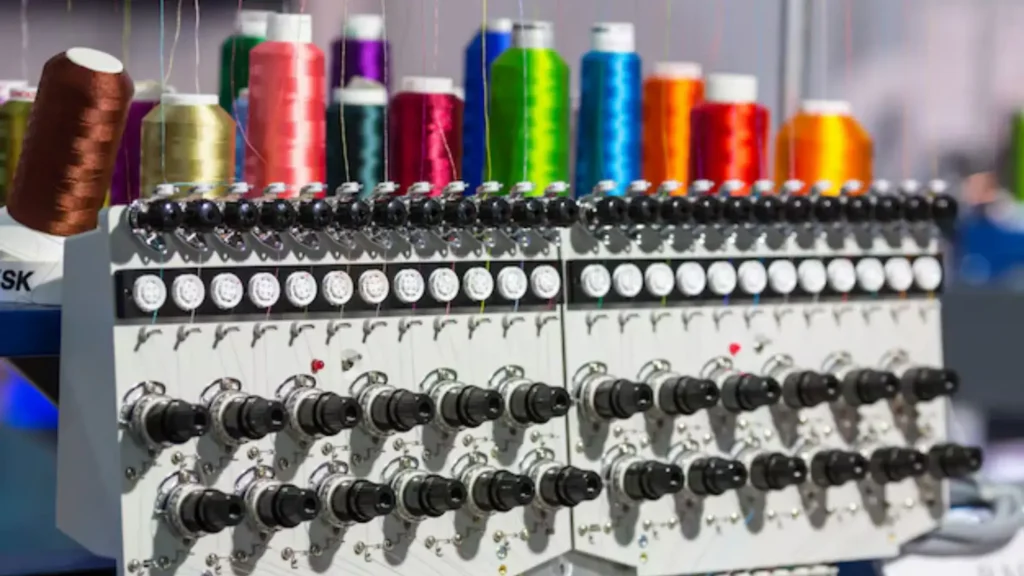
When figuring out how to use embroidery thread that is fragile, dropping your machine’s stitches-per-minute (SPM) is a lifesaver. Metallic, holographic, and delicate silk machine embroidery thread can shred easily at high speeds due to friction heat.
If you are using premium, high-sheen spools from the best embroidery thread brands, dialing your commercial or home machine down to 400–500 SPM ensures smooth stitching and gorgeous, unbroken fills.
4. Keep Your Threads in a Cool, Dry, and Dark Area
Keep Your Threads in a Cool, Dry, and Dark Area
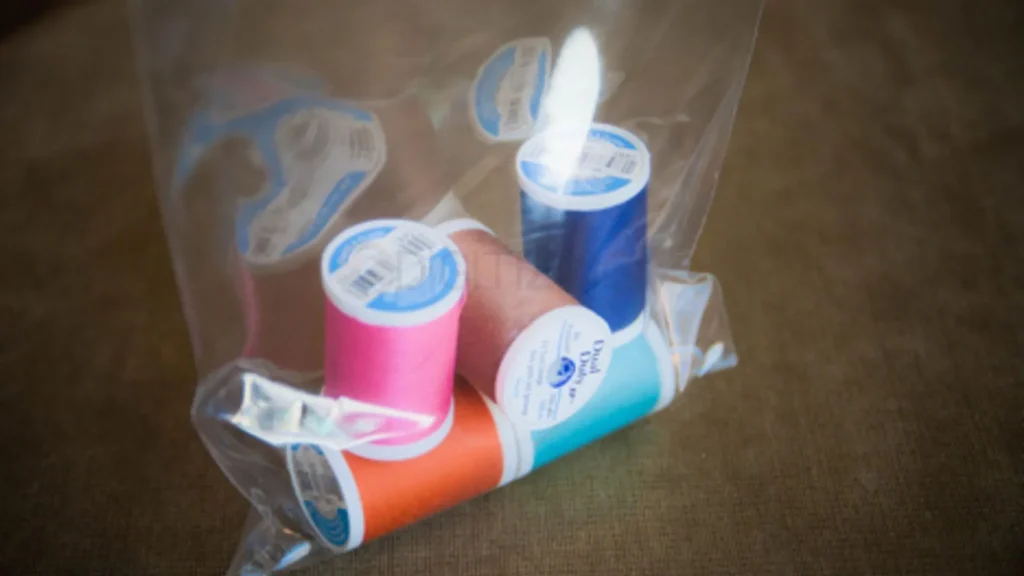
Learning how to store embroidery thread properly preserves its tensile strength and prevents premature fading or dry rotting. To master how to use embroidery thread over the long haul, keep your spools away from direct sunlight and dust.
UV rays break down thread fibers quickly, turning even the best machine embroidery thread into brittle, easily snap-able strands that will ruin your tension during high-speed production runs.
5. Use Thread Nets for Slippery Trilobal Polyester and Rayon
Use Thread Nets for Slippery Trilobal Polyester and Rayon
Using a mesh thread net is a pro secret on how to use embroidery thread when dealing with slippery spools. Many machine embroidery thread types, particularly high-shine trilobal polyester and rayon, tend to cascade or “puddle” off the spool, catching on the spool pin.
Slipping a net over the cone controls the feed perfectly, which is also a crucial step in understanding how to thread a needle for embroidery machines seamlessly without extra loops forming before the tension discs.
6. Adjust Top Tension Settings for Perfect Satin Stitches
Adjust Top Tension Settings for Perfect Satin Stitches
Fine-tuning your upper tension is essential when mastering how to use embroidery thread for flawless satin columns. A perfect embroidery stitch should show a 1/3 to 2/3 ratio on the back, where the top thread pulls slightly to the underside.
When testing different best embroidery thread for machine embroidery options, running a quick “I-text” or satin border test lets you adjust the tension discs so no bobbin thread shows on top.
7. Pass the “Tug Test” with High-Quality Stabilizers
Pass the Tug Test with High-Quality Stabilizers
You cannot separate how your stabilizer performs from how to use embroidery thread successfully. Before you even learn how to start embroidery thread patterns on a new fabric, ensure your backing is drum-tight in the hoop.
If the fabric puckers or shifts, even the most expensive, high-quality thread will look messy, looped, or misaligned due to poor structural support.
8. Thread the Machine with the Presser Foot Up
Thread the Machine with the Presser Foot Up
The absolute golden rule of how to use embroidery thread is to always thread the upper path with your presser foot raised. When the foot is up, the machine’s tension discs are wide open, allowing the thread to seat deeply and correctly between them.
This simple habit prevents nesting on the underside of your hoop, ensuring that any of the unique types of machine embroidery thread you choose can feed smoothly from start to finish.
How Thread Choice Changes Stitch Appearance?
A glossy thread makes satin stitches stand out more. A matte thread makes the design feel softer and less reflective. Thick or stiff thread can make small details look crowded if the design is not adjusted properly.
Digitizers should also think about stitch density. Dense stitches put more stress on the thread path and needle. If the design is too packed, even a good thread can struggle.
Avoid excessive short stitches that create extra friction.
Test the design on the same fabric type before production.
Use stitch types that match the thread’s strength and finish.
This is especially important when talking about machine embroidery thread types in a professional setting. The thread is not just decoration; it is part of the design system.
Conclusion
Wrapping up, knowing how to use embroidery thread like a professional completely transforms the quality of your finished products. However, even the highest quality thread won’t save a design if the digitizing itself isn’t perfect.
That is exactly where ZDigitizing comes in to make your life easier. If you want top-notch digitizing for your designs along with expert advice on the right thread choice, we provide both to ensure your production runs smoothly.
You can get 100% manual digitizing services from us with guaranteed retail quality. To give you complete peace of mind, we even provide a free preview of your design before you pay.
Our prices are much lower than the standard market rates, and we offer great discounts on bulk orders. Whether you need standard logo work, jacket backs, or specialized hat digitizing services, our team is available 24/7 to support your business.
Plus, if you are a new customer, you can get an amazing 50% off on your first order. Don’t let poor files ruin your thread work, place your order today and experience premium quality at unbeatable prices!
Are you looking for embroidery digitizing and vector art services at low cost with superfast turnaround, guarranted quality and preview before pay? So, you are at right place. We can digitize and vectorize any type of artwork in your required file format.