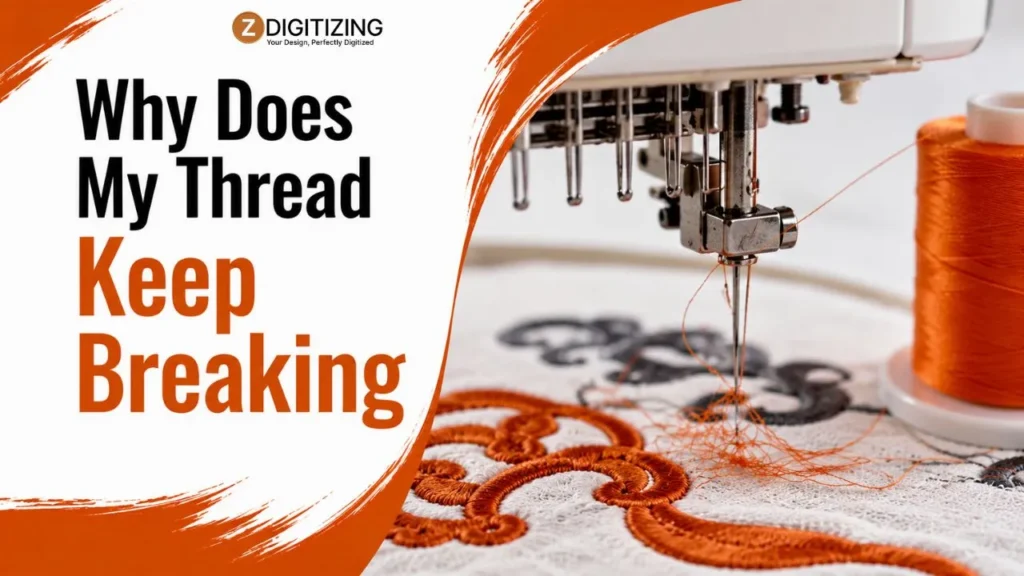
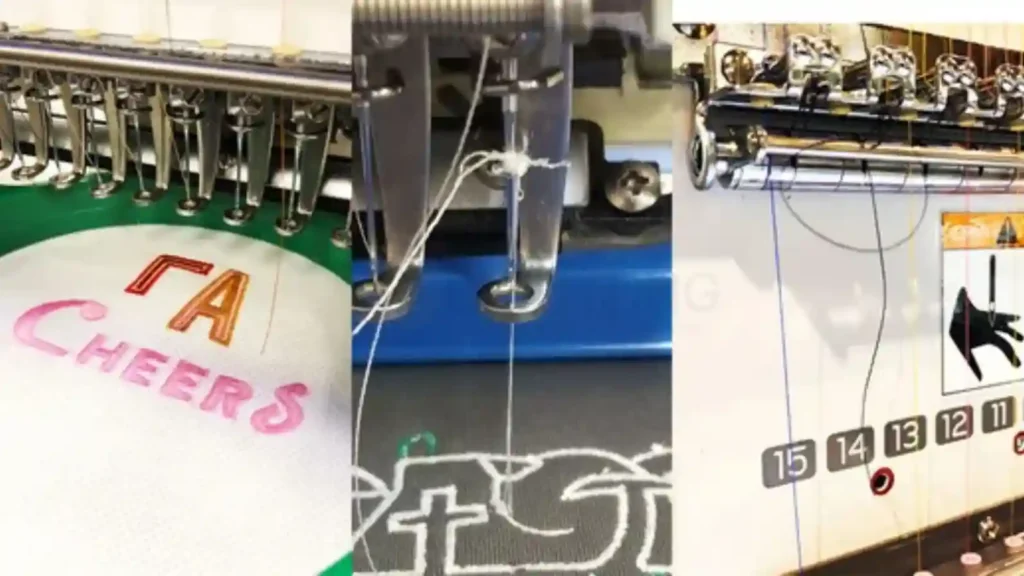
For most embroidery problems, why does my thread keep breaking stems directly to incorrect threading, a damaged needle, excessive tension, bobbin issues, or a design that puts too much stress on the thread. Start by fully rethreading the machine, replacing the needle, and slightly loosening the upper tension. If the thread keeps breaking in the same area of a design, the embroidery file may also need attention.
Why Does My Thread Keep Breaking?
What Kind of Thread Break Are You Seeing?
The location and appearance of the break can help identify the cause. Check whether the upper thread is snapping, the bobbin thread is breaking, or the thread is becoming fuzzy before it breaks.
What Kind of Thread Break Are You Seeing
What you see
What it usually indicates
First thing to check
Upper thread breaking
Incorrect threading, high upper tension, or a damaged needle
Clear the top thread path completely, check upper tension discs, and insert a new needle
Lower or bobbin thread breaking
Bobbin insertion, winding, lint, or bobbin tension problems
Remove, clean, rewind, and reseat the bobbin
Thread fraying or shredding
A burr, rough surface, worn needle, or excessive friction
Inspect the needle, thread path, throat plate, and bobbin area
A clean snap usually points to tension or threading, while fuzzy or separated fibers suggest friction or damage. If the problem appears only on one design section, check the file after ruling out the machine and thread setup. Files created without precise manual digitizing often stack micro-stitches that snap threads instantly.
Why Does My Upper Thread Keep Breaking?
When asking why does my thread keep breaking at the top path, the issue is often related to embroidery thread tension, threading, or the needle itself. A missed thread guide, incorrectly threaded take-up lever, or spool that cannot unwind smoothly can create enough friction to break the thread during stitching.
Why Does My Upper Thread Keep Breaking
Start by removing the thread completely and rethreading the machine with the presser foot raised. This helps the thread settle correctly between the tension discs. Then replace the needle with the correct size and type, making sure it is fully inserted in the proper direction.
If the problem continues, reduce the upper tension slightly and test the design on a scrap piece of fabric. Avoid making large tension changes at once because an overly loose setting can create loops and poor stitch formation.
Other common causes of upper thread breaking include:
Using thread too thick for the needle eye
A rough needle plate, presser foot, or thread guide
A spool cap that prevents smooth thread delivery
Excessive stitching speed on dense sections
Old, brittle, or damaged thread
If the thread becomes fuzzy before snapping, do not keep adjusting tension. The thread may be rubbing against a damaged surface instead.
Why Does My Lower or Bobbin Thread Keep Breaking?
Lower thread breaking usually points to the bobbin area rather than the upper threading. The bobbin may be wound unevenly, inserted incorrectly, or affected by lint beneath the tension spring. A damaged bobbin case or rough spot inside the hook area can also catch the thread.
Why Does My Lower or Bobbin Thread Keep Breaking
Remove the bobbin and verify smooth winding density without loose layers or gaps. Clean the bobbin case, reseat the bobbin according to the machine’s threading direction, and confirm that the thread passes through the correct tension slot.
If the bobbin thread breaking continues, inspect the bobbin case and hook area for scratches, burrs, or thread buildup. A small damaged surface can repeatedly catch the thread as it moves.
Do not immediately tighten or loosen the bobbin screw unless the basic checks have been completed. Bobbin tension should be adjusted carefully because it affects the balance between the upper and lower threads. On the back of a balanced embroidery design, only a small amount of bobbin thread should normally be visible.
Why Does My Embroidery Thread Keep Shredding?
Thread shredding is different from a clean break. Instead of snapping, the fibers become fuzzy, separated, or pulled apart before the thread fails. This is commonly caused by friction, a damaged needle, or a rough part in the thread path.
Why Does My Embroidery Thread Keep Shredding
Inspect the needle eye, throat plate, presser foot, bobbin case, and rotary hook for burrs or sharp edges. Replace the needle if it is worn, bent, or damaged. If a rough machine part is responsible, replacing the needle alone will not solve the problem.
When asking why does my embroidery thread keep shredding, consider the thread itself. Rayon is more delicate than polyester and can become weak when exposed to age, heat, moisture, or poor storage. Metallic thread is also more sensitive to friction and usually requires a suitable needle, slower stitching speed, and a smooth thread path.
When embroidery thread fraying appears only on dense or highly detailed sections, inspect the design settings as well. Excessive density, tiny stitches, and repeated needle penetrations can create friction that weakens the thread before it breaks.
Does the Thread Type Affect Breakage?
Different embroidery threads respond differently to tension, friction, and stitching speed. Choosing the right material helps explain why does my embroidery thread keep breaking on certain fabrics while stitching smoothly on others, reducing overall embroidery thread problems.
Does the Thread Type Affect Breakage
Thread type
Common breakage concern
What to check
Polyester embroidery thread
Excessive tension, friction, or a needle that is too small
Use a suitable needle and check that the thread moves smoothly
Rayon embroidery thread
Weaker fibers can fray or break under excessive tension
Use moderate tension and store the thread in a cool, dry place
Cotton embroidery thread
Less elasticity can make dense designs more difficult to stitch
Match the needle and avoid unnecessary tension
Metallic embroidery thread
Friction, sharp surfaces, and high speed can damage the thread
Use a suitable specialty needle, slower speed, and a smooth thread path
If a particular thread repeatedly breaks while another works correctly, compare the thread type, needle, tension, and machine speed before changing the entire design. The problem may be a compatibility issue rather than a machine fault.
What Should You Check First When Thread Keeps Breaking?
When why does my thread keep breaking becomes a recurring problem, troubleshoot in a fixed order instead of changing several settings at once. This helps identify the actual cause and prevents unnecessary tension or machine adjustments.
What Should You Check First When Thread Keeps Breaking
Rethread the machine completely. Confirm that the thread passes through every guide and the take-up lever correctly. Check that the spool unwinds without catching.
Replace the needle. Use the correct needle type and size, and make sure it is fully inserted in the proper direction.
Check the upper tension. If the upper thread is snapping, loosen the tension slightly and test on scrap fabric. Make one adjustment at a time.
Inspect the bobbin. Confirm smooth winding density, correct insertion, and a clean bobbin case. Look for lint or thread trapped beneath the tension spring.
Examine the thread path. Check the needle plate, presser foot, bobbin case, and hook area for burrs, scratches, or rough edges.
Reduce speed and improve stability. Test dense designs at a slower speed, and make sure the fabric is firmly hooped with suitable backing.
Test another design. If a simpler file stitches correctly but one design keeps breaking in the same location, the embroidery file may be creating excessive stress.
Avoid changing upper and bobbin tension together. Once the machine is balanced, changing both settings can make it difficult to determine which adjustment solved the problem. Regular embroidery machine maintenance also matters because lint, dried lubricant, and worn machine parts can create friction that causes repeated breaks.
How Can You Stop Embroidery Thread From Breaking?
To reduce repeated thread breaks, use the correct needle and thread, rethread the machine carefully, keep the upper tension balanced, and make sure the bobbin is clean and properly wound. Slow the machine when stitching dense designs, use suitable backing, and inspect the thread path for rough surfaces. If the thread still breaks in the same area of one design, the file may need to be corrected.
How Can You Stop Embroidery Thread From Breaking
Problem
Practical solution
Thread snaps near the needle
Rethread the machine, replace the needle, and check upper tension
Bobbin thread keeps breaking
Clean and reseat the bobbin, then check its winding and tension
Thread becomes fuzzy before breaking
Inspect the needle, thread path, throat plate, and bobbin case
Breaks happen in dense design areas
Reduce speed and check stitch density, underlay, and sequencing
The same design section keeps failing
Test another file and consider professional digitizing
The key is to correct the cause rather than repeatedly changing tension. A properly threaded machine, suitable thread and needle, stable fabric, and well-digitized design will usually produce more consistent stitching.
When Is the Embroidery Design Causing the Thread Breaks?
If the machine works correctly with other designs but keeps breaking thread in the same area, the embroidery file may be creating excessive stress. Dense fills, tiny stitches, overlapping sections, and repeated needle penetrations can make why does my thread keep breaking a design-related problem rather than a machine problem.
When Is the Embroidery Design Causing the Thread Breaks
A design can also cause trouble when stitches are too short, underlay is unsuitable, or the sewing sequence forces the machine to repeatedly travel through the same crowded area. These problems become obvious on complex designs requiring a specialized patch digitizing service or dense logo files.
Look for these warning signs:
Thread breaks repeatedly at the same design location.
Several thread types produce the same problem in one file.
A simpler design stitches normally on the same machine.
Breaks occur around dense fills, sharp turns, or overlapping sections.
The design requires unusually frequent trims or color changes.
In these situations, changing tension repeatedly may only hide the symptom. The file may need its density, stitch length, underlay, or sequencing reviewed.
When Machine Troubleshooting Is Not Enough
If you have checked all mechanical paths but why does my thread keep breaking remains an issue, the recurring breaks point directly to the embroidery file. This is especially true when the same design fails at the same location across different fabrics or thread types.
When Machine Troubleshooting Is Not Enough
A professional digitizer fixes these structural issues by reducing unnecessary needle penetrations, balancing stitch density, and re-sequencing pathing for smoother stitching. If you need specialized embroidery digitizing services in USA, choose a partner who can analyze the raw stitch file and correct the underlying density errors.
Conclusion
In most cases, why does my thread keep breaking can be answered by checking the threading path, needle, tension, bobbin, and machine condition in the right order. If the thread keeps breaking at the same point in one design, the embroidery file may need a professional review.
With the right machine settings and a properly digitized design, recurring thread breaks become easier to prevent. If you need help correcting a problematic embroidery file, ZDigitizing can review the design and rebuild areas affected by density, sequencing, or stitch-related stress. New customers receive 50% off their first order.
Are you looking for embroidery digitizing and vector art services at low cost with superfast turnaround, guarranted quality and preview before pay? So, you are at right place. We can digitize and vectorize any type of artwork in your required file format.