Finding the Best Embroidery Digitizing Service in 2026 isn’t simply about choosing the lowest price or the fastest turnaround. The quality of the digitizing directly affects how your design stitches, how efficiently your machines run, and how professional the finished embroidery looks.
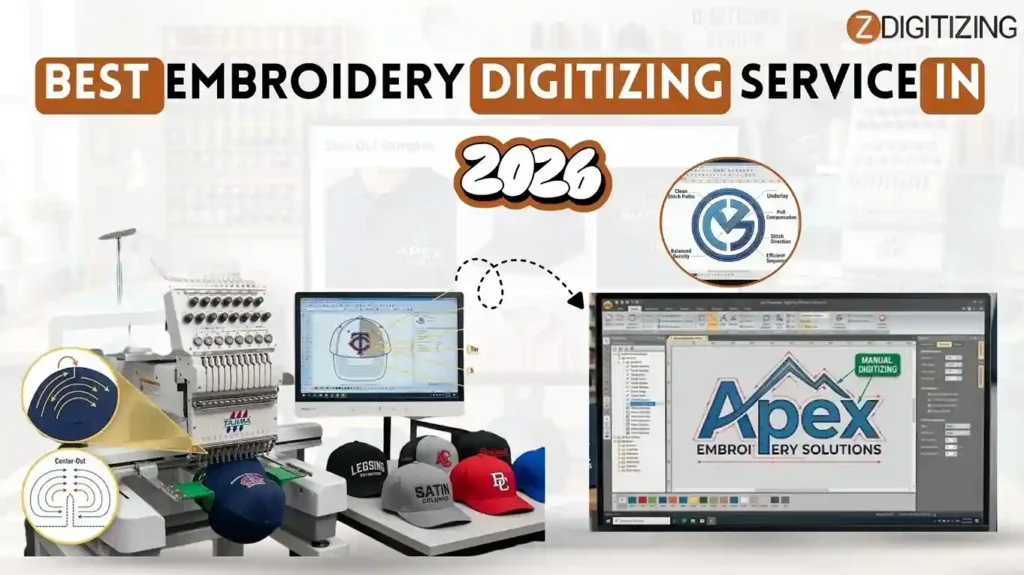
In this guide, you’ll learn what separates an average digitizing company from an experienced professional, how to evaluate quality before placing an order, what pricing and turnaround times to expect, and the key factors that matter when choosing a reliable digitizing service for embroidery.
Best Embroidery Digitizing Service in 2026
What Sets a Great Embroidery Digitizing Service Apart?
Not every embroidery file is created with the same level of skill. While many companies advertise similar turnaround times and pricing, the difference becomes obvious once the design reaches the embroidery machine. A professionally digitized file produces clean stitching, smooth machine operation, and consistent results across multiple garments, while a poorly digitized file often leads to thread breaks, puckering, uneven fills, and costly production delays.
The best digitizing services for embroidery focus on far more than converting artwork into stitches. Experienced digitizers analyze the design, fabric type, garment placement, stitch direction, underlay, pull compensation, and density before creating the file. Every decision is made to ensure the embroidery sews efficiently and maintains its appearance on the finished product.
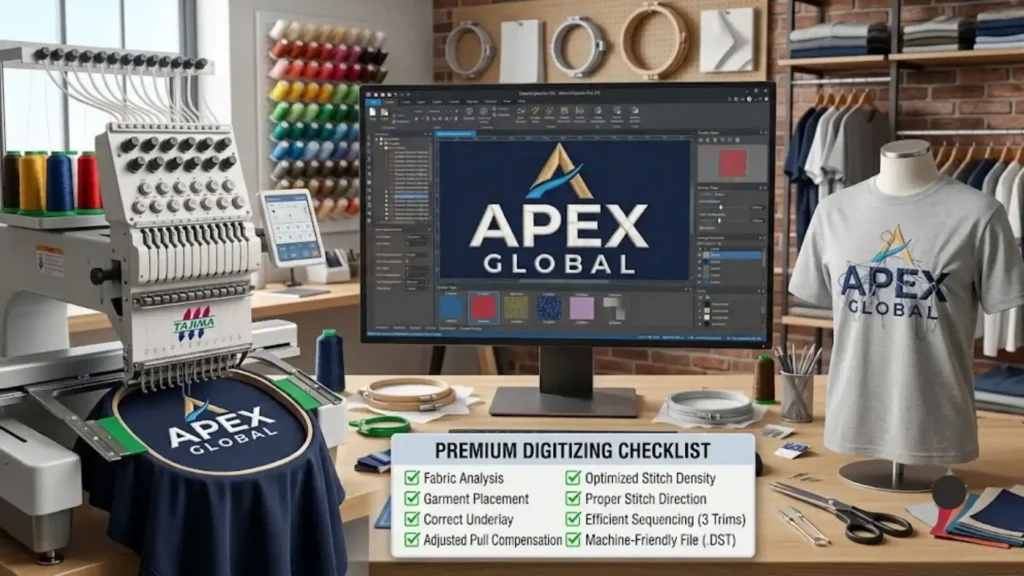
Professional providers also understand that a logo stitched on a structured cap requires a completely different approach than the same artwork embroidered on a polo shirt or jacket back. Instead of relying on automated software, they manually adjust stitch settings to suit each application, resulting in cleaner details and fewer production problems.
When comparing embroidery digitizing services online, look beyond marketing claims. A reputable provider should be able to explain their workflow, offer revisions when necessary, support multiple embroidery machine formats, and deliver production-ready files rather than files that require additional corrections.
Characteristics of a Professional Embroidery Digitizing Service
Feature | Why It Matters |
Manual digitizing by experienced professionals | Produces cleaner stitching and better machine performance |
Fabric-specific stitch adjustments | Prevents puckering, gaps, and distortion |
Production-ready embroidery files | Minimizes machine downtime and editing |
Multiple machine file formats | Ensures compatibility with different embroidery machines |
Quality testing before delivery | Helps identify issues before production begins |
Clear revision policy | Allows refinements without restarting the project |
Consistent turnaround times | Keeps production schedules on track |
Leading Embroidery Digitizing Service Providers Worth Considering in 2026
Choosing the Best Embroidery Digitizing Service in 2026 often means comparing providers with different strengths rather than searching for a single “perfect” company. Some businesses specialize in fast turnaround, while others focus on complex embroidery, large commercial orders, or highly detailed manual digitizing. The best choice depends on your production requirements, budget, embroidery machine, and the type of designs you create.
Instead of relying on sponsored rankings or promotional “Top 10” lists, we evaluated providers using practical factors that matter most to embroidery businesses. These include experience, manual digitizing expertise, turnaround reliability, transparency, customer support, supported embroidery formats, specialty services, and overall reputation within the commercial embroidery industry.

The companies below are not listed in a strict ranking because every embroidery shop has different priorities. Whether you’re looking for quality embroidery digitizing services, a reliable online embroidery digitizing service provider, or a custom embroidery digitizing service for specialized projects, these providers have established themselves as reputable options worth considering.
Quick Comparison of Leading Embroidery Digitizing Service Providers
Provider | Best For | Standard Turnaround* | Manual Digitizing | 24/7 Support | Specialty Strength |
ZDigitizing | Commercial businesses & high-volume production | 4–12 Hours (1-4hr Rush) | 100% Manual | Yes | Caps, jacketbacks, 3D puff, applique, vector art |
Sassy Digitizing | Precision-focused commercial embroidery | 2–4 Hours (Standard) | 100% Manual | Yes | Caps, 3D puff, appliqué |
Absolute Digitizing | Small and medium embroidery businesses | 2–4 Hours | Yes | Yes (Live Chat) | Commercial logo digitizing |
Eagle Digitizing | Bulk commercial orders | 2–6 Hours | Yes | Yes (Live Chat) | High-volume production & balanced thread tension |
DigitizingUSA | USA embroidery & promotional brands | 12–24 Hours | Yes | Yes (Live Chat) | Applique, 3D puff, & fabric optimization |
EZ Digitizing | Detailed logo embroidery & appliqué work | 12–48 Hours | Yes | Email / Form Only | Stitch simulation, fill coverage, & outlines |
Embroidery Digitizing USA | Production-ready logo digitizing | 4–12 Hours | Yes | Yes | Underlay optimization & small text |
*Note: Turnaround times, pricing, and service policies are based on publicly available information available at the time of writing and may change over time. Always confirm the latest details directly with your chosen provider before placing an order.
How We Evaluated These Providers
Rather than selecting companies based on advertising claims, we compared each provider using criteria that directly impact embroidery quality and production efficiency.
Our evaluation considered:
- Experience in providing embroidery digitizing services for commercial and custom embroidery projects.
- Manual digitizing expertise instead of relying solely on automated software.
- Quality of production-ready embroidery files.
- Support for major embroidery machine formats, including DST, PES, EXP, JEF, VP3, and native editing files where available.
- Turnaround consistency for both standard and rush orders.
- Customer support availability and communication.
- Experience with specialty services such as applique digitizing service, 3D puff embroidery, jacket backs, patches, and cap embroidery.
- Overall transparency regarding revisions, pricing, and production workflow.
No single provider is the perfect fit for every embroidery business. A company handling thousands of uniform orders may prioritize speed and consistency, while a boutique apparel brand may value craftsmanship and detailed manual digitizing above everything else. Choosing a service that aligns with the way you work is just as important as evaluating its features or pricing.
Pro Tip: When comparing providers, always request the native embroidery file (such as EMB or ART) in addition to your machine-ready file. Native files make future edits significantly easier, helping you modify text, resize designs correctly, or update logos without paying for complete re-digitizing. Many businesses don’t realize this until months later when a customer requests a small design change.
ZDigitizing
With 10+ years of experience, ZDigitizing has become a well-known name in the embroidery digitizing services industry. The company serves embroidery shops, apparel brands, promotional product businesses, and commercial decorators by providing production-ready embroidery files for a wide range of applications. Its combination of fast turnaround, multiple file format support, and 24/7 customer assistance makes it a practical option for businesses that need consistent results.
Best For
- Commercial embroidery businesses
- Apparel and promotional product companies
- Rush orders
- Caps, patches, and 3D puff embroidery
- Businesses requiring multiple embroidery file formats
Key Strengths
- 10+ years of industry experience
- Supports major embroidery machine file formats
- 24/7 customer support
- Unlimited revisions (according to publicly available information)
- Offers custom embroidery digitizing service along with vector art services
Things to Consider
As with any online embroidery digitizing service provider, the final embroidery quality also depends on the quality of the artwork provided. It’s always worth confirming turnaround time and revision policy before placing time-sensitive orders.
Sassy Digitizing
Sassy Digitizing is recognized for its strong focus on manual digitizing and commercial embroidery projects. The company emphasizes quality over automation and is particularly known for handling detailed embroidery designs that require careful stitch planning.
Best For
- Detailed logo embroidery
- Cap embroidery
- 3D puff projects
- Appliqué embroidery
- Commercial embroidery businesses
Key Strengths
- 100% manual digitizing approach
- Rush delivery options available
- Experience with complex embroidery applications
- Supports multiple embroidery machine formats
- Strong focus on production-ready files
Things to Consider
If your priority is detailed manual digitizing, Sassy Digitizing is worth considering. As with any provider, confirm pricing and turnaround details based on your project’s complexity.
Absolute Digitizing
Absolute Digitizing is a trusted choice for businesses looking for reliable digitizing services for embroidery at competitive rates. The company offers solutions for everyday commercial embroidery while also publishing educational resources for the embroidery community.
Best For
- Small and medium embroidery shops
- Left chest logos
- Jacket back embroidery
- Business branding
- Regular production orders
Key Strengths
- Transparent pricing for common embroidery placements
- Manual digitizing
- Wide machine format compatibility
- Commercial embroidery experience
- Strong educational resources
Things to Consider
Some company information, such as team size and founding year, isn’t publicly available. It’s a good idea to discuss project requirements before placing larger orders.
Eagle Digitizing
Eagle Digitizing offers embroidery digitizing solutions for businesses that require dependable turnaround and support for larger production runs. The company serves a variety of commercial embroidery applications, including caps, patches, and bulk orders.
Best For
- Bulk embroidery production
- Promotional products
- Corporate apparel
- Cap embroidery
- High-volume orders
Key Strengths
- Commercial production focus
- Rush service availability
- Multiple embroidery file formats
- Suitable for bulk orders
- Supports specialty embroidery applications
Things to Consider
Pricing and revision policies are not fully detailed on public sources, so it’s worth confirming these before placing an order.
DigitizingUSA
DigitizingUSA provides quality embroidery digitizing services for embroidery shops, apparel decorators, and promotional businesses. The company is particularly suited to businesses looking for commercial embroidery support and quote-based project planning.
Best For
- Embroidery businesses
- Promotional companies
- Uniform suppliers
- Screen printing businesses adding embroidery
- Commercial production
Key Strengths
- Commercial embroidery expertise
- Quote-first project review
- Supports major embroidery formats
- Suitable for recurring business orders
- Production-focused workflow
Things to Consider
Since pricing varies by project, requesting a detailed quotation helps avoid surprises and ensures the service matches your production needs.
EZ Digitizing
EZ Digitizing specializes in creating machine-ready embroidery files with an emphasis on clean stitch simulation and consistent design quality. Its services cover a variety of embroidery applications, including logos, appliqué, and decorative embroidery.
Best For
- Logo embroidery
- Decorative embroidery
- Applique digitizing service
- Apparel branding
- Small to medium embroidery projects
Key Strengths
- Manual digitizing
- Strong stitch quality
- Supports common embroidery file formats
- Experience with appliqué designs
- Machine-ready embroidery files
Things to Consider
For highly detailed or specialized embroidery projects, discussing artwork requirements beforehand can help ensure the best possible results.
Embroidery Digitizing USA
Embroidery Digitizing USA focuses on delivering production-ready embroidery files for logos, uniforms, patches, and branded apparel. Its workflow places particular emphasis on stitch quality, underlay planning, and machine-friendly designs.
Best For
- Business logo embroidery
- Uniform programs
- Patch digitizing
- Production-ready embroidery files
- Commercial embroidery projects
Key Strengths
- Manual digitizing
- Focus on underlay optimization
- Compatible with major embroidery formats
- Suitable for commercial production
- Clean stitch planning for better machine performance
Things to Consider
Some service details, including pricing and turnaround times, are not publicly available, so requesting a quote before placing an order is recommended.
Pro Tip: When comparing providers, don’t focus only on turnaround time or price. Ask for a recent sew-out sample or portfolio featuring work similar to your project. Seeing how a design stitches on real garments tells you far more about a digitizer’s skill than a website claim or a digital preview ever can.
How to Choose the Best Embroidery Digitizing Service in 2026
After comparing different providers, the next step is knowing how to evaluate them. The Best Embroidery Digitizing Service in 2026 isn’t necessarily the one with the lowest price or the fastest delivery—it’s the one that consistently produces clean, production-ready embroidery files that work well on your machines and garments.
Use the checklist below before choosing any digitizing service for embroidery.
1. Look for Manual Digitizing Expertise
Manual digitizing gives professionals complete control over stitch types, underlay, density, and pull compensation. While automated software can be useful for simple designs, complex logos, small lettering, caps, and 3D puff embroidery usually require manual adjustments for the best results.
2. Check File Format Compatibility
A reliable provider should support the embroidery formats your machine requires, such as DST, PES, EXP, JEF, VP3, or other machine-specific files. If you expect future design updates, ask whether native files like EMB or ART are available.
3. Review Their Portfolio
Don’t judge quality by a digital preview alone. Ask to see actual sew-out photos, especially for projects similar to yours, such as left chest logos, caps, patches, or jackets. Real embroidery samples reveal stitch quality far better than computer simulations.

4. Understand the Revision Policy
Even experienced digitizers occasionally make small adjustments after a test sew-out. A provider with a clear revision policy can save both time and additional costs if minor refinements are needed.
5. Compare Turnaround with Quality
Fast delivery is helpful, but only if the file is ready for production. A slightly longer turnaround is often worthwhile if it results in fewer thread breaks, cleaner stitching, and less machine downtime.
6. Read Customer Reviews Carefully
Instead of looking only at star ratings, read detailed customer feedback. Consistent comments about communication, file quality, and reliable delivery often provide a better picture of the overall service than ratings alone.
Bottom Line: Before committing to a long-term provider, place a small test order using one of your more detailed designs—not a simple logo. This gives you a realistic view of their digitizing quality, communication, turnaround, and revision process before larger production jobs.
Manual vs. Auto Digitizing: Which Produces Better Results?
One of the biggest differences between an average embroidery file and a production-ready one is how it’s created. While automatic digitizing software has improved over the years, most experienced professionals still rely on manual digitizing for commercial embroidery because it offers greater control and more consistent results.
For businesses looking for the Best Embroidery Digitizing Service in 2026, understanding this difference can help you choose a provider that delivers quality rather than just speed.
Feature | Manual Digitizing | Auto Digitizing |
Quality | Excellent for complex and detailed designs | Best for simple artwork |
Small Text | Clean and readable | May lose detail |
Stitch Control | Fully customized | Software-generated |
Fabric Adjustments | Customized for each fabric | Limited adjustments |
3D Puff & Caps | Highly recommended | Often requires manual editing |
Production Reliability | Excellent | Varies depending on the design |
Best For | Commercial embroidery | Simple or hobby projects |
Why Most Commercial Embroidery Shops Prefer Manual Digitizing
Professional digitizers don’t simply convert artwork into stitches—they plan how every stitch will sew. They adjust stitch direction, density, underlay, and pull compensation based on the design, fabric, and embroidery placement. These small adjustments reduce thread breaks, improve stitch quality, and help embroidery machines run more efficiently.
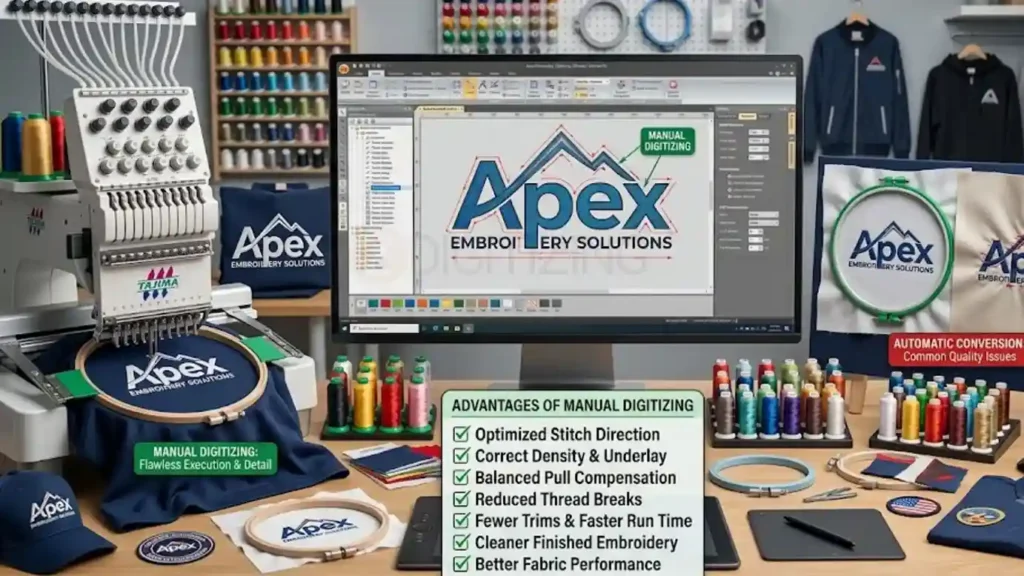
By contrast, automatic software follows predefined rules. While it’s fast for basic designs, it often struggles with fine lettering, intricate logos, textured fabrics, and specialty embroidery such as caps or 3D puff.
When Auto Digitizing Can Be a Good Choice
Auto digitizing isn’t always the wrong option. It can work well for:
- Simple text-based logos
- Basic shapes with minimal detail
- Personal or hobby embroidery
- Quick design previews before manual refinement
For commercial production, however, manually created files generally produce more reliable and professional results.
Expert Insight: Instead of simply asking whether a company offers manual digitizing, ask how they adjust stitch density, underlay, and pull compensation for different fabrics. A skilled digitizer should be able to explain the reasoning behind these decisions with confidence. The depth of their explanation often reveals far more about their expertise than a basic claim of using manual digitizing.
Embroidery Digitizing Pricing Guide for 2026
Pricing varies depending on the design’s complexity, stitch count, turnaround time, and the provider you choose. While some embroidery digitizing services charge a flat rate per design, others calculate the cost based on the number of stitches. Understanding both pricing models makes it easier to compare quotes and avoid unexpected charges.
Average Embroidery Digitizing Costs in 2026
Pricing Model | Typical Cost | Best For |
Simple Left Chest Logo | $6–$15 | Small business logos |
Cap Logo | $6–$20 | Hats and caps |
Jacket Back Design | $15–$35 | Large embroidery designs |
Per 1,000 Stitches | $1.50–$3.00 | Commercial production |
Premium / Complex Designs | $20–$50+ | 3D puff, appliqué, highly detailed artwork |
Rush Service | 25%–100% extra | Urgent orders |
What Affects the Cost?
A custom embroidery digitizing service usually considers several factors before providing a quote, including:
- Design complexity and level of detail.
- Total stitch count.
- Small lettering or intricate elements.
- Garment type (caps, jackets, polos, patches, etc.).
- Standard or rush turnaround.
- Embroidery styles that require specialized digitizing, including 3D puff and appliqué
In many cases, a simple logo with fewer stitches can still cost more if it requires careful stitch planning or fine detail.
Flat-Rate vs. Per-Stitch Pricing
Both pricing models are common across the industry, and neither is automatically better.
- Flat-rate pricing is easy to understand and works well for most standard embroidery projects.
- Per-stitch pricing can be more accurate for large production runs or highly detailed designs, especially when businesses need predictable costs across multiple orders.
Before placing an order, ask what the quoted price includes. Some providers bundle revisions and multiple machine formats into the final price, while others may charge separately for additional edits or specialty file formats.
Key Takeaway: A lower quote doesn’t always mean lower production costs. A poorly digitized file can lead to thread breaks, machine downtime, wasted garments, and repeated sew-outs—costing far more than the money saved on the original digitizing order. Prioritize value and stitch quality over the lowest upfront price.
Turnaround Time: How Long Does Embroidery Digitizing Take?
Turnaround time can vary based on the design’s complexity, the provider’s workload, and whether you request standard or rush service. While many digitizing services for embroidery advertise fast delivery, the real goal should be receiving a file that’s ready for production—not just delivered quickly.
Typical Turnaround Times in 2026
Project Type | Standard Turnaround | Rush Option |
Simple Logo | 12–24 Hours | 2–6 Hours |
Left Chest Logo | 24 Hours | Same Day |
Cap Design | 24–48 Hours | 4–12 Hours |
3D Puff Design | 24–48 Hours | 12–24 Hours |
Applique digitizing service | 48–72 Hours | 24 Hours |
Large Jacket Back | 48–72 Hours | 24–48 Hours |
What Can Affect Delivery Time?
Several factors can influence how quickly a design is completed:
- Artwork quality and resolution.
- Design complexity.
- Number of revisions requested.
- Specialty embroidery techniques, such as 3D puff or appliqué.
- Current production workload.
- Rush service requests.
Providing clear, high-quality artwork and complete project instructions from the beginning can often reduce delays and minimize the need for revisions.
Should You Always Choose Rush Service?
Rush service is useful when you’re working with tight production deadlines, but it isn’t necessary for every order. If your schedule allows, choosing standard turnaround gives the digitizer more time to review the design, make fabric-specific adjustments, and perform additional quality checks before delivery.
Understanding the Embroidery Digitizing Workflow
Knowing how a professional digitizing service for embroidery works can help you understand why some embroidery files produce cleaner results than others. While every company has its own process, experienced digitizers generally follow a structured workflow to ensure the design is ready for production before delivery.
The 7-Step Embroidery Digitizing Workflow
Stage | What Happens |
1. Artwork Review | The design is checked for quality, size, small details, and possible improvements before digitizing begins. |
2. Design Planning | The digitizer selects stitch types, sewing sequence, and embroidery placement based on the garment and design. |
3. Manual Digitizing | Stitch paths, underlay, density, pull compensation, and travel paths are created manually. |
4. Quality Review | The finished file is reviewed to minimize excessive trims, optimize stitch sequencing, reduce unnecessary jumps, and verify overall embroidery quality. |
5. Test Sew-Out | When available, the design is stitched on a similar fabric to identify issues before production. |
6. Final Adjustments | Minor refinements are made based on testing or customer feedback. |
7. File Delivery | Machine-ready files are exported in the requested formats and delivered to the customer. |
Why This Workflow Matters
Skipping any of these steps can lead to avoidable production issues such as thread breaks, puckering, uneven stitch coverage, or unnecessary machine stops. Professional embroidery digitizing services online follow a structured workflow because each stage helps improve stitch quality, machine efficiency, and overall consistency.
For businesses handling repeat orders, a well-planned workflow also ensures that the same design produces consistent results across different garments and production runs.
Quality Checklist: How to Evaluate an Embroidery Digitizing File
Even if you’re working with the Best Embroidery Digitizing Service in 2026, it’s worth knowing how to review the final embroidery file before sending it into production. A quick quality check can help you spot potential issues early, reducing wasted garments, machine downtime, and unnecessary revisions.
Use this checklist whenever you receive a file from an online embroidery digitizing service provider.
Check | Why It Matters |
Clean stitch coverage | Prevents visible gaps and uneven embroidery. |
Small text is readable | Fine lettering should remain clear without merging together. |
No excessive jump stitches | Reduces unnecessary trims and improves machine efficiency. |
Proper underlay | Helps stabilize the design and minimizes puckering. |
Balanced stitch density | Prevents both thread breaks and poor coverage. |
Correct colors and sequence | Makes production smoother and reduces thread changes. |
Required file formats included | Ensures compatibility with your embroidery machine. |
Design matches approved artwork | Confirms size, placement, and overall appearance before production. |
Common Signs of a Poor-Quality Digitized File
Before starting a production run, look for these warning signs:
- Thread breaks during stitching.
- Fabric puckering around the design.
- Gaps between fill stitches.
- Uneven satin borders.
- Misaligned outlines.
- Small text that’s difficult to read.
- Excessive trims or unnecessary color changes.
Finding any of these issues doesn’t always mean the file is unusable, but it often indicates that adjustments are needed before full production.

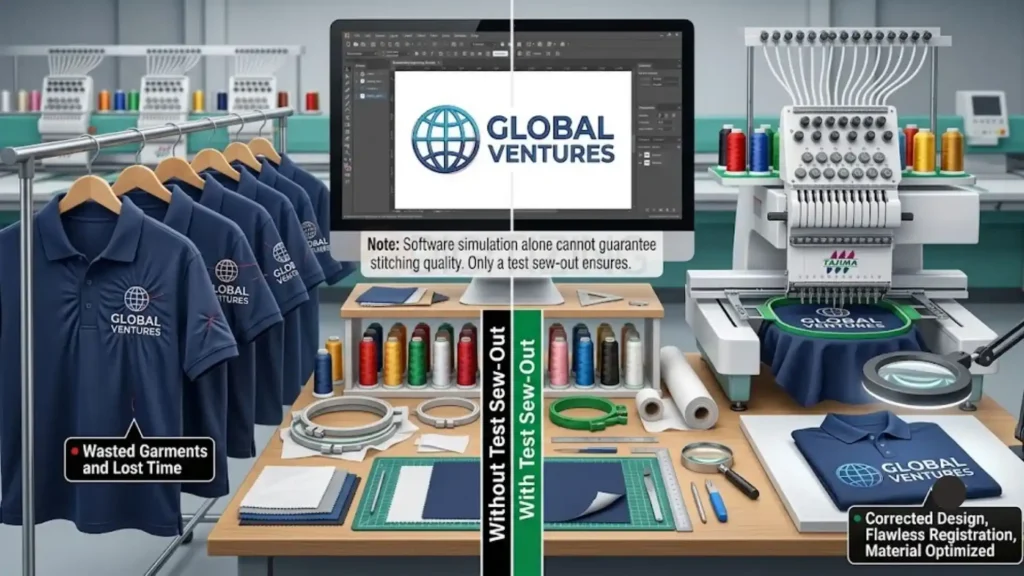
Bottom Line: Never approve a digitized file based only on the software preview. Stitch simulations don’t reveal how the design will behave on real fabric. Whenever possible, run a single test sew-out on the same garment type you’ll use for production. A five-minute test can prevent costly mistakes across hundreds of pieces.
Embroidery File Formats Explained: Which Ones Do You Need?
One of the easiest ways to avoid compatibility issues is to request the correct embroidery file format before production begins. Most quality embroidery digitizing services can deliver the same design in multiple formats, allowing it to work with different embroidery machine brands.
If you’re unsure which format to request, ask your provider which file is recommended for your specific machine.
File Format | Common Machine Brands | Best Use |
DST | Tajima, Barudan and many commercial machines | Industry-standard format for commercial embroidery |
PES | Brother, Baby Lock | Home and small business embroidery machines |
JEF | Janome | Janome embroidery machines |
EXP | Melco | Commercial embroidery production |
VP3 | Husqvarna Viking, Pfaff | Home embroidery machines |
HUS | Husqvarna Viking | Older Husqvarna machines |
XXX | Singer | Singer embroidery machines |
EMB / ART | Native design files | Best for future editing and design modifications |
Why Native Files Are Worth Requesting
While machine formats such as DST or PES are ready for embroidery, they aren’t ideal for making future design changes. Native files like EMB or ART preserve the original editing data, making it much easier to resize, update text, adjust stitch settings, or create new variations later.
If you expect to reuse your logo across different garments or branding projects, requesting the native file can save both time and additional digitizing costs in the future.
Should You Ask for Multiple Formats?
Yes. Most embroidery digitizing services online can provide several machine formats from the same digitized design. Having multiple formats available is especially useful if you operate different embroidery machines or work with contract embroidery shops that use different equipment.
Best Practices for Different Embroidery Applications
Choosing the Best Embroidery Digitizing Service in 2026 isn’t just about finding a company that creates quality stitch files—it’s also about finding a digitizer who understands that every embroidery application requires a different approach.
A logo that embroiders perfectly on a polo shirt may not produce the same results on a structured cap or a heavyweight jacket. Different garments behave differently under the needle, so experienced digitizers adjust stitch settings to match the fabric, placement, and design size instead of using the same file for every application.

Left Chest Logos
Because left chest embroidery is completed within a relatively small sewing area, careful stitch planning becomes especially important. Excessive stitch density can make the design bulky, while insufficient coverage may leave visible gaps.
Caps and Hats
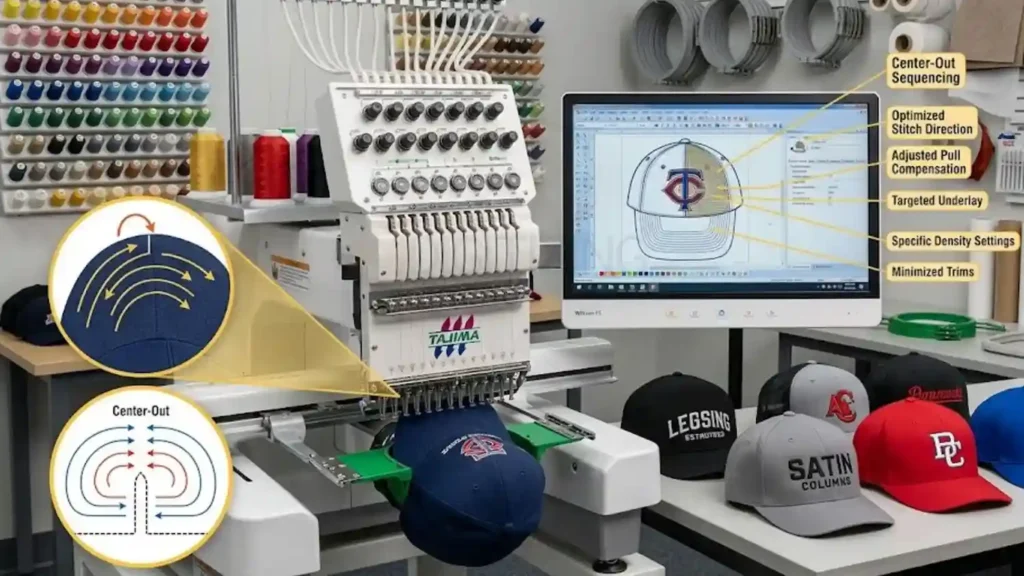
Caps are one of the most challenging embroidery applications because the embroidery is stitched on a curved, structured surface. Professional digitizers typically plan the stitching from the center outward and adjust pull compensation to help maintain symmetry and reduce distortion.
3D Puff Embroidery
Unlike flat embroidery, 3D puff uses foam to create a raised effect. This technique works best with bold lettering and simple shapes that provide enough space for the foam to expand properly. If the stitch density is too high or the design contains very fine details, the finished embroidery may lose its dimensional appearance.
Appliqué Embroidery
An applique digitizing service requires much more than simply outlining fabric pieces. The placement stitch, tack-down stitch, and final satin border must align precisely to create clean edges and prevent the fabric from fraying over time. Even small inaccuracies can become noticeable after repeated washing.
Jacket Backs and Large Designs
Large embroidery designs require efficient stitch sequencing to reduce unnecessary thread trims and color changes. Proper planning not only improves the appearance of the finished embroidery but also helps embroidery machines run more efficiently during long production runs.
Don’t Use One File for Every Garment
One of the most common mistakes businesses make is using the same embroidery file across different products. While the artwork stays the same, the stitch settings often shouldn’t.
A professional digitizing service for embroidery may create separate versions of the same logo for caps, polos, jackets, patches, or performance fabrics. Although this takes a little more time initially, it usually results in cleaner embroidery, fewer production issues, and more consistent branding across every product.
Pro Tip: If your business regularly embroiders the same logo on multiple products, ask your digitizer to create application-specific files rather than one universal design. It’s a small investment that can significantly improve stitch quality and reduce production problems over time.
5 Common Embroidery Digitizing Mistakes Beginners Should Avoid
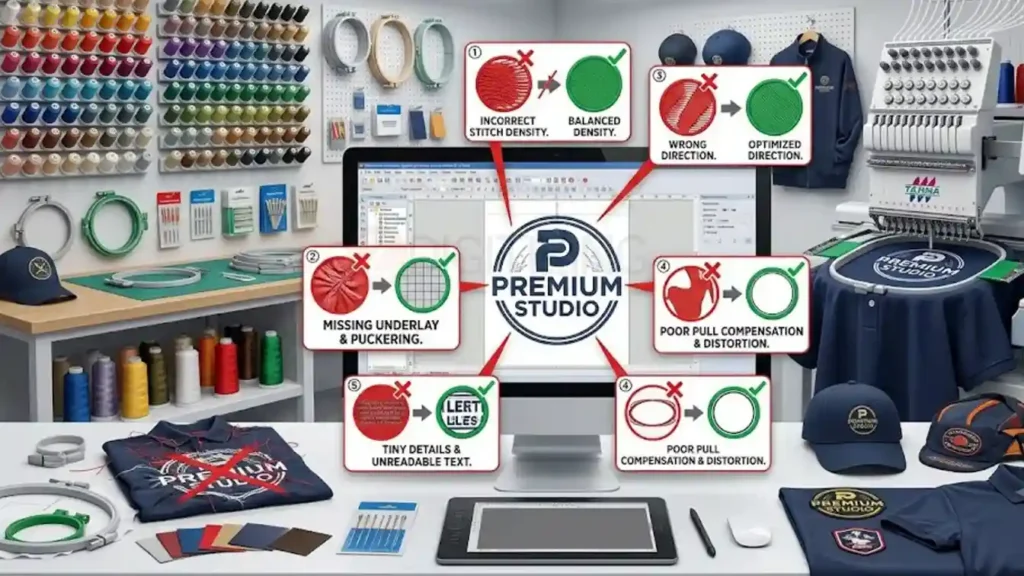
Even small mistakes during digitizing can lead to thread breaks, puckering, poor stitch quality, and wasted garments. Whether you’re learning the process yourself or hiring embroidery digitizing services, avoiding these common errors can save both time and money.
1. Ignoring the Fabric Type
Different fabrics require different stitch settings. A file that works well on a polo shirt may not produce the same results on a cap, hoodie, or performance fabric.
2. Using Low-Quality Artwork
Blurry or low-resolution images make accurate digitizing difficult. Always provide the highest-quality artwork available to achieve better embroidery results.
3. Incorrect Stitch Density
Too many stitches can cause thread breaks and puckering, while too few leave visible gaps. Balanced stitch density is essential for clean, durable embroidery.
4. Skipping a Test Sew-Out
A software preview isn’t enough. Testing the design on the actual garment helps catch issues before full production begins.
5. Choosing Price Over Quality
The cheapest option isn’t always the best value. A professionally digitized file usually reduces production problems, machine downtime, and costly rework.
Expert Tips for Getting Better Embroidery Digitizing Results
Choosing the Best Embroidery Digitizing Service in 2026 is only part of the equation. The quality of your artwork, communication, and production planning also play an important role in the final embroidery result.
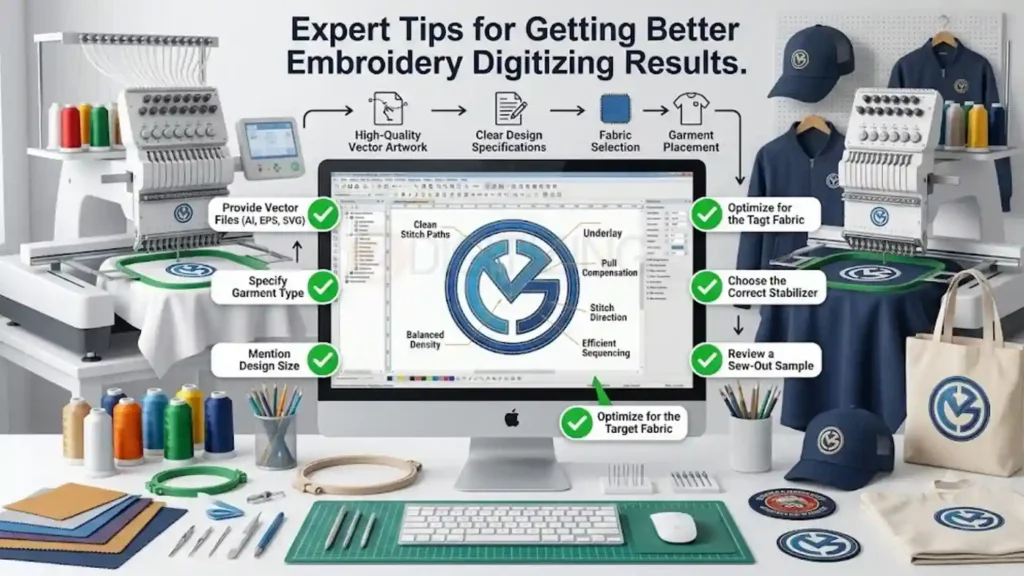
Here are a few tips that experienced embroiderers and digitizers follow to achieve consistent, production-ready embroidery.
Start with the Best Artwork Possible
The cleaner your artwork, the better your embroidery file will be. Whenever possible, provide vector files such as AI, EPS, or PDF. If those aren’t available, send the highest-resolution image you have.
Share Production Details Early
Tell your digitizer where the design will be embroidered, what fabric you’ll use, and which embroidery machine or file format you need. These details help create a file that’s optimized for your project from the start.
Keep Native Files
If your provider offers EMB or ART files, save them. Native files make future edits much easier and can save you from paying for complete re-digitizing later.
Red Flags to Watch for When Choosing a Digitizing Service
Not every provider delivers the same level of quality. Before placing an order, watch for these warning signs.
- No examples of actual embroidered sew-outs.
- Extremely low prices that seem unrealistic.
- No clear revision policy.
- Limited file format support.
- Poor communication or slow response times.
- No explanation of their digitizing process.
- Reviews that mention repeated quality issues.
A reliable online embroidery digitizing service provider should be transparent about its workflow, pricing, turnaround time, and revision process.
Popular Embroidery Digitizing Software
Professional digitizers rely on specialized software to create production-ready embroidery files. While the software is important, the experience of the digitizer behind it has a much greater impact on the final result.
- Wilcom – The industry standard for commercial embroidery digitizing.
- Hatch – A user-friendly option built on Wilcom’s technology, popular with small businesses.
- Pulse – Widely used in industrial embroidery production and multi-head operations.
- Embird – A flexible solution that supports multiple embroidery file formats.
The best embroidery digitizing services online combine professional software with manual digitizing expertise instead of relying entirely on automatic conversion tools.
Industry Snapshot (2026)
The embroidery digitizing industry continues to grow as more businesses offer custom apparel, branded merchandise, and promotional products.
Recent industry trends show:
- Manual digitizing remains the preferred choice for commercial embroidery.
- More providers now offer same-day turnaround for standard designs.
- Native embroidery files are becoming increasingly popular for long-term brand management.
- Businesses continue to prioritize quality and consistency over the lowest price.
Conclusion
Finding the Best Embroidery Digitizing Service in 2026 means looking beyond pricing and turnaround time. Experience, communication, manual digitizing expertise, and production-ready files all contribute to embroidery that looks better and runs more efficiently.
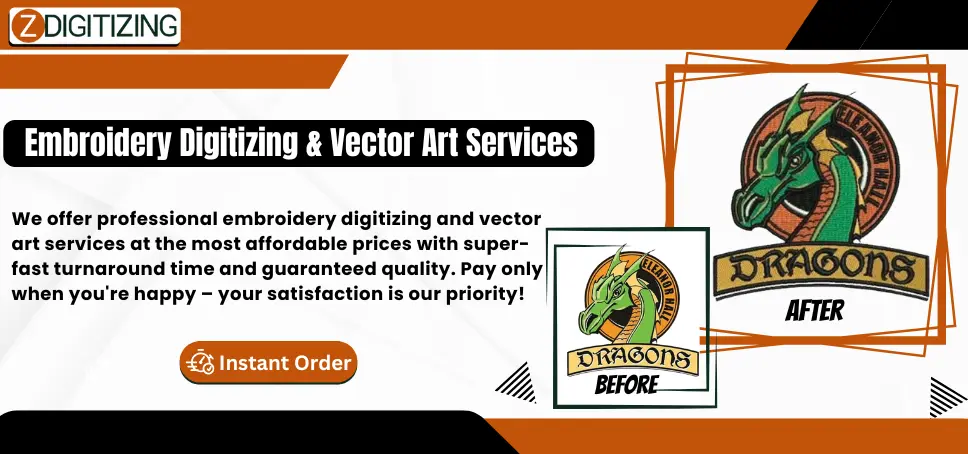
If you’re looking for a trusted provider, ZDigitizing brings 10+ years of experience, premium embroidery digitizing service USA and vector art services, fast turnaround, 24/7 customer support, and high-quality results for customers worldwide. New customers can also take advantage of 50% OFF on their first order, making it an excellent option for businesses and individuals seeking reliable embroidery digitizing solutions.