Choosing between a top-tier Pfaff embroidery machine and a Brother can feel like deciding between a high-performance German sports car and a feature-packed Japanese SUV. Both brands are global leaders. However, they appeal to different creative personalities and technical needs in 2026. This comprehensive guide will break down the engineering, software, and real-world performance to help you decide which brand deserves a spot in your studio.

Pfaff Embroidery Machine vs Brother: Which Brand Is Better?
Quick Answer: Pfaff vs Brother at a Glance
Many readers want a fast overview before diving into details. In short, Pfaff embroidery machine tends to focus on solid build quality, precise stitching, and a smooth fabric feed, while Brother often focuses on user‑friendliness, features per dollar, and a large model range. Your best choice depends on whether you prioritize feel and precision or maximum convenience and affordability.
Side‑by‑Side Brand Snapshot
Here is a quick high‑level comparison of how the brands usually position themselves for embroidery:
Aspect | Pfaff Focus | Brother Focus |
Overall feel | Solid, precise, “engineered” sewing and embroidery experience | Friendly, approachable, feature‑rich experience |
Typical buyer | Serious hobbyist, advanced home user, quality‑oriented sewist | Beginner to advanced, budget‑aware, feature‑focused users |
Strengths | Fabric handling, stitch precision, long‑term feel | Easy interface, wide model range, good value for money |
Weaknesses | Higher price tiers, fewer very‑cheap entry models | Some models feel less “solid”; more plastic in lower tiers |
Ideal use‑cases | Quilting plus embroidery, textured work, precise placement | Monograms, crafts, custom gifts, home business starter setups |
Avg. embroidery speed | 600–1,000 SPM | 650–850 SPM |
Typical hoop sizes | 6×8″ to 12×18″ | 4×4″ to 10×6″ |
Built‑in designs | 100–500+ | 100–1,000+ |
Price range (USD) | $1,500–$15,000 | $500–$10,000 |
This table is only a starting point; the rest of the article unpacks each area in detail so you can see where one Pfaff embroidery machine might outperform a similar model in real‑world use.
When Pfaff Is Usually the Better Choice?
Pfaff tends to be a strong fit if you care deeply about the feel of the machine, plan to do a lot of quilting plus embroidery, or want very even stitching over tricky fabrics.

Many users who love Pfaff embroidery machine also value subtle things like a stable embroidery arm (up to 360mm field on top models), smooth fabric feeding via IDT system, and a sense that the chassis can handle heavy use for 10+ years. If that sounds like you, putting your budget into a more solid machine may pay off long term.
When Brother Is Usually the Better Choice?
Brother often shines when you want a lower entry price (starting at $500), a gentle learning curve, and a modern interface with lots of built‑in designs (up to 1,000 on premium models).
If you are a first‑time embroidery buyer or you want a straightforward home embroidery machine that “just works” for crafts, gifts, and small batches of products, it can be very attractive. Brother’s wide range also makes it easier to find exactly the size and feature set that matches your space and budget.
Understanding the Pfaff Embroidery Machine Lineup
Before comparing brands, it helps to understand how Pfaff organizes its machines. The company usually divides models into families targeted at different users, from serious home sewists to advanced embroidery enthusiasts. Within each family, machines share a core feel and set of design priorities.
Key Pfaff Embroidery Machine Series for Home Users
Popular series include the Passport (compact, 4×4″ hoop, $1,200 range), Ambition (midrange, 6×8″ hoop, 250 built‑in designs, $2,000–$3,500), Creative Performance (9×14″ hoop, 500+ designs, $6,000+), and Creative Icon 2 (top‑tier, 12×18″ hoop, 1,000 SPM, mySewnet connectivity, $12,000–$15,000).

You will typically see differences in hoop size, embroidery speed (up to 1,000 SPM), and screen sophistication as you move up. The key is to decide what hoop size you really need (4×4″ for monograms vs 12×18″ for jackets) and whether you want a combined sewing‑embroidery platform or a more dedicated Pfaff machine focused strongly on decorative work.
Core Strengths of Pfaff Embroidery Machine Design (IDT, Build, Feel)
Many embroiderers praise Pfaff for its stable stitching, strong feed systems (IDT dual-feed handles 10+ layers), and the way it handles layered or textured fabrics. If you plan to do quilting, bags, or heavier materials with embroidery accents, these strengths are valuable.

The brand also leans toward a more “engineered” feel, with metal chassis components that users prefer for precision placement and confidence when running dense designs (up to 1 million stitches).
Pfaff Embroidery Machine Review: Build Quality, Stitching, and Ease of Use
Pfaff consistently delivers solid construction with metal internals instead of plastic, maintains consistent tension with auto-adjust features on premium models, and produces clean satin stitches when users digitize and stabilize designs correctly.
Some users find the learning curve a bit steeper than the most basic competitor models (10–20 hours to master), but once you understand the menus and workflow, the experience is predictable and rewarding. For many owners, the feeling of control and precision is the main reason they stay loyal to a Pfaff embroidery machine.
Understanding the Brother Embroidery Machine Lineup
Brother’s range is often broader, especially in the entry and midrange categories. You will find dedicated embroidery‑only machines, combined sewing‑embroidery models, and higher‑end units with bigger hoops and more advanced screens.
Popular Brother Embroidery Machine Series for Home and Small Business
Key models include PE550D (entry, 4×4″ hoop, 125 designs, $400), SE600 (combo, 4×4″ hoop, 80 designs, $700), Luminaire Innov-is XP1 (high‑end, 10×6″ hoop, 1,000 SPM, camera system, $10,000), and PR series multi‑needle (up to 10 needles, 20×12″ hoop, $8,000–$20,000).

The clear labeling and consistent interface make it easy to jump between models without relearning everything. This makes upgrading from a first Brother embroidery machine to a more advanced model relatively painless.
Brother’s Strengths: User‑Friendliness, Price, and Features
Brother often wins points for being intuitive, especially for beginners who have never threaded an embroidery machine before. Simple menus, icons, and design selection screens (up to 10″ touchscreen on premium) help remove intimidation.
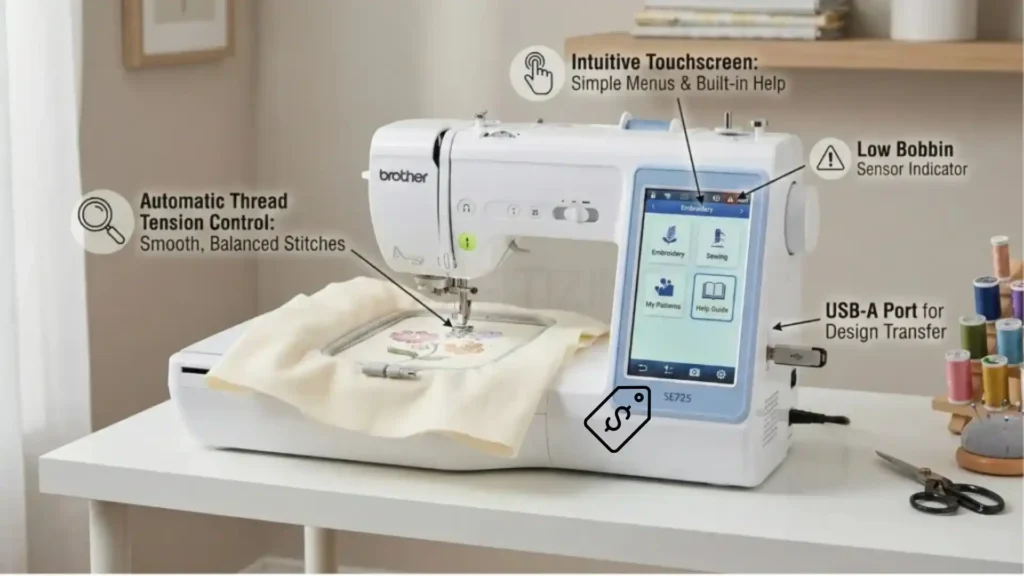
The brand also tends to deliver a lot of features, built‑in fonts (up to 50), designs (100–1,000), USB or Wi‑Fi, and nice color screens, for the price, which is appealing if you want to stretch your budget.
Brother Embroidery Machine Pros and Cons for Embroidery‑Focused Users
For embroidery‑focused users, major advantages include a friendly interface, broad community support (huge YouTube library), and a wide range of tutorials available online.
On the downside, some lower‑tier machines can feel less solid over time (plastic chassis), especially under heavy usage (500+ hours/year), and may require more careful handling to stay in best condition. Still, for light‑to‑moderate use, they are a very practical option next to a similarly priced Pfaff embroidery machine.
Feature‑by‑Feature Comparison: Pfaff vs Brother Embroidery
When comparing Pfaff vs Brother embroidery machines, it’s worth looking beyond the brand name and focusing on what affects everyday embroidery, including stitch quality, hoop size, available accessories, and overall ease of use.
Stitch Quality, Speed, and Stability
Both brands can produce beautiful embroidery when designs are well digitized and stabilization is correct, but they tend to reach that result in slightly different ways.
Pfaff often emphasizes a very stable hoop movement (0.1mm precision) and consistent feeding, which can help with dense or detailed work (up to 1,000 SPM). Brother focuses more on user‑friendly controls and clear on‑screen guidance, which helps you set up the machine correctly and avoid simple mistakes that can ruin a design.
Hoop Sizes, and Embroidery Field
As you move up the range in either brand, you will see larger hoops and expanded embroidery fields (Pfaff up to 360x520mm, Brother up to 250x150mm), allowing bigger designs or more efficient multi‑placement layouts.

Both brands offer specialty hoops (caps, cylinders), multi‑position hoops, and optional embroidery machine accessories like caps or small‑item attachments ($50–$300 each). When comparing models, check not just maximum hoop size but also how easy it is to change hoops (under 2 minutes) and whether add‑on frames you may want are readily available.
Built‑In Designs, Fonts, and On‑Screen Editing
In general, Brother provides generous built‑in designs (100–1,000) and fonts (20–50), plus clear editing options like resize, rotate, and simple combining right on the screen. Pfaff also offers built‑in content (100–500) but often expects you to lean a bit more on software or carefully planned designs.

If you love editing quickly at the machine, Brother may feel more playful; if you prefer doing your planning on a computer or tablet then sending well‑prepared designs to a Pfaff embroidery machine, you may be equally satisfied.
Noise, Vibration, and Overall User Experience
Noise and vibration matter more than many buyers realize, especially if you stitch at night or in a shared home. Pfaff’s focus on a solid chassis and a stable embroidery arm can help reduce wobble on dense designs (<60dB on premium models).
Some Brother models are impressively smooth for their price class (65–70dB), while others can be a little louder; reading reviews for the exact model you are considering is wise in either brand.
Software and Connectivity: Pfaff Embroidery Software vs Brother
Modern embroidery depends heavily on how you move designs from computer to machine, whether you tweak them in software, and how easily you can update firmware or add new features. Here is how the brands usually differ in this area.
Pfaff Embroidery Software Options and mySewnet Ecosystem
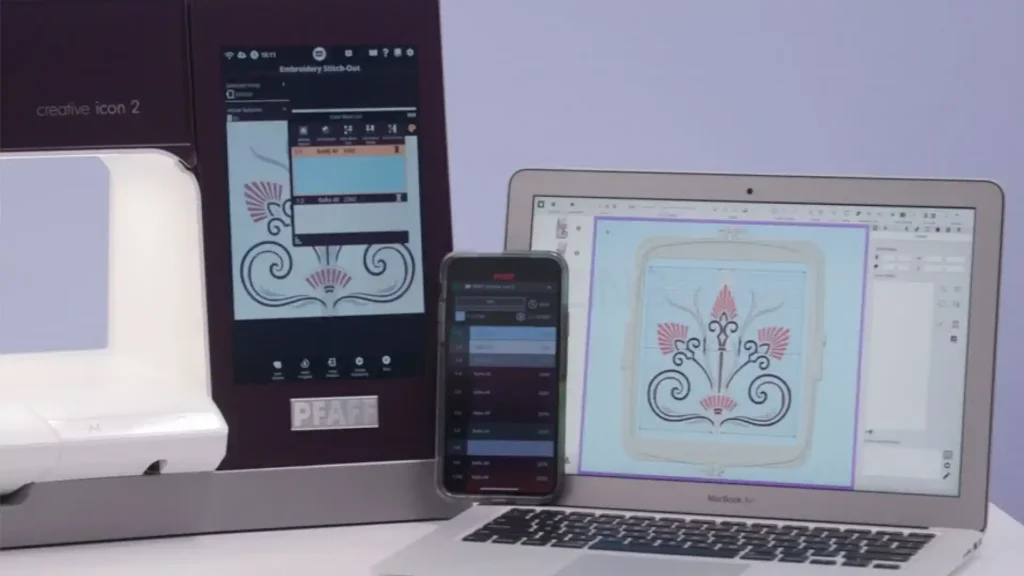
Pfaff is often tied into a connected ecosystem that includes design libraries (100,000+ via subscription), cloud storage, and software tools for editing and creating embroidery (mySewnet Creator, $500–$2,000).
This environment can be powerful for users who like a more integrated, premium experience and are comfortable learning software. Once you understand the workflow, it can be very efficient to design, edit, and send projects directly to a Pfaff embroidery machine over a modern connection (Wi‑Fi, USB).
Brother Software, Apps, and Wi‑Fi Features
Brother leans into convenience with apps (Artspira, free tier), Wi‑Fi transfers on some models, and straightforward USB usage on others. Many users import designs purchased online and send them quickly to the machine with minimal fuss (under 1 minute transfer). If you are not interested in deep digitizing work yourself and mainly want to use ready‑made designs, this approach keeps things simple and approachable.
File Formats, USB, and Working With Third‑Party Designs
Both brands can handle common embroidery file types (.PES, .VP3, .JEF), and both can work with designs from third‑party sites and digitizing providers.
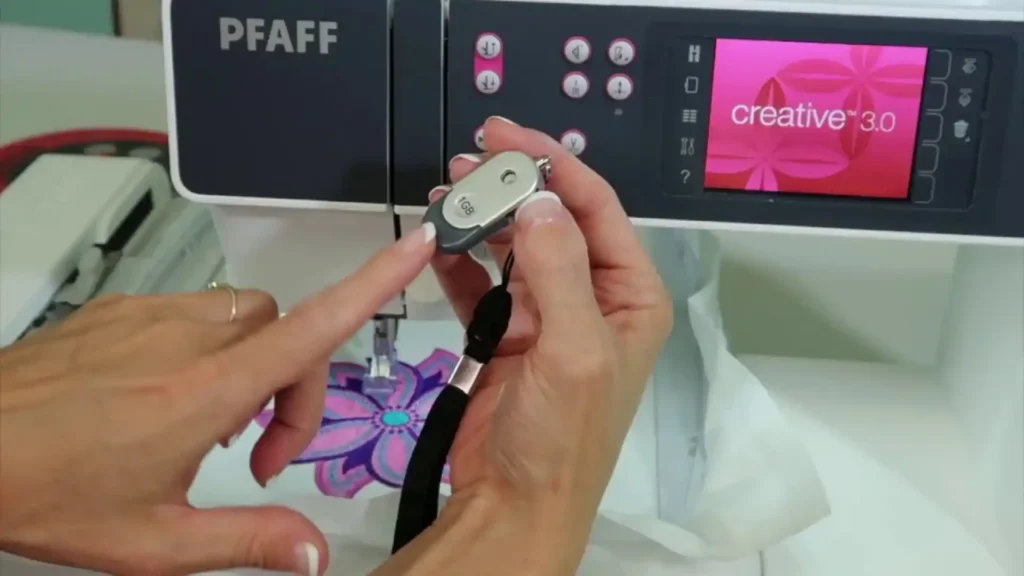
The main questions to ask are: how easy is it to get files onto your machine (drag‑and‑drop USB), how picky is the machine about formatting, and whether your chosen digitizer understands the brand you use.
A well‑digitized file, matched to hoop size and fabric type, is often more important than brand differences when aiming for professional results from a Pfaff embroidery machine.
Price, Value, and Long‑Term Costs
Embroidery machines are long‑term investments, so the “cheapest” option can become expensive if it wears out quickly or is costly to repair. Comparing brands means looking at upfront price, service, parts, and resale value.
Entry‑Level Home Embroidery Machine Options: Pfaff vs Brother
At the entry level, Brother typically offers more models and sharper prices ($400–$1,000, e.g., PE550D at $450), especially for combined sewing‑embroidery machines. Beginners can get a capable starter unit without over‑committing financially, and later trade up.
Pfaff usually enters at a higher price ($1,200+, e.g., Passport 3.0), but with a more solid feel; if your budget allows and you want something that feels closer to a serious Pfaff embroidery machine from day one, this can be attractive.
Mid‑Range Machines for Serious Hobbyists and Side Hustles
In the midrange ($2,000–$6,000), both brands offer machines that can handle regular weekly use (20–30 hours), more complex designs, and larger hoops (6×10″+).
At this point (e.g., Pfaff Creative 3.0 at $4,500 vs Brother SE1900 at $2,500), you should pay close attention to dealer support, warranty terms (1–5 years), and how readily you can get the machine serviced. A midrange Pfaff embroidery machine can be an excellent centerpiece for a craft‑based side hustle, especially if you value precise stitching on premium fabrics.
High‑End and Semi‑Pro Models (Single‑Needle vs Multi‑Needle)
Higher‑end single‑needle machines from both brands add speed (800–1,200 SPM), features, and larger embroidery fields, while multi‑needle machines are aimed squarely at serious small businesses (Pfaff Creative Icon at $14,000 vs Brother PR1050X at $9,000).

Here the decision should be based on your real workload: if you run long designs daily (500k+ stitches), invest in a machine designed for that pressure. A top‑tier Pfaff embroidery machine may deliver a very refined experience for high‑end projects, while a multi‑needle from the competing brand may be better for volume.
Maintenance, Repairs, and Depreciation: Which Brand Holds Value Better?
Long‑term costs include regular servicing ($150–$300/year), replacement parts ($50–$200), and how well the machine holds its value if you decide to sell (Pfaff retains 60–80% after 3 years vs Brother 40–60%).
A more expensive but better‑built Pfaff embroidery machine can hold value well, especially when regularly serviced and kept in good condition. Brother’s more affordable models may depreciate faster, but lower upfront cost and easy resale on popular models still make them attractive depending on your budget strategy.
Pfaff Embroidery Machine vs Brother for Different Users
Different user types care about different things. A beginner worries about learning, a quilter worries about fabric handling, and a small business cares about speed and reliability first.
Embroidery Machine for Beginners: Which Brand Is Easier to Learn?
For complete beginners, the gentle learning curve (5–10 hours) and friendly screens of many machines from the competing brand are a big advantage. Clear menus, lots of beginner‑oriented tutorials, and lower entry prices make the first steps less stressful.
However, if you can get hands‑on time at a dealer and feel comfortable with it, starting with an easier Pfaff embroidery machine can also pay off by giving you strong foundations and plenty of room to grow.
Quilters and Applique Lovers: Brand Differences That Matter

Quilters and applique fans care about feed systems, precision placement (0.5mm accuracy), and how well a machine handles thick seams and layered projects (up to 12mm stack).
Pfaff’s focus on fabric control can be a real asset here, especially for intricate quilting with embroidery accents. If you primarily do flat, single‑layer projects with lighter fabrics, a well‑chosen alternative machine can still perform beautifully alongside a Pfaff embroidery machine.
Small Business Owners and Etsy Sellers: Throughput, Reliability, and Support
If you sell stitched items, you need more than pretty stitches; you need uptime (99%+), predictable thread behavior, and a fast way to move between orders (10–20/minute color changes on multi‑needle).
For some small businesses, a robust Pfaff embroidery machine is ideal as a main workhorse, especially if backed by a strong local dealer. Others may prefer a setup with multiple, more affordable machines from the other brand to provide redundancy and flexibility.
How to Decide Between Pfaff and Brother?
If you still feel torn, use a simple question‑based process to guide your choice. This section helps you translate your goals into clear requirements so you can pick with confidence.
Five Key Questions to Ask Before You Buy
Ask yourself:
- What specific items do I want to embroider in the next 12–24 months?
- How often will I realistically use the machine each week (5–40 hours)?
- Do I value a more solid, precise feel or maximum ease‑of‑use and a fast learning curve?
- Is there a strong local dealer for the brand I am considering?
- How comfortable am I with software and design management?
Your answers will naturally push you toward either a robust Pfaff embroidery machine or a more beginner‑friendly alternative.
Future Trends in Home Embroidery Machines
The embroidery world is evolving quickly, with more connectivity, smarter features, and better integration with cloud services. These trends affect how you will use your machine over the next five to ten years.
Smart Features, Apps, and Cloud Libraries in Pfaff and Brother

Both brands are moving toward wireless transfers, design synchronization across devices (iOS/Android), and richer built‑in content (AI resizing expected 2026+). You can expect future models to make it easier to browse libraries, preview designs, and send them directly to your Pfaff embroidery machine or another compatible device. Planning for connectivity now means your machine will stay relevant longer as new tools appear.
Evolving Best Embroidery Machine Brand Criteria (Support, Updates, Ecosystem)
In the past, many people judged machines mostly on hoop size and price, but the definition of the best embroidery brand is changing. Today, users weigh software, app quality, online updates (quarterly firmware), and how active the brand is in improving features over time. When you choose a Pfaff embroidery machine, consider not just today’s specs but also the strength of the broader ecosystem around it.
How AI‑Assisted Will Affect Your Workflow?
Digitizing is already becoming faster and smarter, and AI‑assisted tools are making it easier to create clean, production‑ready files from artwork (under 24 hours turnaround). This benefits both brands equally, because the machine receives a more optimized design.
As AI improves, partnering with the best embroidery digitizing services in USA will let you run more complex designs with fewer test stitches, no matter which Pfaff embroidery machine or alternative brand you use.
Conclusion
We compared both brands based on quality, features, software, price, and long-term use. One brand is known for precision and stability, while the other is easier for beginners and budget users. The right choice depends on your real embroidery work, not just machine features.
Embroidery quality also depends on the design file. Even the best Pfaff embroidery machine can struggle if the design is poorly digitized, causing thread breaks and uneven stitches. This is why professional digitizing is important, especially for detailed and appliqué designs.
ZDigitizing provides professional embroidery digitizing services with 10+ years of experience. Their expert team works 24/7 with full customer support, quality guaranteed, free minor edits, and design previews before payment, including support for applique digitizing service.
Prices are already lower than the market, and you get 50% OFF on your first order. Visit ZDigitizing, place your first order, and experience premium embroidery digitizing quality that helps your designs stitch clean and professional every time.