How to Start Embroidery: A Complete Beginner’s Guide
Embroidery has changed a lot over the years, and how to start embroidery in 2026 is very different from how people learned it before. Machines are getting smarter, results are getting cleaner, and beginners now have better tools than ever to learn embroidery the right way. In this article, we will start from the basics and slowly move toward professional-level understanding without making things complicated.
Whether you are completely new or restarting embroidery in 2026, this guide will help you build strong foundations and avoid common mistakes.
How to Start Embroidery: A Complete Beginner’s Guide
Essential Toolkit: Embroidery Basics and Supplies
Before you touch the machine or load any design, one thing matters more than everything else, the tools you are using. When people struggle in the beginning, it is usually not because embroidery is hard, but because they started without the right tools. That is why learning how to start embroidery correctly always begins with choosing the proper supplies.
1. Fabrics That Are Best for Beginners
When starting out, always choose stable and easy-to-handle fabrics. Medium-weight cotton, poly-cotton blends, twill, and light canvas are ideal because they hold stitches well and do not move too much during stitching. These fabrics clearly show stitch quality, which helps beginners learn faster.
Avoid very thin fabrics or heavy denim at the start. They require stronger support and better control. Also, always pre-wash your fabric to avoid shrinkage after stitching. This simple habit protects your final result.
2. Hoop or Frame: Holding Fabric the Right Way
An embroidery hoop keeps your fabric and stabilizer tight so the design does not shift while stitching. The fabric should feel firm but not stretched. If it feels loose, re-hooping is always better than continuing with poor tension.
Hoop or Frame Holding Fabric the Right Way
Different hoop sizes match different design areas, so choose according to your project. Proper hooping is one of the first skills you must master when learning how to start embroidery without frustration.
3. Needles That Protect Fabric and Thread
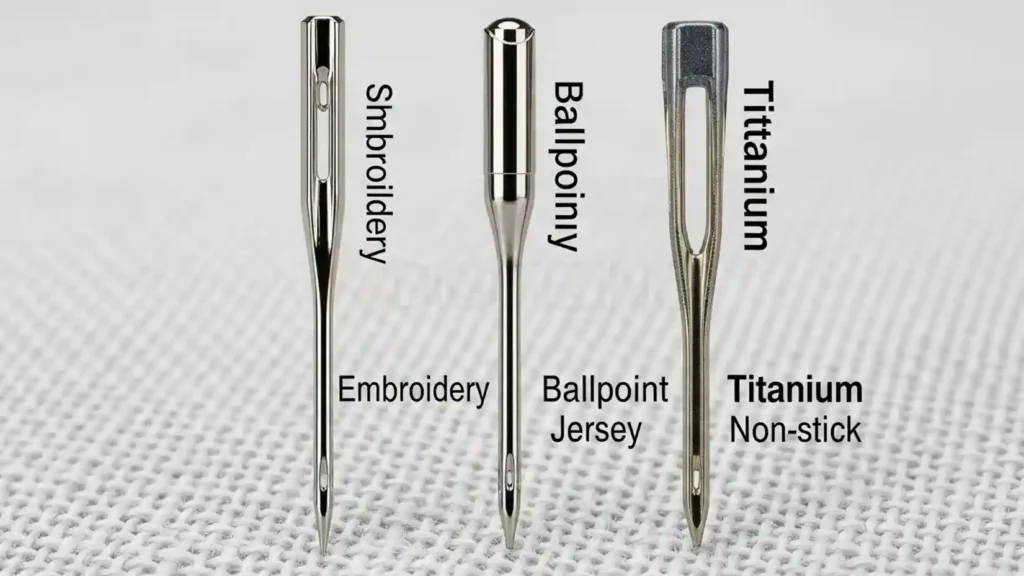
Using the correct embroidery needles makes a big difference in stitch quality. For most beginner projects, sizes like 75/11 or 80/12 work well. Sharp needles are best for woven fabrics, while ballpoint needles are safer for knit materials.
Needles That Protect Fabric and Thread
A dull needle causes thread breaks, skipped stitches, and rough holes in fabric. Change needles regularly, even if they look fine. This is a professional habit that saves time and material.
4. Threads You Can Depend On
When learning how to start embroidery, thread quality plays a bigger role than many beginners realize. Good thread creates clean, smooth stitches. Polyester thread is a reliable choice for beginners because it is strong, colorfast, and resists breakage.
Threads You Can Depend On
Start with basic colors such as black, white, navy, and red so you can practice on many designs. Store embroidery threads away from heat and sunlight. Proper storage keeps thread quality consistent over time.
5. Stabilizers: The Hidden Support System
Stabilizers prevent fabric from stretching or puckering during stitching. Cut-away stabilizer works best for stretchy fabrics, tear-away for stable materials, and water-soluble topping for towels or textured surfaces.
Stabilizers The Hidden Support System
Always cut stabilizer larger than the hoop so the fabric stays supported on all sides. This step is a core part of embroidery machine basics and should never be skipped, even for small designs.
6. Marking Tools and Cutting Essentials
When learning how to get started embroidery, accurate placement makes a big difference in final results. Washable fabric pens or chalk help you place designs accurately without leaving permanent marks. These tools make alignment easy and stress-free.
Use small curved scissors to trim threads neatly and keep the back of your embroidery clean. A seam ripper is also helpful for test runs and practice pieces.
7. Bobbins and Small Extras That Matter
Bobbins and Small Extras That Matter
Pre-wound bobbins give consistent tension and save setup time. If winding your own, do it slowly to avoid uneven filling.
Small extras like temporary adhesive spray, lint-free wipes, and a notebook for tracking settings may seem minor, but they prevent big frustrations during early projects.
Choosing the Right Designs and Understanding Digitizing
Designs matter just as much as machines and tools when learning how to start embroidery. Many beginners feel confused at this stage because they are not sure where embroidery designs come from or how they are prepared for stitching.
So let’s keep it simple. Once your tools are ready, the next step is understanding where to get embroidery designs and what digitizing really means if you want clean, professional results. It is an essential part of any beginner embroidery guide if you want clean, professional results.
Where Beginners Can Get Embroidery Designs?
When learning how to start embroidery, it is always best to begin with simple and ready-made designs. You can find ready-made embroidery designs from online marketplaces, embroidery design libraries, or from designers who sell beginner-friendly files. These designs are already prepared for stitching, which makes them perfect for embroidery for beginners.
Where Beginners Can Get Embroidery Designs
Avoid very complex logos or heavy designs in the beginning. Simple shapes, clean outlines, and fewer color changes help you learn faster and reduce mistakes. Choosing the right design is just as important as choosing the right fabric.
What Is Digitizing and Why It Matters?
Digitizing means converting an image, logo, or artwork into an embroidery file that the machine can understand. It is not automatic drawing; it is a technical process where stitch direction, density, underlay, and sequencing are carefully planned.
Many beginners think they can stitch any image directly, but that is not true. If the design is not digitized properly, the embroidery will look messy no matter how good your machine is. This is where many people get stuck while learning how to begin embroidery the right way.
What If You Cannot Digitize Designs Yourself?
If digitizing feels difficult or technical, that is completely normal. Digitizing requires experience and embroidery knowledge, and it takes time to master. Instead of struggling, many beginners and professionals choose premium embroidery digitizing services in USA to ensure their designs stitch cleanly from the start.
At ZDigitizing, we provide premium embroidery digitizing services worldwide. Our expert digitizers manually digitize every design with attention to stitch quality, fabric type, and placement, so your embroidery runs smoothly without errors.
People choose our services because we deliver clean results, fast turnaround, and designs that are ready for real production, not just test runs. We focus on quality, consistency, and reliability so you can confidently move forward with your embroidery projects.
Machine Setup: Getting Ready Before You Start Stitching
Now that your tools are ready and your designs are digitized, the next step is machine setup. This stage is very important, because even a small mistake here can affect your final results. When people talk about how to start embroidery, they often focus on designs and threads, but proper machine setup is what actually makes everything work smoothly.
So let’s slow down and talk like friends. Before you stitch anything, your machine needs to be prepared correctly. Think of this as warming up before exercise. A few careful minutes here can save you hours of fixing problems later. This is also where beginners start to feel more confident as they learn embroidery step by step instead of guessing settings.
Start with a Clean and Stable Machine
Start with a Clean and Stable Machine
First, make sure your machine is placed on a stable table. Any vibration can affect stitch quality. Clean lint from the bobbin area and needle plate, even if the machine looks clean. A fresh needle should be installed properly, and threading must follow the exact path shown by the manufacturer.
At this stage, do not rush. Good habits built here make a big difference later, especially when learning how to start embroidery without frustration.
Threading, Bobbin, and Tension Check
Threading, Bobbin, and Tension Check
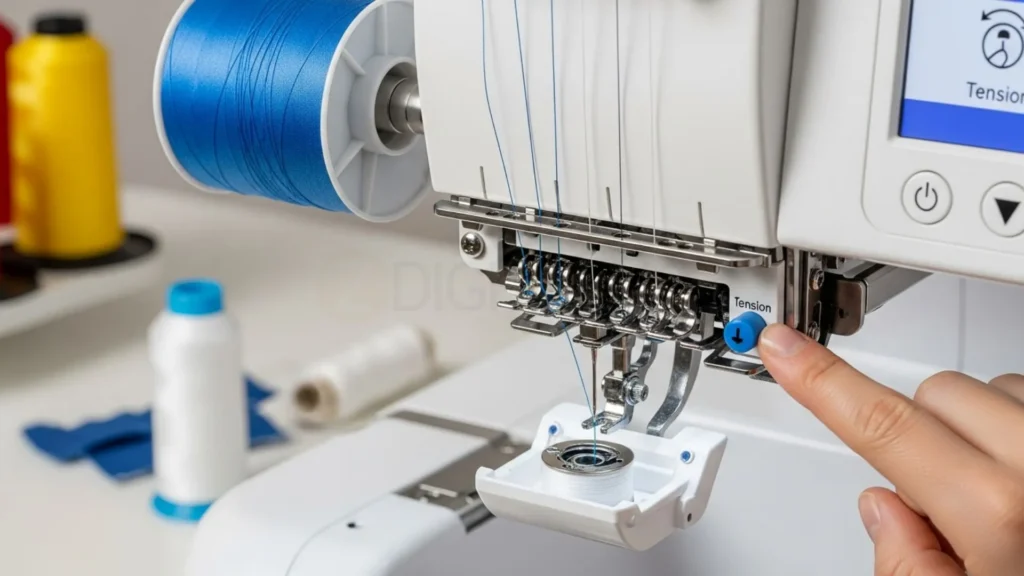
Thread the top thread slowly and carefully, making sure it sits correctly between tension disks. Insert the bobbin properly and check that it rotates in the correct direction. Do a simple tension test on scrap fabric to see if stitches look balanced from both sides.
This process is the heart of embroidery machine setup. If tension is wrong, no design or fabric can fix it.
Speed and First Test Run
Set the machine speed lower than normal for your first runs. Slower speed gives you better control and helps you notice problems early. Always do a test stitch on scrap fabric before moving to your final piece.
Once everything looks clean and stable, you are truly ready to stitch. At this point, how to start embroidery feels less confusing and more like a clear process you can repeat again and again.
How to Start Embroidery: Step-by-Step Guide
This is the stage where everything finally comes together, especially for machine embroidery for beginners who are ready to move from setup to real stitching. You’ve gathered your tools, finished digitizing or sourced a design file, and completed your embroidery machine setup, now it’s time to actually start stitching.
This is where hooping your project, positioning the design, running the stitch-out, and finishing cleanly all connect into one clear workflow. Follow these steps carefully for your first real run, and your confidence will grow naturally.
Step 1: Prepare Your Fabric and Stabilizer
Prepare Your Fabric and Stabilizer
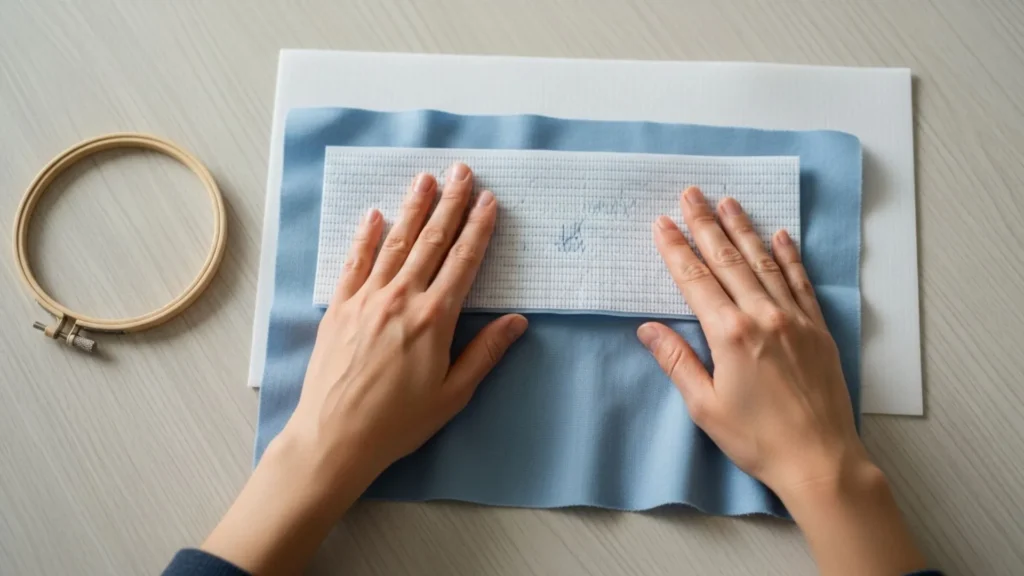
Cut a piece of stabilizer 2-4 inches larger than your hoop on all sides, then place it behind your fabric (wrong side facing the stabilizer). For stable items like towels or totes, hoop both layers together tightly.
If working on stretchy knits like a t-shirt, either hoop very gently or float the garment on top of hooped stabilizer using temporary adhesive spray. Smooth out all wrinkles, the design area must lie perfectly flat.
Step 2: Hoop Taut and Mark Design Position
Hoop Taut and Mark Design Position
Tighten the hoop until it feels drum-like when tapped; loose fabric shifts during stitching and ruins registration. Use a washable fabric pen or chalk to mark the exact center or baseline where your design will sit, most machines have a center mark or needle-down reference point. Double-check that your marked spot aligns with the hoop’s center crosshair.
This hooping step plays a huge role in how to start embroidery with clean and balanced results.
Step 3: Attach Hoop and Load the Design
Attach Hoop and Load the Design
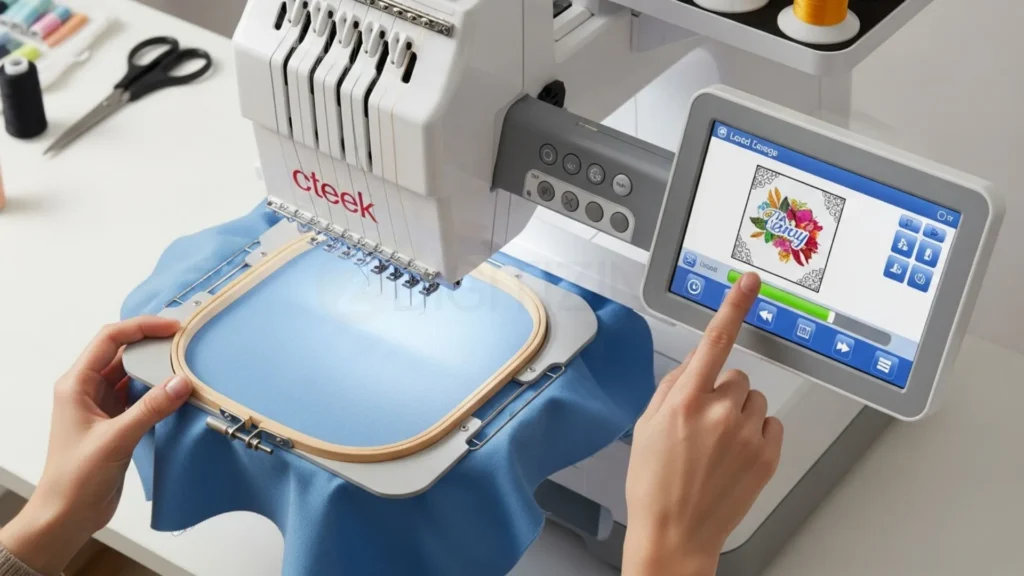
Snap or screw the hoop securely onto your machine’s embroidery arm, ensuring it’s level and locked. Power on, go to the embroidery mode, and load your design file via USB, built-in memory, or direct import.
Use the screen preview to check size, rotation, and color order, resize only if the file allows it, and never stretch beyond 10% without re-digitizing. This is also where many beginners truly begin to understand how to use an embroidery machine in a controlled and professional way.
Step 4: Position and Trace the Design
Position and Trace the Design
As part of learning how to start embroidery, move the hoop using the jog arrows until your fabric mark sits directly under the needle. Activate the “trace” or “outline” function to run a basting box or color outline, this shows exactly where stitches will land and confirms hoop tension. If the outline drifts or puckers, stop, re-hoop, and try again. Adjust position as needed before proceeding.
Step 5: Set Speed, Tension, and Start Stitching
Set Speed, Tension, and Start Stitching
Set speed to 400-600 SPM (stitches per minute) for your first runs, fast enough to progress, slow enough to monitor. Confirm tension settings match your thread (usually default 4.0-5.0 is fine for beginners). Lower the presser foot, press start, and stay close: watch for even stitches, no looping, and smooth fabric movement.
At this stage, how to start embroidery becomes a real hands-on process instead of just theory.
Step 6: Monitor and Pause if Needed
Keep hands clear of the needle area. Listen for unusual sounds (clunks mean skipped stitches or bobbin issues) and watch the first 20% closely, problems like bird-nesting or thread breaks often show early. If something’s off, hit stop, check threading, tension, or needles, then resume or restart. Let simple designs run unattended only after you are confident.
Step 7: Finish, Unhoop, and Inspect
Finish, Unhoop, and Inspect
When complete, the machine beeps, cut threads, raise the presser foot/needle, and remove the hoop. Unhoop carefully to avoid distorting stitches. Trim jump threads and excess stabilizer neatly from the back. Inspect both sides: front for even coverage and clean edges, back for minimal bulk and secure anchoring. Run a hot iron (back side down) over a pressing cloth to set stitches.
This final inspection step is often skipped, but it defines how to start an embroidery project the right way from beginning to end.
Step 8: Clean Up and Log Your Settings
Wipe lint from the bobbin area, re-thread if needed, and wind fresh bobbins. In your project notebook, note what worked: fabric type, stabilizer weight, needle size, design name, speed, tension, and results (for example, “perfect on towel, minor puckering on knit”).
Doing this regularly turns one good stitch-out into repeatable success and completes the full cycle of how to start embroidery with confidence and control.
Comparison of All Embroidery Techniques (Traditional to Modern)
Embroidery includes many different techniques, and each one works in a unique way.To clearly understand how to start embroidery, beginners should see how modern machine embroidery compares with hand embroidery and other popular methods, including cross stitch vs embroidery.
This table makes everything simple by showing all techniques side by side.
Feature / Technique
Machine Embroidery
Hand Embroidery
Cross Stitch
Appliqué
Free-Motion
Chenille
Sashiko
How It Is Done
Automated with digitized files
Hand stitched
Counted pattern stitching
Fabric pieces stitched on
Manual machine control
Loop/chain stitching
Traditional hand stitching
Skill Level
Beginner to advanced
Medium to high
Beginner
Medium
Advanced
Medium
Medium
Speed
Very fast
Slow
Slow
Medium
Medium
Fast
Slow
Design Control
High and precise
Very flexible
Pattern-based
Medium
Very creative
Limited shapes
Repetitive patterns
Stitch Consistency
Very consistent
Depends on hand
Consistent
Consistent
Varies
Consistent
Consistent
Best Used For
Logos, garments, bulk work
Decorative art
Crafts, frames
Jackets, bold designs
Artistic embroidery
Letterman jackets
Decorative fabric
Business Friendly
Yes
No
No
Yes
Limited
Yes
No
Common Mistakes Beginners Make in Embroidery
When beginners start embroidery, mistakes are very normal. Most errors do not happen because embroidery is difficult, but because small steps are skipped or rushed. Understanding these mistakes early makes how to start embroidery much easier and less stressful.
If you know what to avoid, you save time, fabric, and thread. Below are the most common mistakes beginners make, so you can stay one step ahead.
Skipping the test stitch and starting directly on the final garment
Hooping fabric too loose or stretching it too tight
Using the wrong stabilizer for the fabric type
Not checking design placement before stitching
Using a dull or damaged needle for too long
Stitching at very high speed in the beginning
Ignoring thread tension issues and continuing to stitch
Not trimming jump stitches during or after stitching
Removing stabilizer roughly and damaging the fabric
Expecting perfect results without practice
Avoiding these mistakes helps beginners build confidence and understand how to start embroidery in a calm, step-by-step way instead of learning through frustration.
Conclusion: Start Embroidery with Confidence
Now you know how to start embroidery the right way, from tools and designs to machine setup and stitching. The biggest lesson is simple: even the best machine cannot give clean results without a properly digitized design. Quality embroidery always starts with a strong design file.
At ZDigitizing, we provide professional embroidery digitizing and vector art services with over 10+ years of experience. Our expert digitizers understand real embroidery machines, stitch behavior, and production needs, so your designs stitch smoothly and look sharp every time.
Whether you are working on a small logo or need best jacket back digitizing, we are here to support you worldwide. We work 24/7, offer 24/7 customer support, provide preview before payment, and give free minor edits. Our prices are already lower than the market, and you get 50% OFF on your first order.
If you are serious about learning how to start embroidery and want professional results from day one, visit ZDigitizing today and place your first order with confidence.
Are you looking for embroidery digitizing and vector art services at low cost with superfast turnaround, guarranted quality and preview before pay? So, you are at right place. We can digitize and vectorize any type of artwork in your required file format.