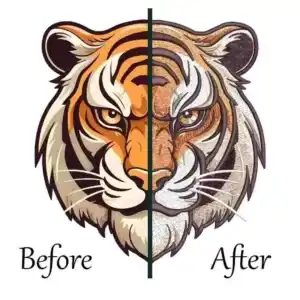
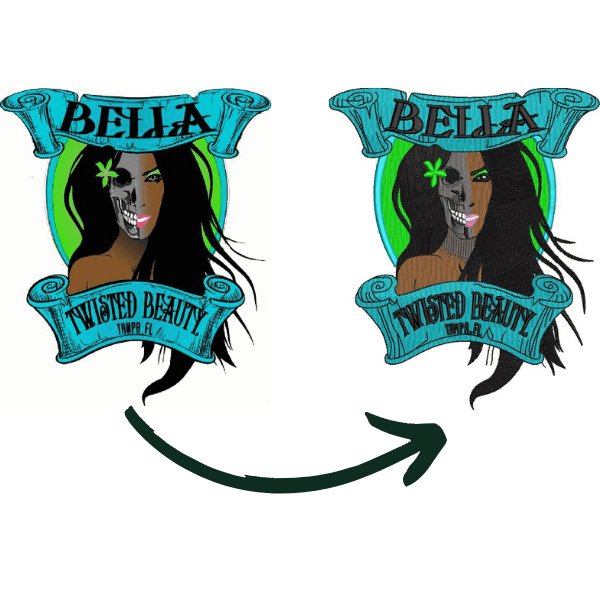
If you are trying to decide whether professional‑grade tools are right for your workflow, Wilcom embroidery software is one of the most powerful options on the market, but it is not always the best fit. For serious embroiderers and commercial shops, Wilcom is often worth the high cost because it offers professional‑grade digitizing tools, advanced color control, and strong machine compatibility; for casual hobbyists, cheaper or free tools may be enough.
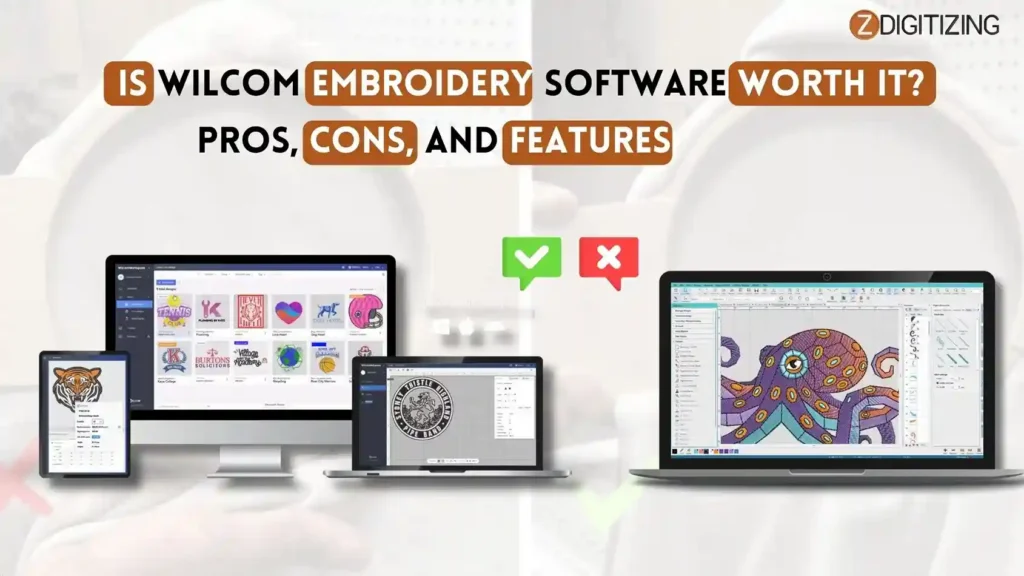
This article will help you understand not just what Wilcom can do, but whether it matches your skill level, budget, and business goals.
Is Wilcom Embroidery Software Worth It? Pros, Cons, and Features
What Wilcom Embroidery Software Actually Does?
Wilcom digitizing software is a family of tools that lets you create, edit, and prepare digital embroidery designs for machines. At its core, it takes drawings, logos, fonts, or sketches and turns them into stitch files your machine can sew.
The main product of Wilcom 2006, EmbroideryStudio, sits at the top of the range, while Truesizer and WilcomWorkspace serve different roles in the workflow.

Technically, this software is “digitizing software,” which means it controls how needles move, how colors change, and how fabric stretches under thread.
The best versions of Wilcom embroidery software also add features like 3D previews, color blending, and automatic underlay, so you are not just stitching lines but building structured, professional designs.
Core Uses for Beginners vs Professionals vs Businesses
Each user group taps into Wilcom embroidery software in different ways:
- Beginners often use it to resize logos, convert simple images to embroidery, and experiment with basic lettering and applique.
- Professionals lean on it for high‑volume Wilcom logo work, complex multi‑layer designs, and projects that must look perfect on uniforms, corporate gifts, and sportswear.
- Businesses and shops use full‑feature suites like Wilcom Studio and WilcomWorkspace to manage design libraries, standardize settings, and streamline quoting and production.
Even if you only embroider a few pieces a week, having the right tools can cut editing time dramatically. For high‑volume shops, Wilcom software becomes part of the backbone of daily operations, not just a “nice‑to‑have” add‑on.
Key Features That Make Wilcom Stand Out
When people ask “Is Wilcom embroidery software worth it?”, they are really asking, “What can it do that cheaper tools cannot?” The answer lies in a handful of powerful features that directly impact quality, speed, and workflow.
1. Advanced Digitizing and Color Control
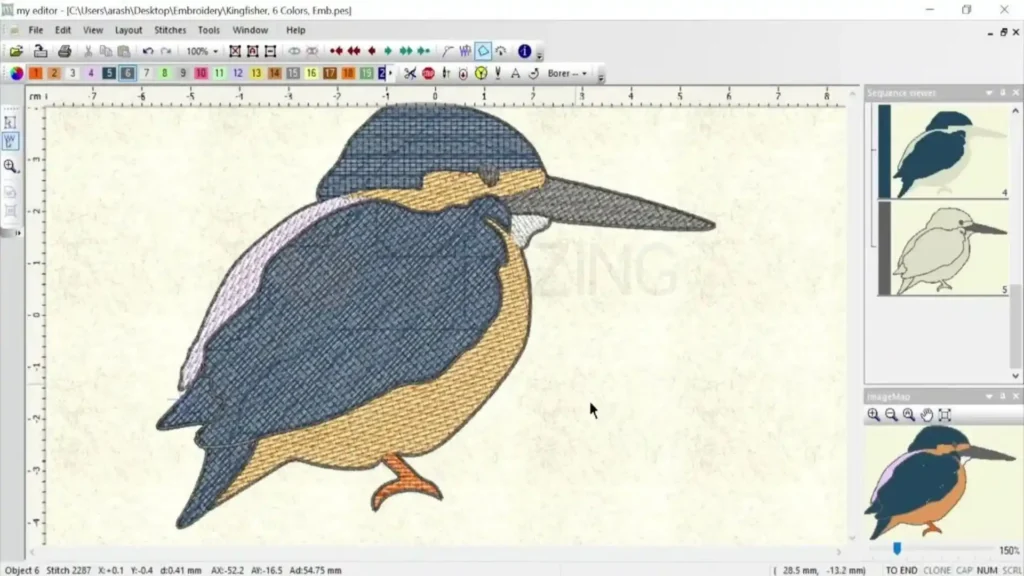
Modern Wilcom embroidery software lets you turn outlines and images into fully stitched designs with minimal manual work. Features that matter most include:
- Automatic digitizing: You import a logo, outline key areas, and the software suggests stitch paths and densities.
- Multi‑layer stitching: Objects can be broken into layers so you can stitch underlay, fill, and top accents separately.
- Color blending and multi‑blend: You can create smooth gradients using multiple threads instead of flat blocks of color.
- Gradient shading and variable density: Stitches can be denser in one area and lighter in another, which helps on curved or textured fabrics.
These features of the Wilcom designer are especially useful for sports logos, corporate branding, and photo‑style designs. For example, a bike‑race sponsorship logo with a realistic mountain background can be stitched with subtle shading instead of blocked colors, giving a much more professional look.
2. Precision Tools and Grids
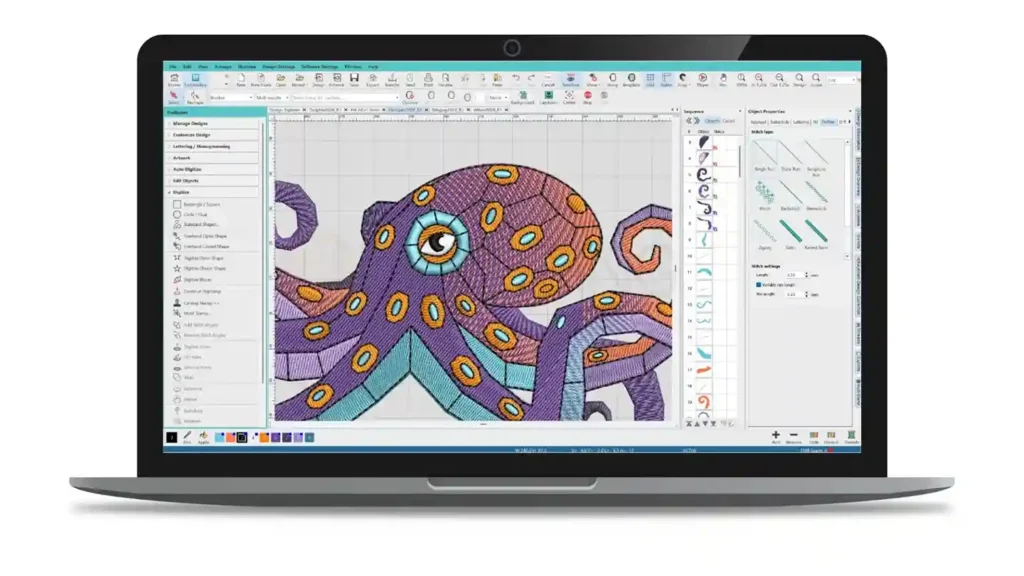
One of the reasons professionals trust Wilcom embroidery software is its precision tools. Instead of placing objects “by eye,” you can use:
- Snap‑to‑object alignment so nodes and shapes lock into place.
- Major and minor grids that let you zoom in and position details with pixel‑level accuracy.
- Independent pull compensation so each object can be tuned to reduce fabric pull without changing the whole design.
These tools matter most when you work on structured items like caps, pockets, or jackets, where a small misalignment can ruin the entire look. For a shop doing 50+ caps a week, even a minor improvement in alignment can save hours of re‑hooping and re‑stitching.
3. Real‑Time Preview and Machine Compatibility

Before you ever run a design on fabric, good Wilcom embroidery software lets you preview how it will sew. The 3D stitch preview shows:
- Jump stitches.
- Trim locations.
- Color changes.
- Fabric distortion based on density and underlay.
This preview helps you catch problems like long jumps, tangled threads, or heavy areas that might stretch the fabric. You can then adjust densities, underlay, or object placement before the needle ever touches the garment.
In terms of compatibility, Wilcom embroidery software supports more than 60 machine‑specific file formats, including common formats like PES, DST, JEF, EXP, EMB, and many others.
That means you can open a file from a Brother, Janome, Singer, Tajima, Ricoma, or many other brands and tweak it without worrying about format crashes.
4. Workflow and Business Tools (WilcomWorkspace, Truesizer, Estimator)
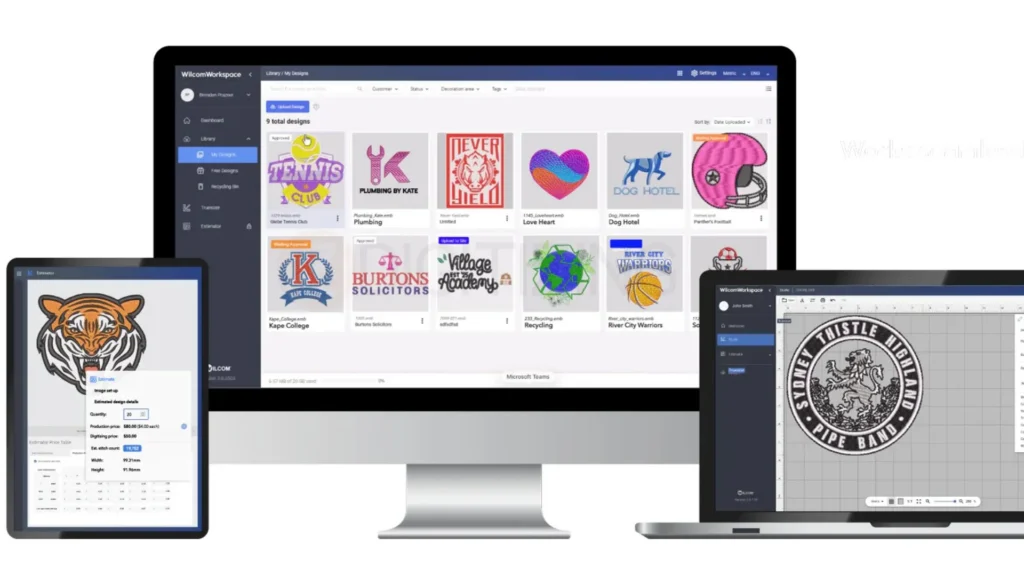
For businesses, the real value of Wilcom embroidery software often lies in workflow tools, not just design features:
- WilcomWorkspace lets teams share design libraries, standardize settings, and manage multiple jobs from a central system.
- Truesizer is a free or low‑cost viewer that lets you load, resize, and simulate designs without a full license.
- Estimator tools help you calculate stitch counts, thread usage, and production time so you can quote more accurately.
These tools reduce back‑and‑forth between designers, sales, and production staff. For example, a customer can send a logo, the designer can quickly prepare it in Wilcom Embroidery Studio, and the shop can generate a quote based on stitch count and estimated time, all within the same ecosystem.
Is Wilcom Good for Beginners? (or “Is It Too Hard?”)
Many people avoid Wilcom embroidery software because they hear it is “too advanced” or “too complex for beginners.” The reality is more nuanced: it is powerful, but beginners can use it, if they manage expectations and start with the right approach.
What Beginners Struggle With Most?
From online discussions and user forums, beginners commonly struggle with:
- A crowded interface that feels overwhelming at first.
- Confusion between manual digitizing and automatic digitizing.
- Not knowing how to pick the right stitch types for different parts of a design.
- File‑format issues when moving designs from computer to machine.
These problems are not unique to Wilcom embroidery software; they exist in almost any professional‑level tool. What makes software Wilcom different is that it also offers strong support and learning materials to help you push through that initial phase.
Training, Support, and Wilcom Answers
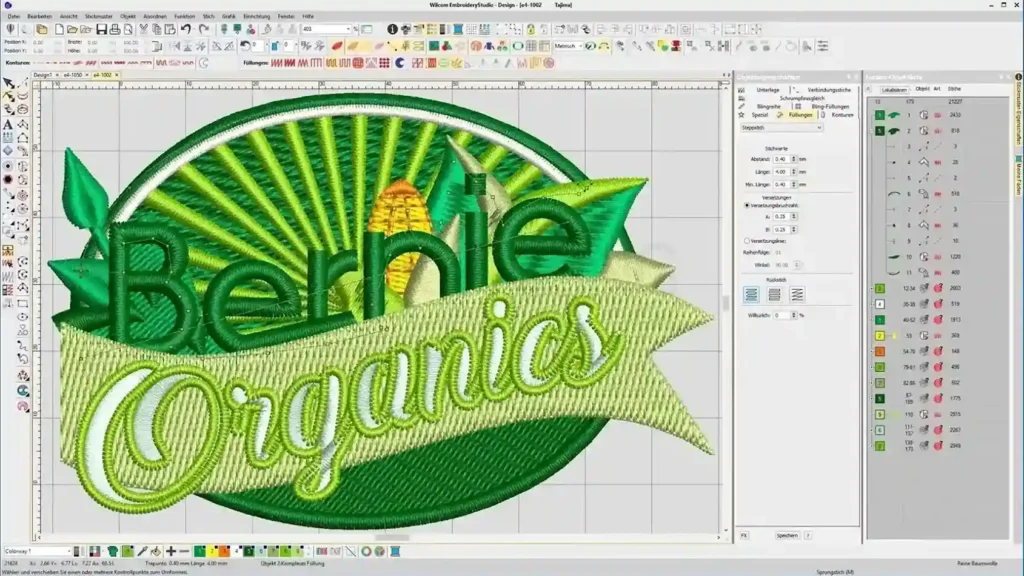
Wilcom embroidery digitizing software has built an ecosystem of help around its software:
- Built‑in tutorials and example projects walk you through basic tasks step by step.
- Wilcom Answers acts like an in‑software assistant that suggests solutions when you get stuck.
- Certification paths and training courses are available for those who want to go deeper, especially for commercial users.
For beginners, the best strategy is to treat the first few weeks like a mini‑course:
- Start with simple applique letters or monograms.
- Use automatic digitizing on logos, then tweak a few settings (like density and underlay).
- Gradually move into more complex designs once you feel comfortable with the layout and tools.
This approach softens the learning curve and helps you decide whether the investment in Wilcom embroidery software is worth continuing.
Pros of Using Wilcom Embroidery Software
To answer “Is it worth it?” clearly, it helps to line up the main advantages and link them to real‑world benefits.
- High‑quality, professional‑grade results: When you use advanced features like multi‑blend, gradient shading, and precise underlay, your designs look more polished and consistent, which is critical for uniforms, corporate gifts, and branded merchandise.
- Time savings on complex designs: Automatic digitizing and multi‑layer management reduce the need for manual editing, especially for logos with multiple colors and shapes.
- Better control over fabric and stitch behavior: Independent pull compensation and underlay tools let you tune designs for different fabrics (caps, jackets, knitwear) without starting from scratch each time.
- Strong compatibility and stability: Wide file‑format support and mature software code mean fewer crashes and fewer format‑conversion headaches.
- Workflow tools for teams and shops: With WilcomWorkspace, Truesizer, and estimation features, you can scale your operation without losing consistency.
For a shop that does 50–200 pieces a week, even a 10–15% improvement in efficiency can translate into hundreds of saved hours per year. That’s where the Wilcom embroidery software ROI starts to make sense.
Cons and Limitations to Watch Out For
No software is perfect, and being honest about the downsides of the Wilcom app helps you make a smarter decision.
- High licensing cost: Full EmbroideryStudio licenses are expensive, which can be hard to justify for casual users or small shops with low volume.
- Steep learning curve: The interface and tools are dense, so it can take weeks or even months to feel fully comfortable, especially if you are new to digitizing.
- Hardware requirements: Large, complex designs can be demanding on your computer, and you may need a decent CPU, enough RAM, and a stable operating system.
- Over‑feature bloat for simple tasks: If you mainly do basic monograms and simple logos, many advanced features will never be used, which can feel like paying for more than you need.
Recognizing these limits helps you decide whether to invest in the full suite or start with something lighter, like Wilcom Truesizer, Hatch, or a budget digitizer.
How Much Does Wilcom Embroidery Software Cost in 2026?
Wilcom EmbroideryStudio is sold in several tiers, each geared toward different levels of professional use. Exact pricing changes over time, but the general range of Wilcom International in 2026 is roughly:
- Wilcom Essentials – around $1,500–$2,500 USD for a one‑time license, depending on region and reseller.
- Wilcom Advanced – typically $3,000–$4,500 USD for a one‑time license, since it adds more advanced digitizing tools and modules.
Wilcom Enterprise – often $5,000+ USD for a one‑time license, aimed at large studios or multi‑user setups.
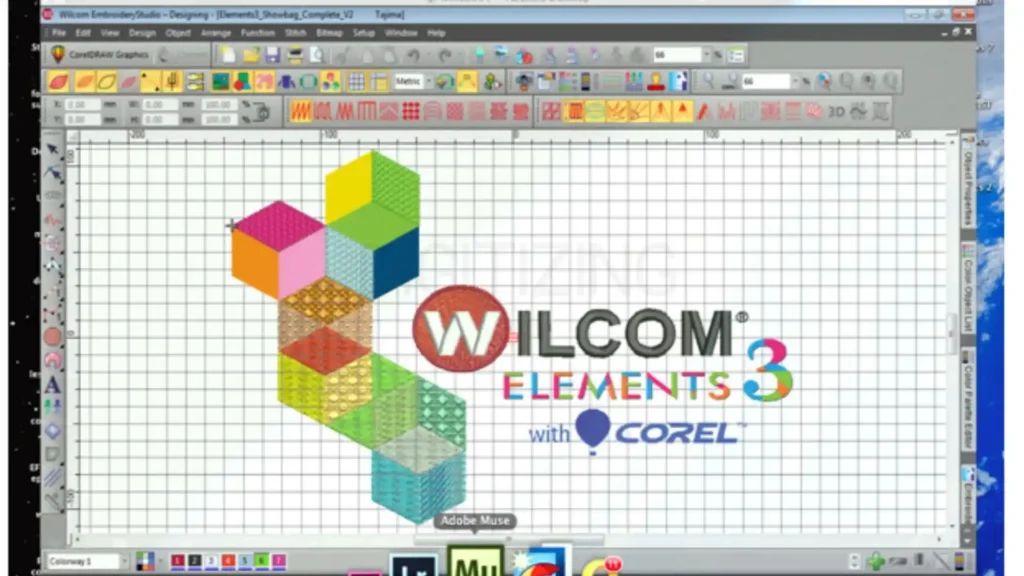
In addition to one‑time licenses, some dealers or resellers may offer:
- Subscription or rental plans (e.g., monthly or annual payments) that can lower the upfront cost but may be more expensive over time.
- Educational or small‑business discounts for schools or qualifying small shops.
By comparison, lighter tools like Hatch (based on the Wilcom engine) usually cost a few hundred dollars, while basic or free editors and viewers cost nothing or very little.
This means Wilcom embroidery software is a serious investment, but if you handle enough paid work, it can pay for itself through faster turnaround, reduced outsourcing, and fewer wasted test‑stitches.
Learning Curve and Time to Proficiency
The learning curve is probably the highest soft cost of using Wilcom embroidery software. Here is a realistic timeline:
- Week 1–2: Learn the interface, basic tools, and how to open and save files. Practice simple lettering, basic applique, and small logo edits.
- Week 3–6: Explore automatic digitizing, underlay control, and basic color‑layer management. Start saving templates and standard settings for common jobs.
- Months 1–3: Work on more complex logos, multi‑color designs, and projects with different fabric types. Build a small library of reusable elements (monograms, borders, applique shapes).
By the end of that period, most users can produce professional‑looking work without constantly referring back to tutorials. The key is to practice regularly and save reusable templates, which cuts down on setup time for future jobs.
Hardware Requirements and Stability
On the technical side, Wilcom embroidery software expects a stable PC environment:
- A modern Windows PC (recent versions of Windows 10/11) is recommended.
- At least 8–16 GB of RAM helps when working on large, dense designs.
- A decent graphics card improves preview smoothness, especially in 3D‑style previews.
If your current machine is a low‑budget laptop or an older PC, you may experience slower performance or occasional crashes with very large files. In that case, upgrading hardware before investing in the full software suite can make the Wilcom embroidery software experience much smoother.
Stitch Types and Digitizing Control in Wilcom
A big part of what makes Wilcom embroidery software powerful is how it handles different stitch types. Understanding these helps you decide whether the software is right for your projects.

Common stitch types in professional digitizing include:
- Run stitches: Thin, linear stitches for outlines, fine details, and small text.
- Satin stitches: Dense, parallel stitches for borders, letters, and small shapes.
- Fill stitches: Broad areas of stitches for large color blocks or backgrounds.
- Underlay stitches: Light foundation stitches that support the top layer and reduce fabric pull.
- Redwork: Single‑line, low‑density stitching often used for vintage‑style designs.
- Monogram stitches: Overlapping satin or special fonts designed for lettering.
- Applique stitches: Specialized satin or edge joins for patches and fabric overlays.
Embroidery Wilcom lets you control the density, spacing, angle, and underlay for each of these types, which is why it is popular in commercial logos, sports designs, and high‑end fashion embroidery.
How Wilcom Handles Underlay and Pull Compensation?
Fabric pull is one of the biggest headaches in embroidery. When dense satin stitches tug on the material, the design can look skewed or wavy. Wilcom embroidery software tackles this with:
- Independent pull compensation: Each object can be adjusted to counteract pull in a specific direction, so you do not need to tweak the whole design.
- Smart underlay types: You can choose different underlay styles (zig‑zag, contour, ladder‑style) depending on the shape and fabric.
- Density control: Reduce stitch density in areas where pull is likely, while keeping key areas solid.
For example, when stitching a large satin‑filled logo on a lightweight jacket, you might use a lighter underlay and slightly lower density in the center to keep the fabric smooth while still getting a bold color effect.
Applique and Premium Applique Digitizing in Wilcom
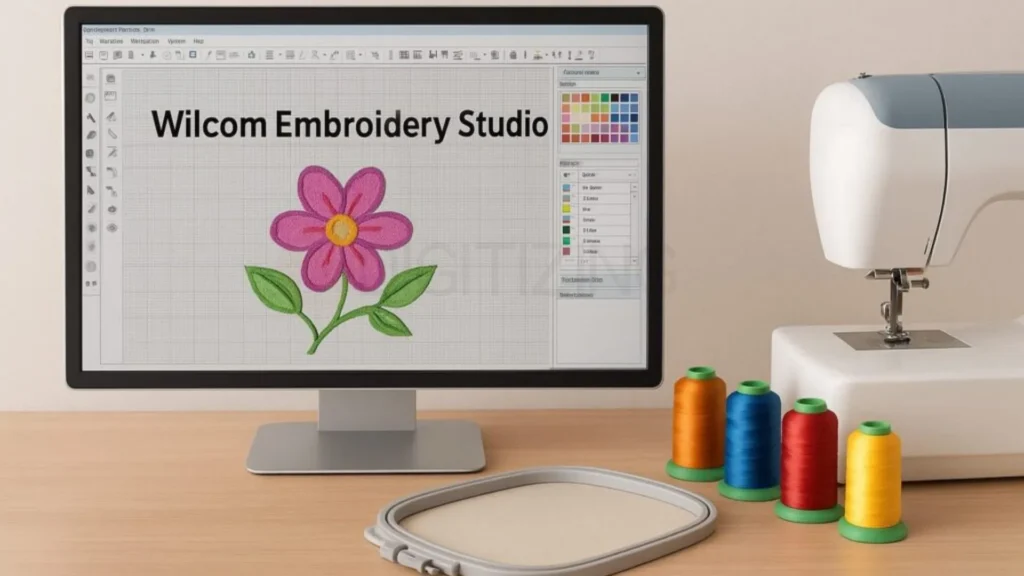
It is a specialty where Wilcom embroidery software really shines. In this digitizing, fabric patches are stitched in place, often with satin‑edge borders that join the patch to the base fabric.
Wilcom’s applique modules help you:
- Position and resize patches precisely.
- Use satin‑edge or join‑style stitching to create clean borders.
- Control underlay and density so the patch lays flat and the border looks smooth.
Because applique work is visually dramatic and often used for premium garments, many shops charge extra for “premium applique digitizing.” With the right Wilcom embroidery software setup, you can produce those high‑margin jobs in‑house instead of outsourcing them.
When Wilcom Is Truly Worth the Investment?
If you look at the big picture, Wilcom embroidery software makes the most sense when:
- Quality and consistency are critical (logos, uniforms, corporate branding).
- You handle a steady volume of designs that justify the time spent learning.
- You use multiple machines or work with different brands, so compatibility matters.
- You want to move away from basic software or manual editing.
For low‑volume hobbyists, the upside may not match the cost and learning time. But for shops that regularly produce hundreds of embroidered items, the software can pay for itself through:
- Fewer mistakes and re‑stitching.
- Faster job turnaround.
- Ability to take on more complex, higher‑value projects.
Ideal Users for Wilcom EmbroideryStudio
Wilcom embroidery software is best suited for:
- Commercial embroidery shops that do logos, uniforms, and brand merchandise.
- Sports teams and leagues need consistent, high‑quality designs across many players and garments.
- Corporate gifts and promo shops that handle large‑volume orders with strict quality standards.
- Educators and trainers who teach digitizing or machine embroidery.
- Freelance designers who want professional tools for client work.
If your business falls into one of these categories and you are still using basic or low‑end software, upgrading to Wilcom embroidery software can be a logical next step.
When a Cheaper or Free Tool Is Enough?
On the other hand, a cheaper or free tool may be enough if:
- You embroider only a few pieces a year for family or gifts.
- Your designs are simple: small monograms, basic text, or simple clip‑art‑style icons.
- You are comfortable outsourcing complex digitizing and only need to resize or re‑color files.
In these cases, investing in the full suite of Wilcom embroidery software may not give you enough extra value to justify the cost. Starting with Truesizer or a budget‑tier program and upgrading later is often the smarter move.
Conclusion: Is Wilcom Embroidery Software Worth It for You?
To sum up, Wilcom software is a powerful, professional‑level tool that can significantly improve the quality, speed, and consistency of your embroidery work. It makes the most sense for:
- Commercial shops that handle logos, uniforms, and brand merchandise at scale.
- Professionals who need advanced control over stitches, colors, and underlay.
- Businesses that want robust workflow tools and strong compatibility across machines.
If you are a casual hobbyist or only embroider a few simple designs each year, you may be better off starting with something lighter, like Truesizer, Hatch, or a budget Wilcom digitizer, and upgrading Wilcom software later if your needs grow.
For the best results, the quality of digitizing matters more than the software alone. Even with advanced tools, a poorly digitized logo can still look uneven, pucker the fabric, or run out of thread. That is why professional embroidery digitizing is so important: it turns your design into a clean, stable, machine‑ready file that sews smoothly and looks sharp on every piece.
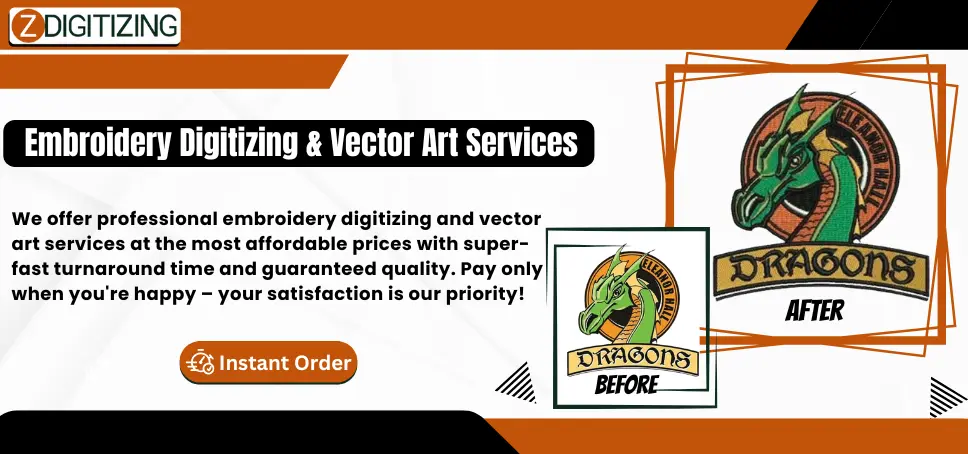
That is where ZDigitizing can help. If you are not ready to invest in Wilcom embroidery software or you want to outsource the technical work, ZDigitizing is a reliable online embroidery digitizing service provider in UK that focuses on quality and speed. We provide:
- Professional embroidery digitizing services that match commercial‑grade standards.
- Over 10+ years of experience in the embroidery and digitizing industry.
- Expert digitizing using advanced techniques and modern software.
- A 24/7 working team so you can get your designs processed any time.
- Quality guaranteed on every project.
- A free preview is provided before payment, so you know exactly what you are getting.
- Minor edits offered at no cost.
- Prices that are already lower than the market, making premium quality more affordable.
- 50% OFF on your first order, giving you a low‑risk way to test the service.
If you want high‑quality embroidery results without the learning curve or the software cost, ZDigitizing is a smart choice.
Visit ZDigitizing today, place your first order, use the 50% OFF offer, and experience premium digitizing quality that makes your designs look sharp, clean, and professional on every garment.